Microsoft unveils conceptual Project Solara, an agent-focused operating system
The Redmond-based technology giant demonstrated two hardware concepts, but the underlying software remains in the conceptual phase with no commercial release planned.
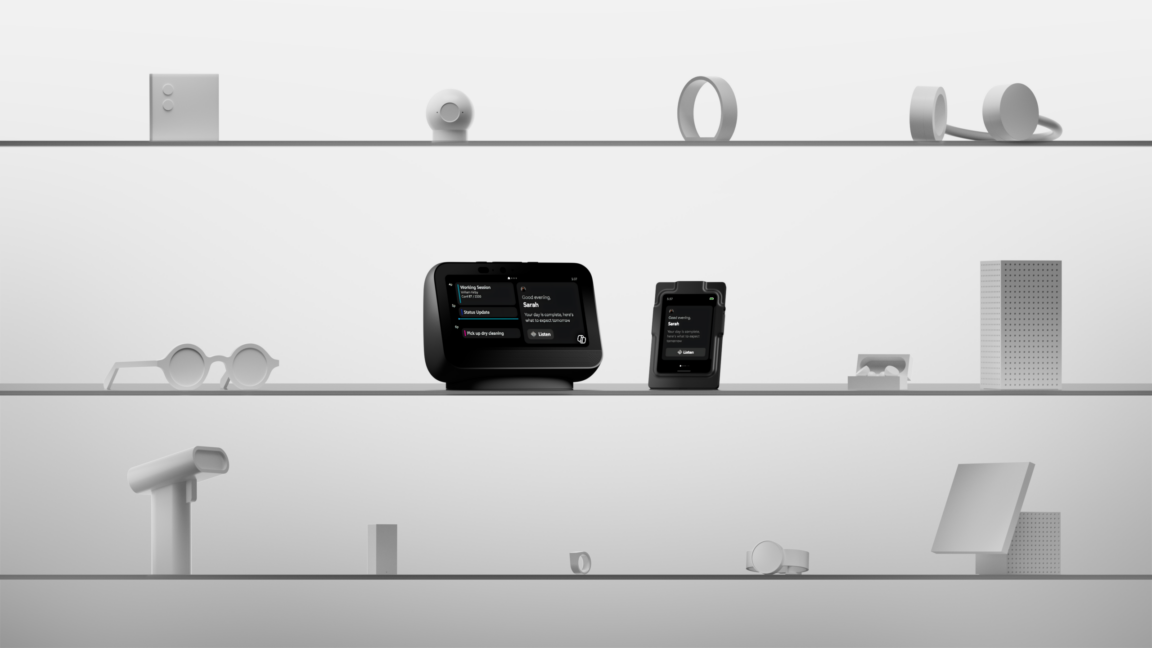
Microsoft announced Project Solara at its Build 2026 conference, introducing a new software platform built on the Android Open Source Project (AOSP) that is designed to run artificial intelligence agents instead of traditional applications. The operating system, which Microsoft refers to as the Microsoft Device Ecosystem Platform, utilises a 'just-in-time UI' architecture. This approach allows agents to generate user interfaces dynamically based on the context and the specific type of device being used, rather than relying on static, manually designed screens.
The company demonstrated two concept devices to illustrate the platform's potential. The 'Desk Concept' is a smart display powered by MediaTek IoT chips, featuring a touchscreen, microphones, and a camera. It is designed to act as a secondary monitor or a standalone Windows PC using Windows 365 cloud computing, keeping users informed of their AI agents' activities. The second device, the 'Badge Concept', is a wearable powered by Qualcomm chips that includes 5G connectivity, a camera, microphones, and a fingerprint scanner for biometric authentication.
Microsoft clarified that the project is currently in the conceptual phase and none of the demonstrated functionality currently works. The company is not planning a commercial release at this stage. Instead, Microsoft is collaborating with industry partners including AccuWeather, Best Buy, CVS Health, Levi’s, and Target to further develop the technology and demo agent-first devices. The platform includes Microsoft enterprise technologies and a shell capable of interacting with multiple AI agents, aiming to free agents from reliance on single, fixed interfaces.
This initiative follows Microsoft’s historical struggles with mobile computing, where the company fell behind competitors on app availability, security, and long-term support. The shift towards agentic interfaces mirrors broader industry trends, with Google recently previewing agent-first search tools at its I/O conference that build dashboards and mini-apps based on user queries. Microsoft’s partnership with OpenAI has been described as fragmented, and this new direction represents a significant pivot in its AI strategy.
New computing form factors have historically required specialisation, a process that is complex and expensive. Microsoft’s vision for Project Solara suggests a future where specialized devices handle context-specific tasks through generative interfaces. However, the timeline for the development of the advanced models required to power these agents remains speculative, and the long-term viability of such agent-first interfaces remains unproven.
