Microsoft halves quantum roadmap to 2029 with Majorana 2 chip release
Microsoft has unveiled its second-generation Majorana 2 quantum processor, citing significant improvements in qubit stability that allow the company to halve its development timeline. The announcement marks a pivotal shift in the firm’s strategy to deliver a scalable, fault-tolerant quantum computer by the end of the decade.
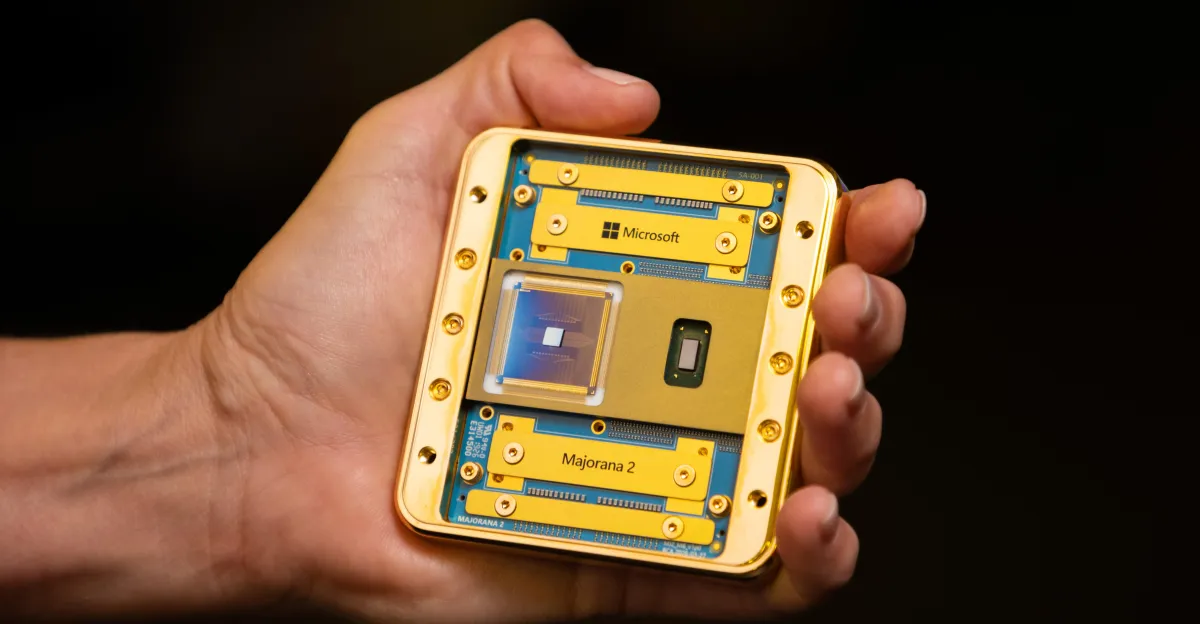
Microsoft has announced the release of Majorana 2, its second-generation topological quantum chip, claiming a substantial leap in qubit reliability compared to its predecessor, Majorana 1. The company states that the new processor represents a 1,000-fold improvement in stability, a milestone that has prompted the tech giant to halve its development timeline. Microsoft now targets the delivery of a scalable, practical quantum computer by 2029, accelerating the previous roadmap significantly.
The performance gains are attributed to a revised material stack within the chip. Majorana 2 replaces the aluminium superconductor used in Majorana 1 with lead, while updating the semiconductor active region to a combination of indium arsenide and indium arsenide antimonide. Chetan Nayak, Microsoft technical fellow and corporate vice president of quantum hardware, stated that these changes created a "more stable topological phase," which is critical for maintaining the integrity of quantum information.
According to Microsoft, the material upgrades have dramatically extended qubit lifetimes. In the aluminium-based Majorana 1, lifetimes ranged between one and 12 milliseconds. In contrast, Majorana 2 qubits now exceed 20 seconds in lifetime, with some instances lasting over a minute. Nayak described this extension as a key factor in convincing the company that it has made sufficient progress to promise useful quantum computing much sooner than previously anticipated.
Microsoft is working toward building a fault-tolerant prototype quantum computer based on topological qubits, with the aim of solving complex global problems. The company notes that the physics community was initially skeptical of its claims regarding the earlier Majorana 1 processor. However, the firm argues that the tangible improvements in Majorana 2 demonstrate the viability of its topological approach, moving the technology closer to commercial and scientific utility.
In conjunction with the hardware announcement, Microsoft has released Microsoft Discovery, an agentic AI tool used in the chip's development, to the research community via GitHub. Designed to apply agentic workflows to research and development programs, the tool is available for researchers to access using a GitHub Copilot account. The release underscores the increasing integration of artificial intelligence in accelerating hardware innovation within the quantum computing sector.
