Microsoft enters local AI hardware market with Surface RTX Spark Dev Box
Powered by Nvidia’s Arm-based silicon, the new device targets developers seeking to run large language models locally, though pricing and precise release dates remain undisclosed.
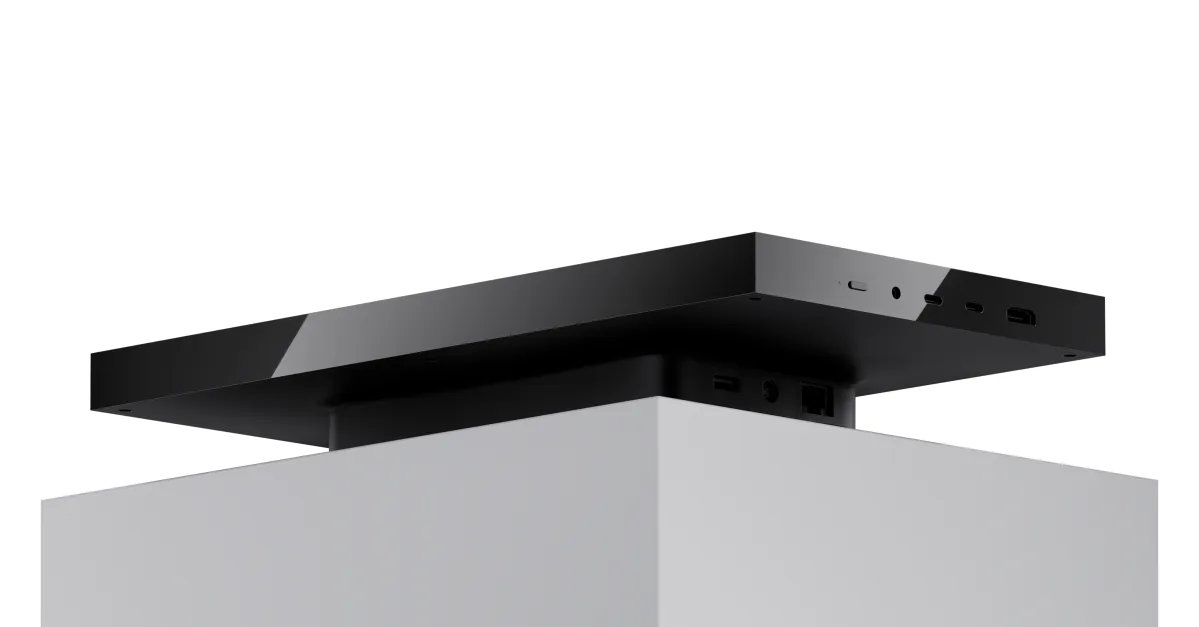
Microsoft has announced the Surface RTX Spark Dev Box, a compact desktop unit engineered specifically for local-first artificial intelligence development. The device is powered by Nvidia’s Arm-based RTX Spark chips, the same silicon recently featured in the Surface Laptop Ultra, and is optimised for sustained workloads and intensive local AI tasks.
The hardware features 128GB of unified memory, which Microsoft states enables the system to run local AI models with up to 120 billion parameters. To support these demands, the device operates with a 100-watt thermal envelope, exceeding the 45-watt-to-80-watt limits found in RTX Spark laptops. The chassis is constructed from aluminium and functions as a heatsink, bearing a visual resemblance to the top of an Xbox Series X console.
Microsoft is preconfiguring the unit with Windows 11 Pro and essential developer tools, including Visual Studio Code and GitHub Copilot. Andrew Hill, corporate vice president of Surface, noted that the image-level configuration is designed to keep developers in their workflow. This includes a dark theme, a simplified taskbar, disabled Widgets, enabled Do Not Disturb, and PowerShell 7 set as the default shell.
The release addresses a void in the market left by Qualcomm’s cancelled Snapdragon Dev Kit. Originally intended to ship two years ago to assist developers in porting applications to Windows on Arm, the Qualcomm kit was delayed due to hardware quality complications. Microsoft positions the new Surface unit as a direct replacement for that project.
While full specifications beyond the core processor, memory, and thermal envelope are not yet available, the device is scheduled for release in the US later this year via Microsoft’s online store. Pricing has not been disclosed. Performance claims regarding model execution may vary depending on specific model architectures and quantisation methods.
