Micron and SK Hynix join trillion-dollar club as AI memory demand surges
US-based Micron Technology and South Korean firm SK Hynix have both surpassed a market capitalisation of one trillion US dollars, driven by surging demand for high-bandwidth memory (HBM) semiconductors essential for artificial intelligence systems.
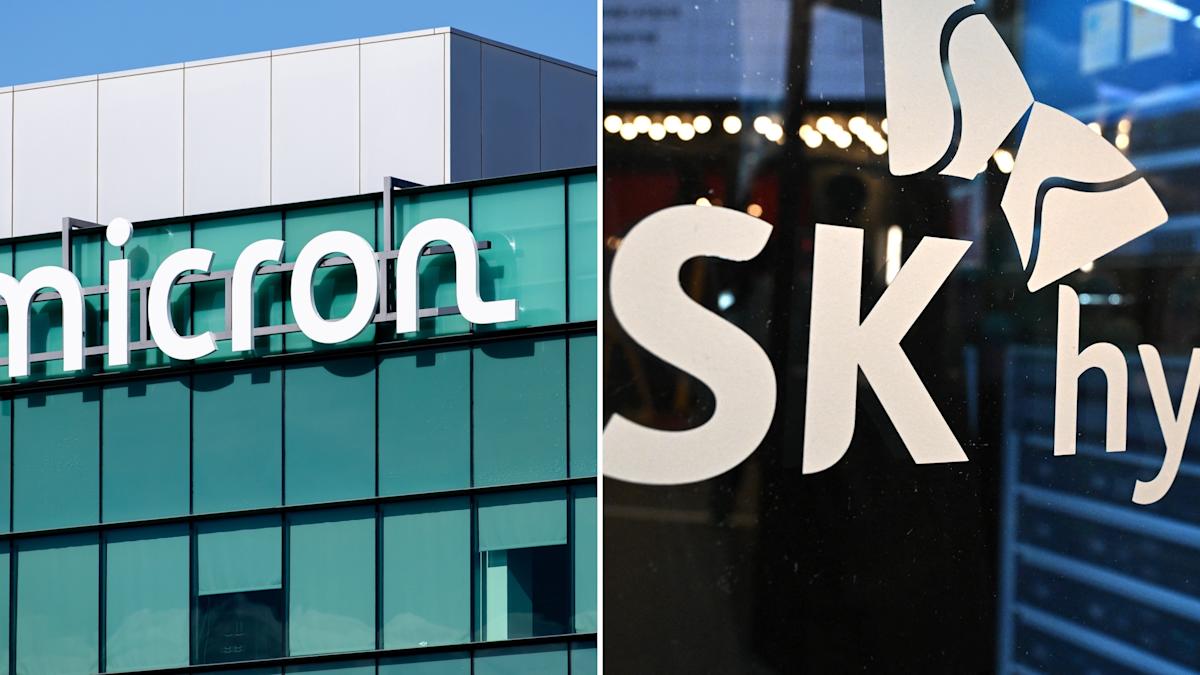
US-based Micron Technology and South Korean firm SK Hynix have both surpassed a market capitalisation of one trillion US dollars, driven by surging demand for high-bandwidth memory (HBM) semiconductors essential for artificial intelligence systems. SK Hynix’s shares have risen more than 250 per cent this year, while Micron’s valuation was boosted by a UBS price target increase. The milestone reflects a shift in the AI supply chain, with investors snapping up semiconductor stocks amid a global memory shortage that has allowed manufacturers to raise prices.
SK Hynix crossed the $1 trillion valuation mark last week, cementing its position in the global AI supply chain. Micron Technology surpassed the $1 trillion milestone the day before SK Hynix. UBS cited long-term agreement opportunities with partially fixed pricing as the reason for tripling Micron’s price target. Micron’s HBM4 chips are designed for Nvidia’s next-generation Vera Rubin GPUs and can reach more than 2.8 terabytes per second of bandwidth. Samsung Electronics hit a $1 trillion valuation earlier in May, becoming the second Asian company to do so after TSMC. Other semiconductor stocks, including Qualcomm, Advanced Micro Devices, Marvell Technology, and Intel, have also seen significant gains or traded near all-time highs in May 2026.
High-bandwidth memory (HBM) chips differ from conventional memory by stacking layers vertically and placing them close to the processor, offering significantly more bandwidth and better power efficiency. Modern AI models process vast amounts of data, and HBM prevents bottlenecks that occur when processors cannot access data quickly enough. Nvidia makes graphics processing units (GPUs) used to build AI systems, while HBM plays a critical supporting role. Investors are increasingly snapping up stocks tied to central processing units and memory to run agentic workloads, a market once dominated by Nvidia. Google’s Sundar Pichai and OpenAI’s Sam Altman have previously warned of a possible AI bubble. Concerns exist regarding the energy demand of data centres and stalls in data centre construction.
SK Hynix has emerged as a key supplier to AI chip giant Nvidia, according to reports from CNBC, which noted the company’s shares have climbed more than 250 per cent since the start of the year. This performance has solidified its standing at the centre of the global AI supply chain. The South Korean firm’s valuation surge coincides with a broader rally in the semiconductor sector, where investors are aggressively positioning themselves in stocks tied to the hardware required to run and process agentic workloads.
Micron’s valuation rally followed a significant adjustment by UBS, which tripled its price target on the stock from $535 to $1,625 a share. The bank cited long-term agreement opportunities with partially fixed pricing as the primary driver for the upgrade. According to CNBC, this price target could see the stock continue to climb, potentially doubling in value. Micron’s HBM4 chips, designed for Nvidia’s next-generation Vera Rubin GPUs, are capable of reaching more than 2.8 terabytes per second of bandwidth, highlighting the critical nature of these components in the AI ecosystem.
The rapid ascent of these chipmakers underscores a larger shift in the AI supply chain, with HBM becoming one of the industry’s most sought-after components. Scientific American reports that while companies like Nvidia make the graphics processing units used to build AI systems, HBM plays an equally important role behind the scenes. Modern AI models process vast amounts of data, and even the fastest processors can become bottlenecked if they cannot access that data quickly enough. HBM chips deliver significantly more memory bandwidth than conventional memory technologies while maintaining good power efficiency.
Despite the market enthusiasm, not every AI bet will pay off, according to Scientific American. The publication cites warnings of a possible bubble by Google’s Sundar Pichai and OpenAI’s Sam Altman, as well as concerns over the energy demand of data centres and stalls with data centre construction. Nevertheless, the current global demand for chips has led to a memory shortage, allowing Micron, SK Hynix, and Samsung to hike prices. Samsung Electronics hit a $1 trillion valuation earlier in May, becoming the second Asian company to do so after TSMC, while American companies Qualcomm, Advanced Micro Devices, and Marvell Technology also hit new heights in May. Intel was also trading near all-time highs.