Meta @Scale: Boris Cherny Defends Agentic AI Loops as Industry Shifts to Autonomous Workflows
At Meta’s @Scale conference, Boris Cherny outlined how AI agents are now prompting other agents to write code in continuous, non-deterministic loops, marking a significant departure from traditional human-led development.
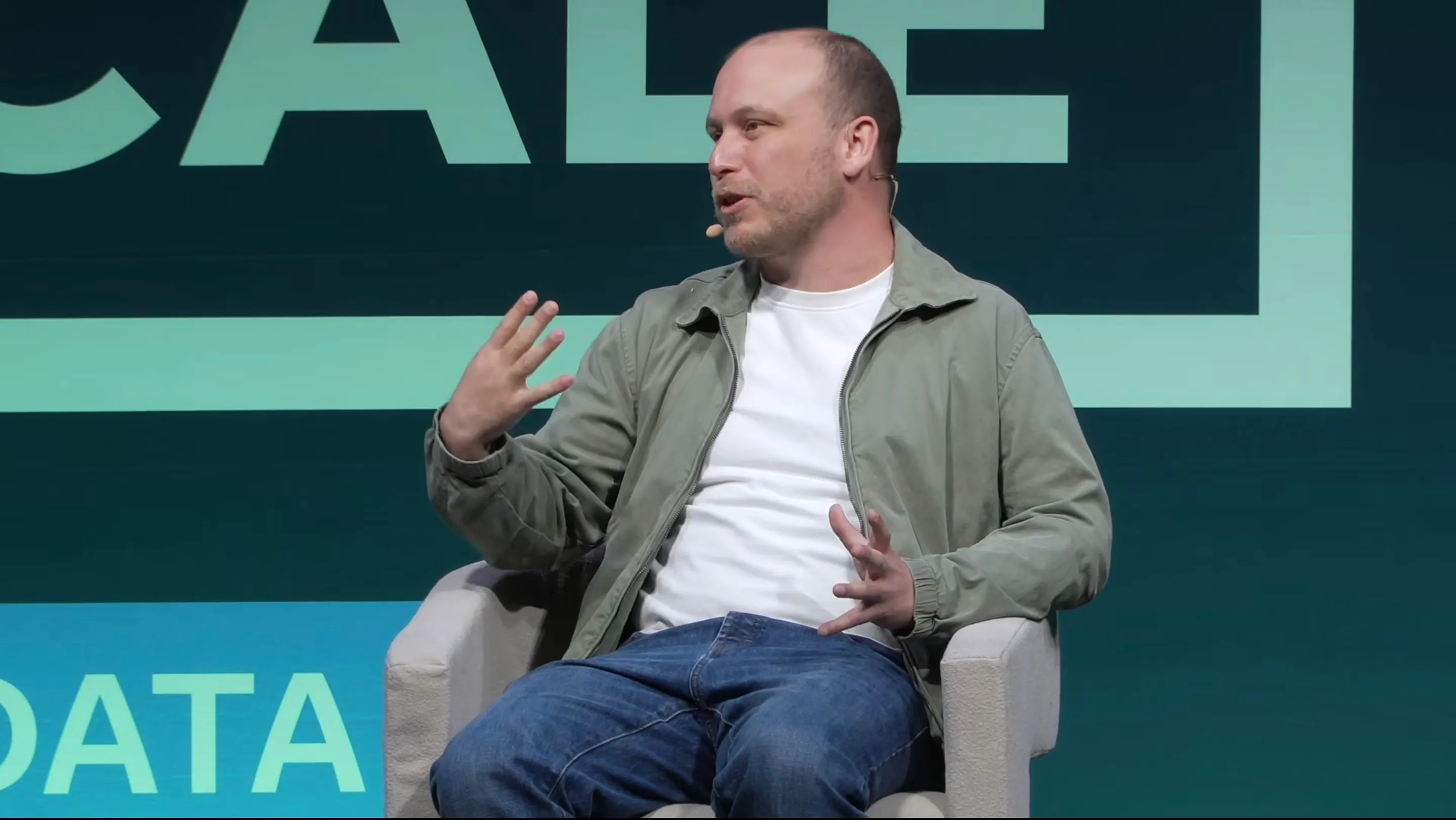
Boris Cherny, the creator of Claude Code, addressed the growing adoption of agentic artificial intelligence at Meta’s @Scale conference, firmly dismissing concerns that AI loops are merely a passing hype cycle. When asked by an audience member whether these recursive systems represented a genuine technological shift or a fleeting trend, Cherny responded emphatically that they are for real. He described a clear evolution in software engineering: moving from humans writing source code by hand, to agents writing code, and now to agents prompting other agents to generate code. Cherny characterised this transition as being as significant as the initial move from manual coding to agent-assisted development.
Cherny detailed his own implementation of these continuous background loops, where one agent continuously seeks ways to improve code architecture while another identifies and unifies duplicated abstractions. Unlike traditional software development, these agents operate without a fixed stop condition, running endlessly until a sub-agent determines the work is complete. They autonomously submit pull requests, functioning much like human developers but without the need for constant human oversight. This approach authorises a swarm of agents to work in the background, representing a substantial increase in trust placed in AI systems to handle complex, ongoing tasks.
The concept of recursive loops is not new to computer science, where functions typically call themselves with a deterministic condition to halt execution. However, agentic loops follow a non-deterministic logic, relying on the AI itself to decide when to stop. One popular technique, known as the Ralph Loop after the character Ralph Wiggum, involves summarising the model’s work and asking if the goal has been accomplished. This method helps prevent models from getting lost during extended operations, effectively bouncing the model back and forth until the task is resolved.
This shift aligns with the broader industry push for increased test-time compute. OpenAI researcher Noam Brown has previously observed that contemporary models can solve nearly any problem if sufficient computational resources are applied. In the context of hill-climbing problems, such as improving a code base, models can make incremental improvements until a threshold is met or until compute resources are exhausted. Cherny’s example illustrates this principle, where agents continue making improvements for as long as there is compute to spend on them.
Despite the potential benefits, the high consumption of computational resources and tokens poses a significant economic challenge. AI loops burn through tokens much faster than simple question-and-answer chatbots, with no ceiling on expenditure as the loops run continuously. While this model is viable for Anthropic, which sells tokens, it presents a costly barrier for other entities. Nevertheless, if the benefits of these autonomous workflows outweigh the costs, they could represent a staggering advancement in AI’s ability to handle real-world work without human intervention.
