McGregor targets next summer return following ACL and meniscus tear at UFC 329
UFC President Dana White halts speculation on future bouts until medical clearance for hardcore training is granted
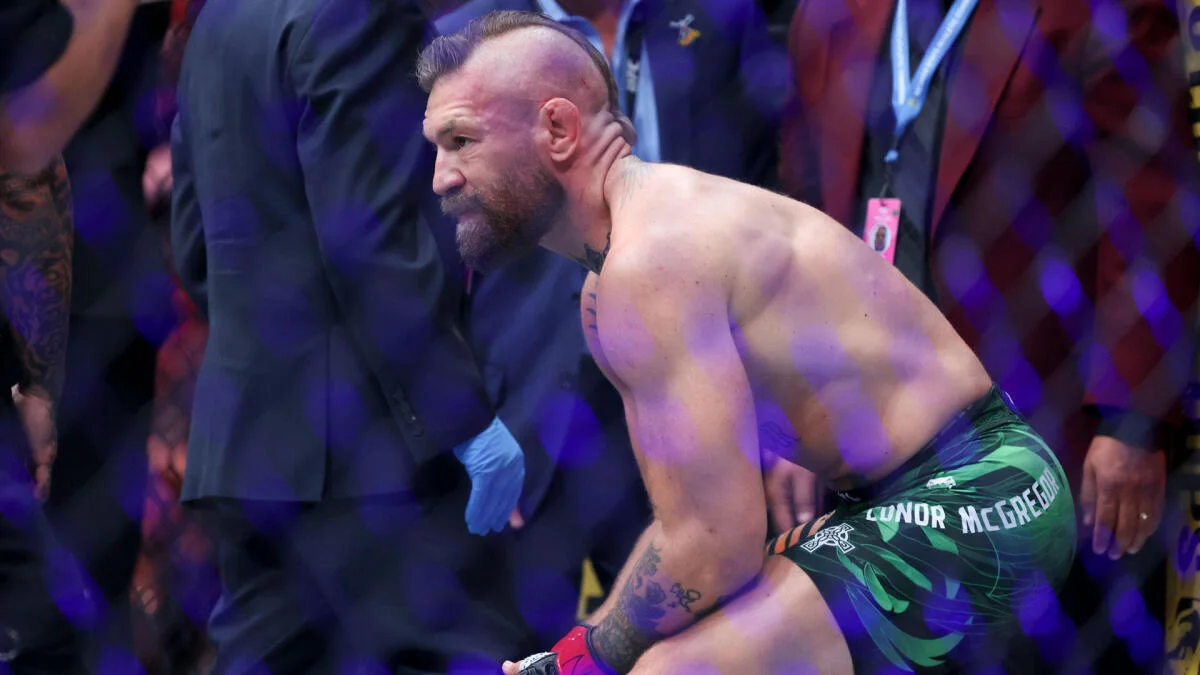
Former two-division champion Conor McGregor has confirmed he sustained an anterior cruciate ligament (ACL) and meniscus tear during his bout against Max Holloway at UFC 329. The Irish fighter stated the injury occurred in the opening sequence when attempting a jumping switch kick, affecting the opposite leg to the one he injured in his previous fight against Holloway.
McGregor indicated that advancements in regenerative medicine and improved training methods could allow him to return to competition by next summer. This timeline would coincide with the final fight of his current contract with the promotion. He noted on social media that he is currently walking without crutches and has successfully completed leg extension machine work, stating he can activate his quadriceps under resistance.
The injury was sustained in the first round, leading to McGregor’s defeat by Max Holloway. In the immediate aftermath, McGregor exited the arena directly into a waiting car without visiting the locker room to change or retrieve his belongings. He later described being in a "dark place" at the time of the injury, speculating that the event may have "saved" him from attending an after-party in a compromised state.
UFC President Dana White has halted speculation regarding McGregor’s future bouts, stating that discussions will only resume once medical professionals approve the commencement of "hardcore training." White addressed the nature of the right knee damage at a news conference on Saturday, consulting with colleagues before confirming the diagnosis.
McGregor’s coach, John Kavanagh, stated that the jumping switch kick was a technique drilled extensively during camp. Kavanagh noted that McGregor emerged from training camp completely healthy, with extra precautions taken to ensure his availability. The specific timeline for McGregor’s return remains speculative, based on his personal assessment rather than an independent medical prognosis.