Maurizio Cattelan brings his ‘Night’ to Berlin’s Neue Nationalgalerie
The Italian sculptor’s first major solo show in Germany explores power and memory through new commissions and historic works, including a scaled-down Brandenburg Gate.
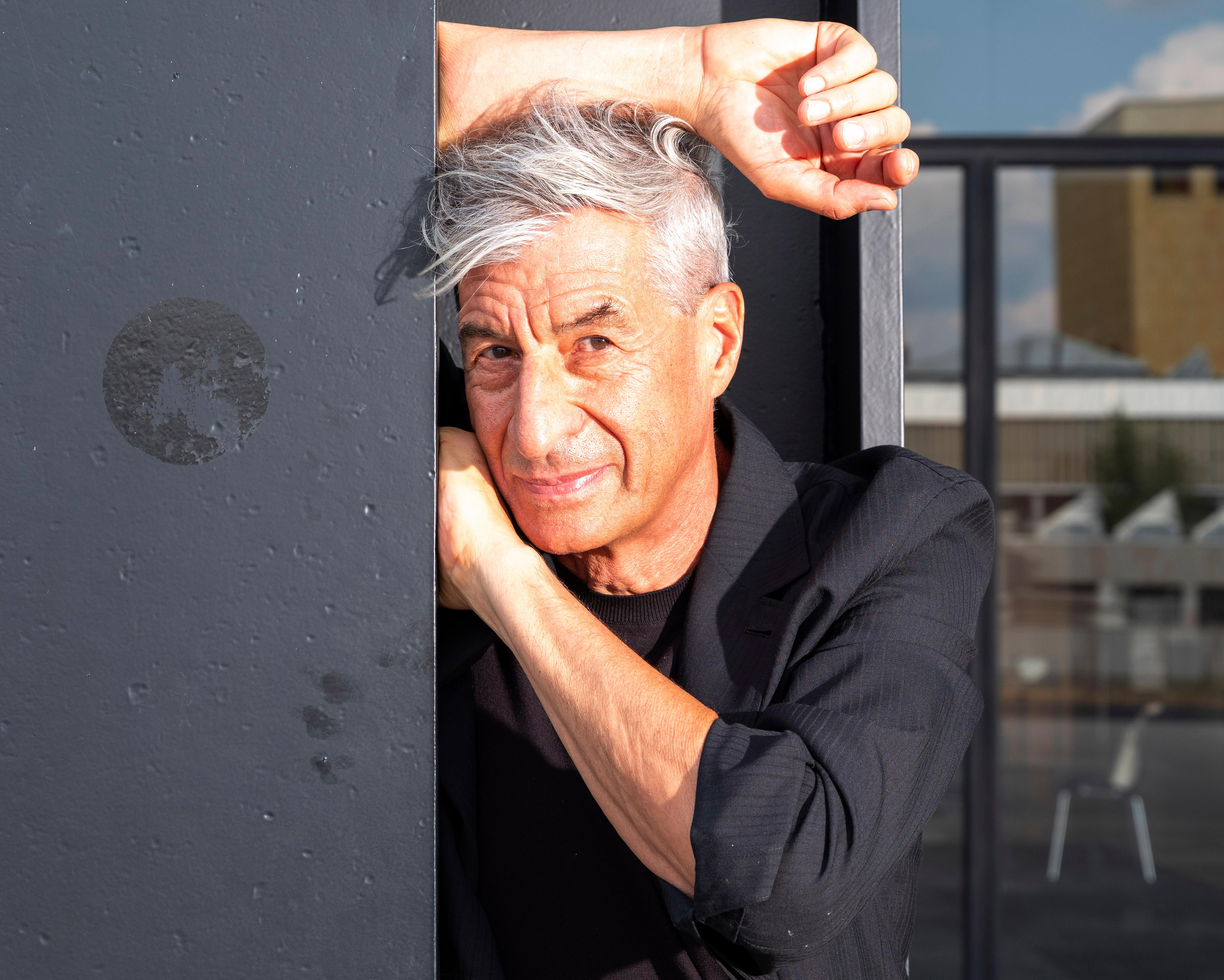
Maurizio Cattelan has opened his first major solo exhibition in Germany, titled *Night*, at the Neue Nationalgalerie in Berlin. The show, awarded to the Italian sculptor as the winner of the Neue Nationalgalerie prize, features new commissions and historic works from the past three decades. Curated in collaboration with Lisa Botti, the exhibition explores themes of power, collective memory, and history, while notably excluding some of the artist’s most famous pieces.
The display includes *Purgatory*, a new commission presenting a stunted-scale version of the Brandenburg Gate, which serves as an ambivalent landmark for visitors to rethink their engagement with European history. This work is positioned alongside *Him*, a 2001 piece featuring a diminutive kneeling figure of Adolf Hitler, and *Dawn*, a 2007 female figure with real human hair in a crucifixion pose. Cattelan described the exhibition’s structure as influenced by the concept of a church, with central axes connecting the works.
Cattelan, who divides his time between New York and Milan, stated that his work is serious despite its humorous appearance. He explained that he skipped over his greatest hits, such as the duct-taped banana *Comedian* and the gold toilet *America*, because they were part of a different conversation. NNG director Klaus Biesenbach noted that Cattelan camouflages seriousness with humour, describing him as a deep thinker who has reached a level of accessibility with his easy-to-communicate ideas.
The artist expressed that he is “extremely desperate” while planning the show, describing the process as a “fix” and a “dependency”. He admitted to suffering during the creation of major exhibitions, yet he loves the rush of the challenge. Cattelan views the Berlin location as a homecoming, referencing his co-curation of the fourth Berlin Biennale in 2006, which Biesenbach described as a “watershed moment” for the city’s creative scene.
The exhibition also features *Never*, a 2003 work depicting Oskar, the child witness from Günter Grass’s novel *The Tin Drum*, beating a drum. Overhead, thousands of stuffed pigeons are absorbed by the black ceiling, which Cattelan describes as a menacing presence, while Botti adds that it is also about the holy spirit and optimism. The show highlights the wane of power and the horror of history, symbolised by the scarred and vibrant host city.
Cattelan believes Berlin still carries scars, history, and contradictions, describing it as a sort of outdoor experiment. He credited the city with helping him recapture part of his youth, noting that Berlin is a place where things can grow overnight and then disappear. The artist, who was born to a working-class family in Padua and had no formal art training, sees the exhibition as a way to have a conversation with the building rather than dominate it.