Markets rally as Trump and Xi conclude Beijing summit with no major deals
Wall Street posted gains at the opening of talks, while Nvidia shares surged on chip sale approval, but the two-day summit ended without significant bilateral agreements.
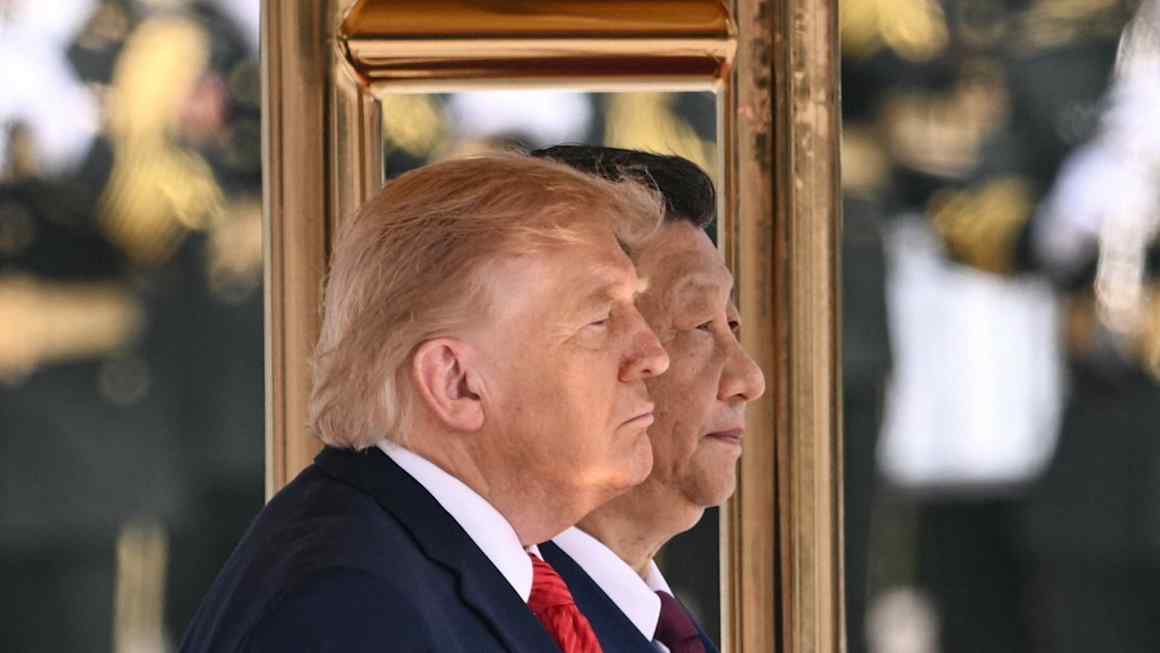
US President Donald Trump has returned to the United States following a two-day summit with Chinese President Xi Jinping in Beijing, marking the first visit by an American president to China since 2017. The talks, which concluded on 15 May 2026, resulted in no significant bilateral agreements, though both leaders expressed hope for more stable ties. The summit occurred against a backdrop of ongoing tensions regarding the war in Iran and the Strait of Hormuz, with Trump seeking Chinese assistance to end the conflict and reopen the straits.
Market participants reacted positively to the commencement of the diplomatic engagement. On 14 May, US stock markets rose as the summit began, with the Dow Jones Industrial Average gaining 0.8%, the S&P 500 rising 0.3%, and the Nasdaq Composite climbing 0.2%. Individual corporate movements also reflected investor sentiment, as Nvidia shares surged more than 2% following US approval of a chip sale. The US delegation included major technology executives, including Elon Musk, Tim Cook, and Jensen Huang, underscoring the intersection of geopolitical strategy and corporate interests.
Despite the positive market reaction, the substantive outcomes of the summit were limited. Trump and Xi established an institutional framework for managing relations, yet the leaders issued divergent accounts of the results. The White House emphasised trade agreements in its post-summit statements, while Chinese accounts focused on the concept of strategic stability. Agenda items had included trade, artificial intelligence, and the Strait of Hormuz, but concrete outcomes on these fronts remained elusive.
Security concerns remained a focal point of the dialogue, particularly regarding regional conflicts. Trump described Xi as a "great leader" and claimed the two "feel very similar" on the desire to end the Iran war. However, Xi Jinping did not mention Iran in his post-summit press remarks. Instead, he issued a specific warning regarding Taiwan, stating that failure to handle the issue properly could lead to clashes and put the entire relationship in jeopardy.
The summit also highlighted ongoing friction in defence cooperation. Trump noted that the US has delayed approval of a weapons package, a point he raised during the talks. While the leaders expressed a shared desire for stability, the unresolved nature of Taiwan and Iran tensions, combined with the lack of major deals, suggests that the new institutional framework will be tested by persistent geopolitical divergences.