Macquarie CEO Shemara Wikramanayake retires amid scrutiny of infrastructure privatisation model
Critics point to high costs and substandard services at assets such as Thames Water and Sydney Airport, arguing that shareholder enrichment came at the expense of the public
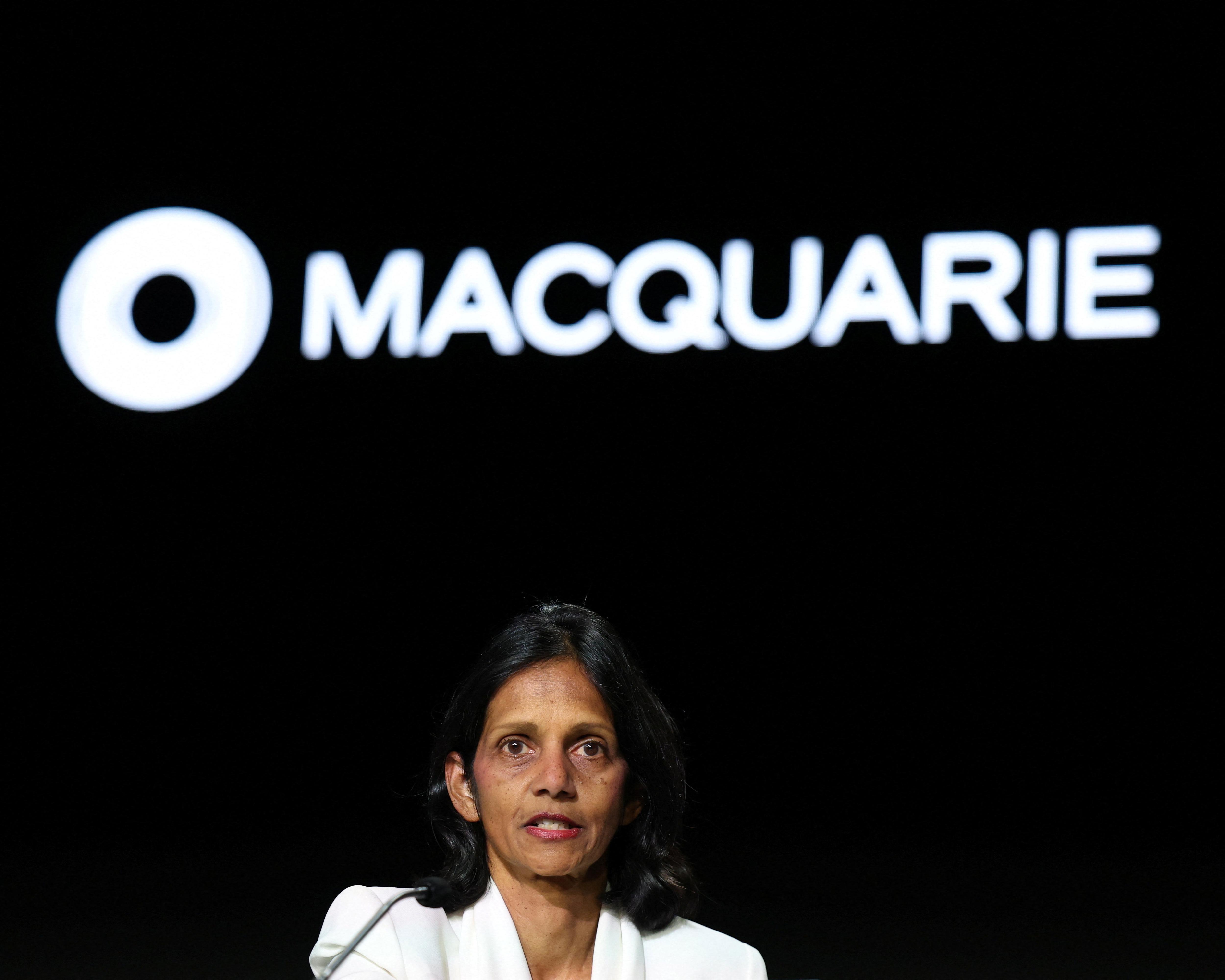
Shemara Wikramanayake has retired as chief executive of Macquarie Group, concluding a tenure of nearly 40 years with the Sydney-based institution. She departs with shares valued in the hundreds of millions of dollars, having overseen a period where the group increased annual revenue by approximately 80% and nearly doubled its profit. Under her leadership, Macquarie transitioned from a specialist in privatised infrastructure to a global merchant bank involved in commodity trading, specialist asset finance, and wealth management.
The retirement has triggered public debate regarding the company’s history of acquiring public assets. Critics argue that the group’s strategy of purchasing utilities and transport networks has resulted in high costs and substandard services for the public while enriching shareholders. Macquarie shareholders have tripled their returns over the past eight years through dividends and capital gains, a performance that contrasts sharply with the experiences of consumers using the assets the bank owned or influenced.
A central point of contention is the group’s involvement with Thames Water in the UK. Acquired by a Macquarie-led consortium in 2006, the utility was loaded with debt and saw billions extracted in dividends before Macquarie sold its stake in 2017. The utility’s performance was described as unsalvageable, leaving the UK government to grapple with its dire state nearly a decade later. With prolonged dry conditions affecting the UK and approximately 23 million people under hosepipe bans, calls for public ownership of the water provider have intensified.
In Australia, the privatisation of Sydney Airport to a Macquarie-led consortium has faced similar scrutiny. The Australian Competition and Consumer Commission has repeatedly identified the airport as a monopoly with ineffectual price monitoring, noting that the consortium promptly raised a wide range of fees and charges. The group was also a pioneer in the private toll road industry, leaving Australian cities with transport systems characterised by a review as a “poorly-functioning patchwork” of costly infrastructure.
The pattern of private sector efficiency rhetoric combined with continued public largesse or high consumer costs extends beyond Macquarie. Other privatisations, including CSL, Qantas, and Telstra, have followed similar trajectories. CSL, created from the Commonwealth Serum Laboratories, saw research on less commercially attractive products scaled down while cashflow from blood plasma contracts funded global acquisitions. Qantas has been noted for prioritising profit maximisation over obligations to the public and employees, while Telstra required the public to buy back the telephone network at massive expense.
There is a noted shift in policy sentiment regarding these deals. Terms such as “financial engineering”, once promoted by Infrastructure Australia and universities, are now viewed with suspicion following failures such as the collapse of Carillion. While ordinary people may respect Wikramanayake’s achievements, the debate over whether the public has paid a sufficient price for the wealth generated by these infrastructure models remains unresolved.