M11 Track Club’s institutional model underpins Hodgkinson’s world record pursuit
As Keely Hodgkinson targets the women’s 800m world record, the M11 Track Club’s expansion into high-level physiological support signals a shift in how British athletics is structured.
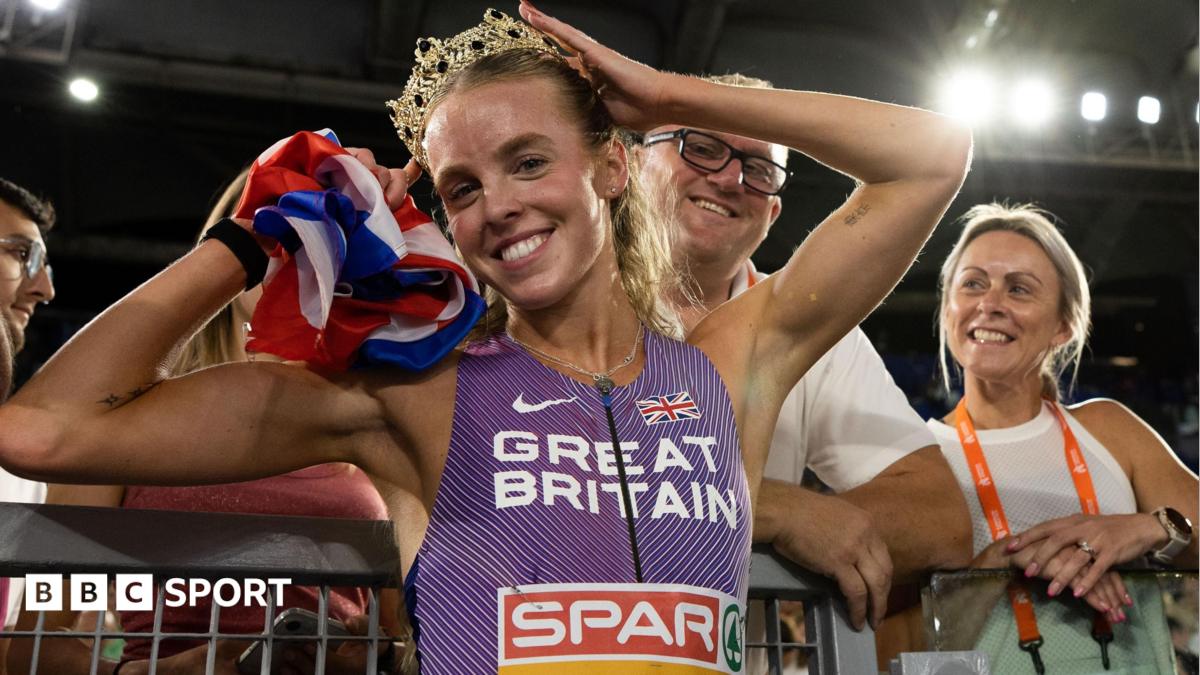
The M11 Track Club in Manchester has evolved from a local training group into a sophisticated performance infrastructure, driven by the coaching philosophy of Trevor Painter and Jenny Meadows. According to a report by BBC Sport, the club’s success with Olympic champion Keely Hodgkinson is rooted in a rigorous, community-oriented environment that prioritises collective resilience over individual ego. The squad, comprising nearly 30 international athletes, operates under a model where intense, lactic-acid-inducing sessions are balanced by a familial support structure designed to sustain high-level performance.
Hodgkinson, who has secured 11 senior international medals since turning professional, attributes her rise to this specific ecosystem. The club’s approach involves brutal training blocks, such as 400m intervals, which have already yielded significant results. Hodgkinson recently set a new British 800m record in Stockholm, clocking a time faster than her previous personal best, although she finished behind Swiss athlete Audrey Werro. This performance occurred before the team began its specific 800m training block, suggesting the current physiological conditioning is already exceeding expectations.
The operational scale of M11 has expanded significantly following the backing of major sponsors. This financial support has enabled the recruitment of additional staff, including an assistant coach, a track-side physiotherapist, and a dedicated physiologist. The appointment of Rachel McCormick in late 2025 marks a strategic shift towards data-driven decision-making. McCormick, who received approximately 180 applications for the role, utilises blood lactate monitoring and smart ring technology to analyse athlete recovery and adaptation, aiming to identify marginal gains without disrupting the group’s established training culture.
A key feature of the M11 model is the integration of teammates who compete in the same events, challenging the notion that middle-distance running is purely an individual sport. Hodgkinson and Georgia Hunter Bell, who won silver in the 800m at the World Championships in Tokyo while Hodgkinson took gold, exemplify this dynamic. Their relationship has strengthened through shared competition and training, with both athletes describing their bond as sisterly. This camaraderie is fostered by coaches who enforce a culture where athletes support each other through exhaustion and injury, ensuring that individual success does not come at the cost of group cohesion.
The pursuit of the women’s 800m world record, currently standing at 1 minute 53.28 seconds set in 1983, is the club’s primary objective. Meadows and Painter have constructed an environment that protects this focus, carefully selecting athletes who possess the character to endure high-intensity training. By combining traditional coaching methods with modern physiological analysis, M11 is positioning Hodgkinson and her peers to challenge long-standing records, demonstrating how institutional support structures can elevate athletic performance in a highly competitive global field.