Liberal Democrats consolidate English local gains while ceding historic Scottish stronghold to SNP
Significant victories in Portsmouth and Richmond upon Thames contrast with a historic defeat in the Shetland Islands, leaving overall support averaging three points lower than recent cycles.
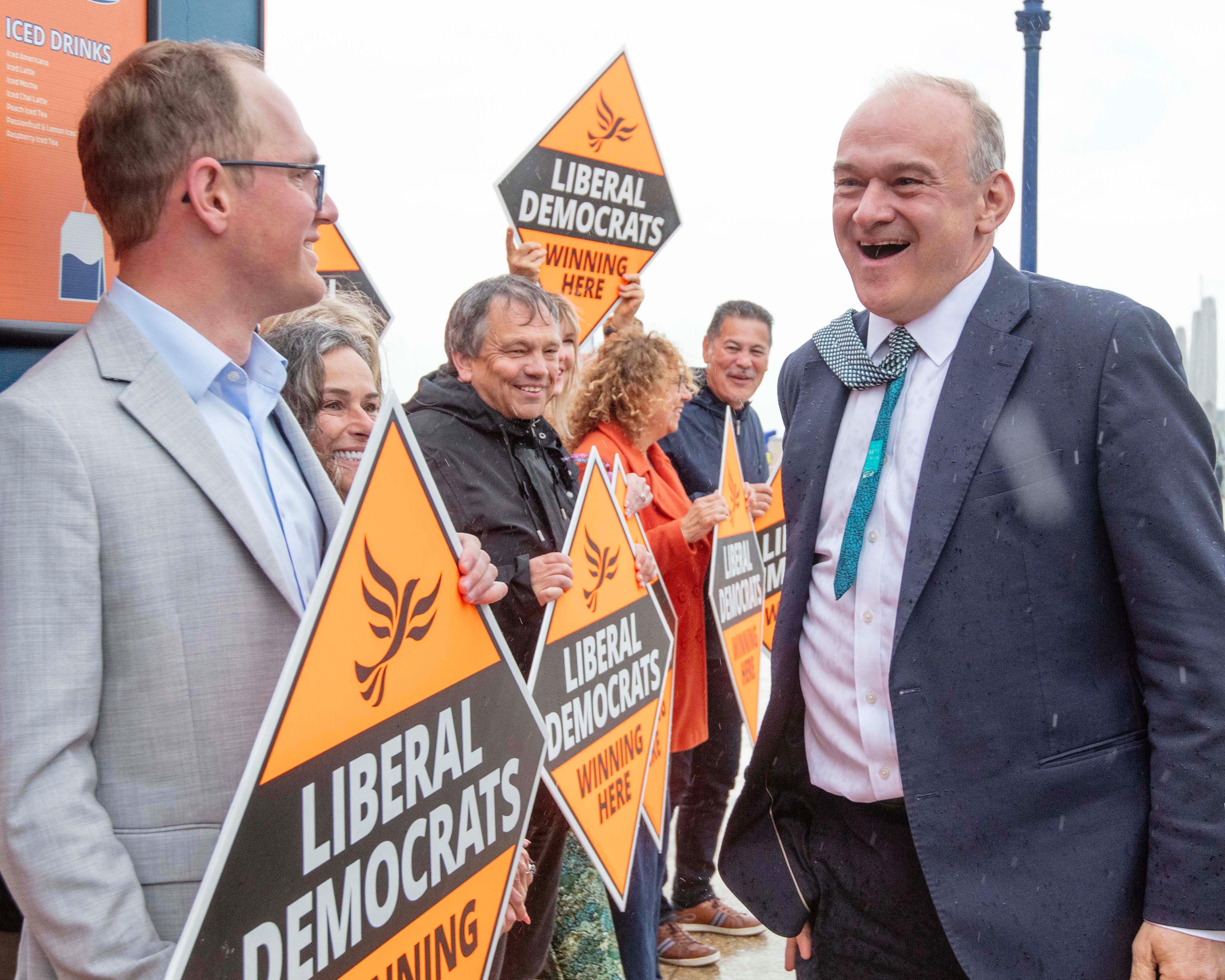
Liberal Democrat leader Ed Davey has characterised the party's recent performance in local elections as evidence that it is best positioned to counter what he describes as the extreme populist shifts offered by both Reform UK and the Greens. While the party secured tangible victories in England, including control of Portsmouth city council and a complete sweep of all 54 seats in Richmond upon Thames, London, these gains occurred against a backdrop of declining overall support. Analysis of the results indicates that the Liberal Democrats' average support was three percentage points lower than recorded in the 2022 and 2024 elections.
The party's success in England was marked by a clinical efficiency in converting votes into seats, particularly in affluent areas where traditional Green voters appear anxious about the new direction of their party. In Richmond upon Thames, the Liberal Democrats gained five councillors, all of whom were previously representing the Greens, to take full control of the borough. Similarly, in Portsmouth, the party seized control of the city council, ending a period of no overall control and capitalising on an anti-incumbent mood that has seen voters weary of both the Conservatives and Labour.
Despite these English successes, the party suffered a significant territorial loss in Scotland. The Scottish National Party won the Shetland Islands seat from the Liberal Democrats, bringing an end to 75 years of continuous representation there by the party. This result stands in stark contrast to nearby Orkney, where Liberal Democrat candidate Liam McArthur retained the MSP seat with a record 70 per cent of the vote, marking the biggest share in the Scottish parliament's history.
In other English constituencies, the Liberal Democrats held their ground against a surge from Reform UK in Hull, where the party narrowly lost majority control but maintained a presence. Further advances were recorded in Sutton, where the party now holds 51 of 55 seats following the loss of all 20 Conservative councillors, and in West Surrey, a traditional Conservative stronghold where the party is set to take control of the unitary authority.
Speaking in Portsmouth, Mr Davey argued that voters are seeking a different form of change that aligns with British values of tolerance, decency, and respect for the rule of law. He contrasted this with the "burn it all down" approach he attributes to Reform and the Greens, positioning his party's "build it up" strategy as a more viable alternative for those seeking to turn around the economy and defence. The Guardian Politics report notes that while the party has made inroads into heartland areas where former Tory voters are seeking a new political home, the overall decline in support suggests challenges remain in translating local momentum into national gains.