Lego expands Smart Play ecosystem with Pokémon battle sets
The new 12-set range launches on 1 August, offering two all-in-one kits and ten compatible options that require separate Smart Bricks to function.
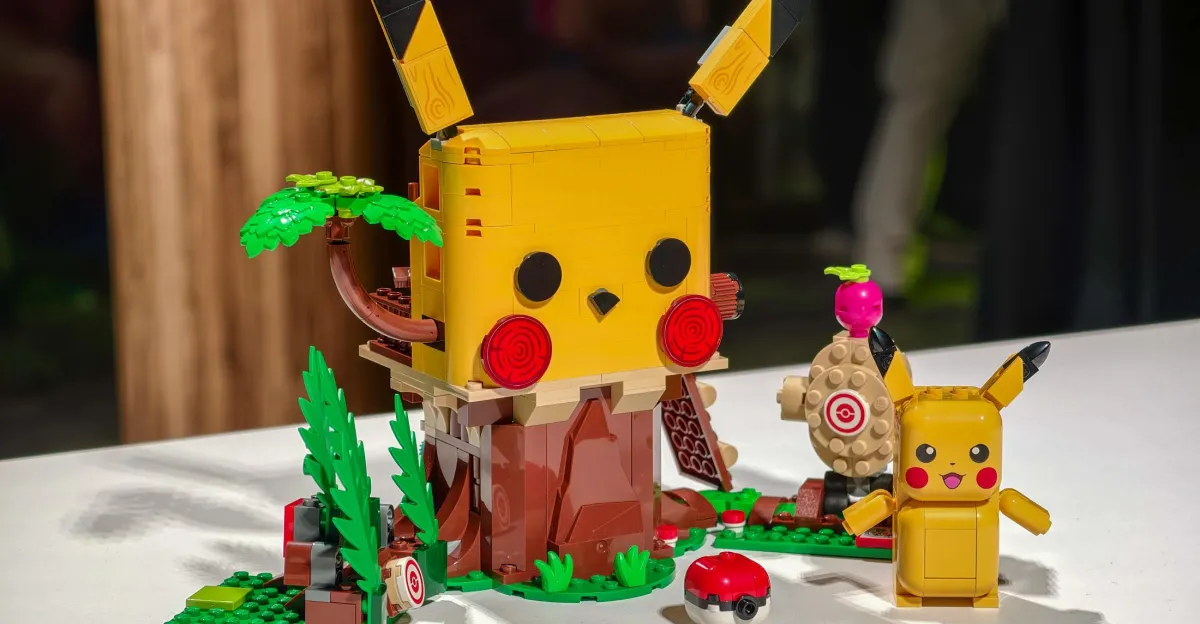
Lego has announced 12 new Smart Play Pokémon sets, marking the second generation of its Smart Bricks technology and scheduled for release on 1 August. The announcement follows the March launch of the first-generation Star Wars sets, which faced criticism for delivering limited interactivity compared to the advanced features showcased at CES earlier in the year. The new Pokémon range aims to address these gaps by introducing complex battle mechanics and training modes, although the company acknowledges remaining technical hurdles regarding audio localisation and memory.
The product line is divided into two categories: two "all-in-one" kits and ten "compatible" sets. The all-in-one options, priced at $69.99 for the Pikachu treehouse and $119.99 for the Charizard and Jolteon battle set, include the necessary Smart Bricks and chargers. The remaining ten sets, ranging from an $14.99 Jigglypuff kit to an $89.99 Cubone and Gengar battle pack, contain Smart Tags but require purchasers to buy separate Smart Bricks to activate the interactive features.
Interactive combat is the primary new feature, triggered by shaking two Smart Brick-connected figures together. This action initiates a battle mode where users can execute attacks by thrusting the figures, charge stronger moves by holding them back, or dodge by pulling them away. Federico Begher, Lego’s SVP of product and marketing development, stated that the mechanics are intentionally simple to avoid overwhelming children, focusing on a "sweet spot" of open-ended play rather than replicating the turn-based complexity of the video games.
Behind the scenes, the sets utilise type advantages and inherent strength differences, with a runtime synthesizer generating elemental sound effects such as electricity or water rushes. However, the figures do not produce specific character voice lines due to the Smart Brick’s memory constraints and the challenges of global localisation. As Pokémon names vary by region, such as Squirtle being known as Zenigame in Japan, Lego opted for generic sounds to ensure the toys function correctly across all markets without requiring software updates for different languages.
Training mode allows Pokémon to temporarily level up by tapping against targets or waving in the air, boosting their stats for subsequent battles. These stat increases are not permanent and reset when the Smart Brick is removed or the battery dies. The sets range from 88 pieces to 831 pieces, with age ratings from six to ten years old, and have undergone rigorous playtesting to ensure durability despite the physical nature of the battle mechanics.
