Lakers face elimination as Thunder's process-driven model exposes flaws in LA's superstar strategy
Despite Austin Reaves' rapid return from injury, the Lakers' top-heavy roster construction struggles against the Thunder's cohesive, intentional assembly.
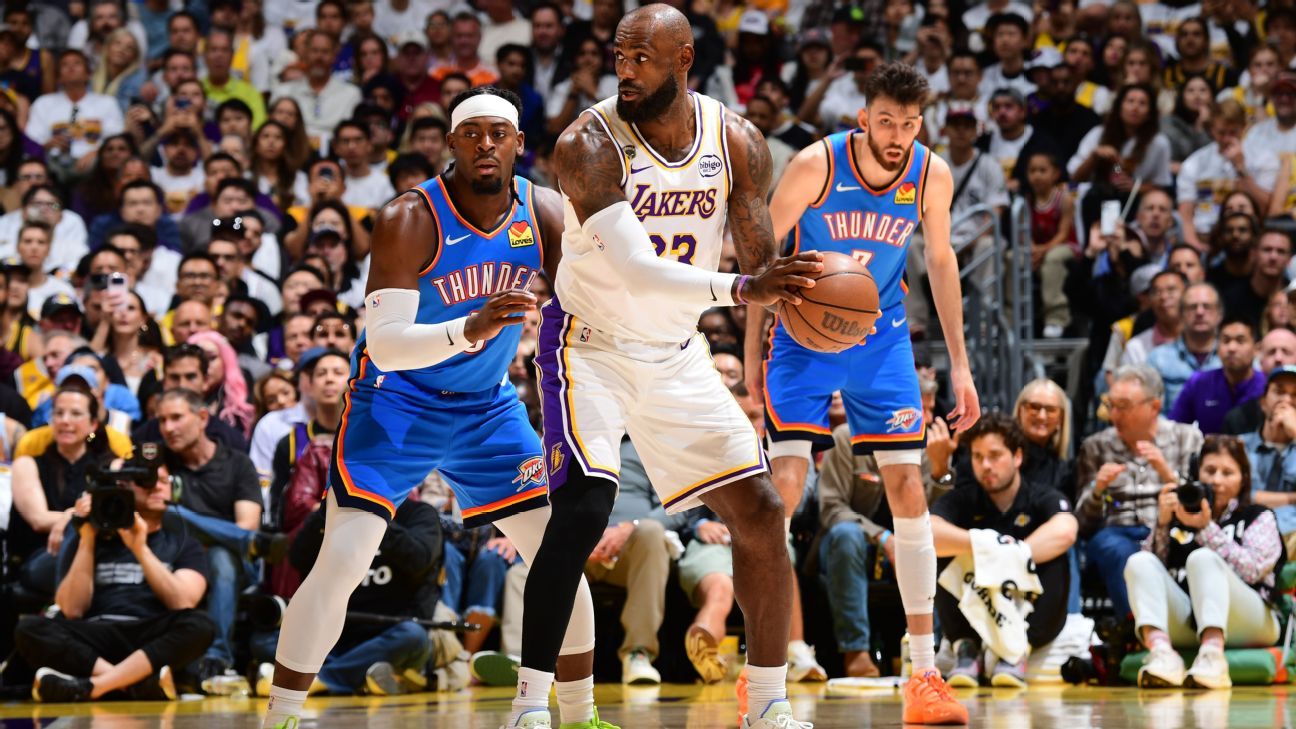
The Los Angeles Lakers face elimination after falling 3-0 to the Oklahoma City Thunder in the NBA playoffs, a deficit that underscores a fundamental divergence in roster philosophy. The series has highlighted a strategic contrast between the Lakers' reliance on a top-heavy lineup of superstars and the Thunder's cohesive, process-driven approach to team construction.
In Game 3 at Crypto.com Arena, the Thunder defeated the Lakers 131-108, with Shai Gilgeous-Alexander scoring 23 points. The victory was bolstered by a dominant two-big lineup featuring Chet Holmgren and Isaiah Hartenstein, who combined for 64 points in the paint, a figure tied for the franchise's most in a playoff game since moving to Oklahoma City in 2008.
Lakers star Austin Reaves returned to the lineup after a four-week recovery from a Grade 2 oblique muscle tear, utilising hyperbaric therapy at UCLA Medical Center. Although Reaves had initially been expected to miss until the conference finals, his return has not been enough to contain the Thunder's depth and versatility, exposing gaps around the Lakers' core trio of LeBron James, Reaves, and Luka Doncic.
Lakers forward LeBron James acknowledged the difficulty of the task ahead, noting that the Thunder's ability to "shape shift" and remain productive regardless of lineup changes means "everything and more" is required to beat them. Despite the Lakers slowing down Gilgeous-Alexander's scoring output to an average of 21 points per game in the first three contests, the Thunder's overall production has overwhelmed the Lakers' roster.
Thunder guard Alex Caruso, who was traded to the Thunder before the season, highlighted the contrast between the Lakers' ad hoc roster building and the Thunder's intentional assembly. Caruso compared the Thunder's cohesion to historic dynasties such as the 2015-17 Golden State Warriors and the 1995-97 Chicago Bulls, emphasising that their success stems from an everyday process rather than one-off adjustments.
Caruso, a key role player on the 2020 Lakers championship team, noted that while the star-led model worked in the past, the organisation did not consider it sustainable. He observed that the Thunder lost for a couple of years before finding players to build around, selecting them one by one to fit specific roles, a methodology that has resulted in seamless integration between starters and backups.
The series outcome suggests that the Lakers' strategy of recruiting and retaining superstars to lead the team to championships, a model that worked well in previous decades, is now being challenged by teams built on depth and culture.