Lake Chala sediment analysis challenges Mount Toba extinction theory
High-resolution varve data from East Africa indicates the 74,000-year-old event resulted in less than two years of 0.5-degree Celsius cooling, well within natural climate variability.
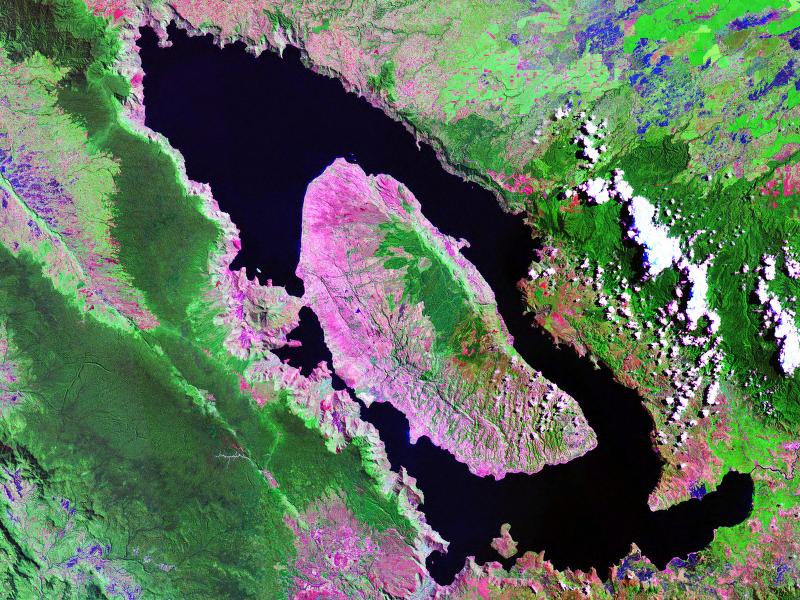
A study published in Science Advances by researchers led by Jinheum Park at Johannes Gutenberg University has reassessed the climatic impact of the Mount Toba eruption, challenging the long-held "Toba catastrophe theory." The research, which analysed high-resolution sediment cores from Lake Chala on the Kenya-Tanzania border, indicates the super-eruption approximately 74,000 years ago caused minimal climate disruption. Contrary to theories that the event nearly wiped out the human species, the data suggests the eruption resulted in only about 0.5 degrees Celsius of cooling lasting less than two years.
Previous estimates of the eruption’s severity relied on computer models with widely varying assumptions regarding sulfur output, leading to predictions ranging from a near-extinction-level event to a mild nuisance. Standard sediment cores often lack the resolution to capture such abrupt events, as materials from different years mix together. To overcome this, the team utilised annual varves in Lake Chala’s deep, oxygen-starved waters, which act as a high-resolution climate recorder similar to tree rings. This allowed for precise dating and analysis of the sediment layers deposited during the event.
The analysis identified a microscopic layer of volcanic ash, only 0.3 millimetres thick, containing glass shards that confirmed direct ash fall rather than redeposition. Following the ash deposition, the team observed green films in the sediment, interpreted as a stress response from diatoms due to dimmed skies. This was followed by a significant diatom bloom in the subsequent dry season, driven by deep mixing in the chilled lake. By the third year, the sediment layers returned to their typical pattern, indicating a rapid recovery.
Using elemental ratios of silicon-to-aluminum and manganese-to-iron, the researchers estimated the magnitude of the cooling. They determined that if the region had cooled by 2 to 3 degrees Celsius, the lake’s annual records would have been disrupted by nutrient depletion. Instead, the observed changes were within the natural range of variation seen in the last glacial–interglacial cycles. The team concluded that early humans had already survived similar climatic conditions, meaning the eruption did not pose a significant threat to their survival.
The study also provided a more precise timeline for the eruption, placing it in January or February of the southern summer. This timing likely caused sulfate aerosols to drift northwards, thinning over Africa sooner than if the eruption had occurred in the northern summer. While the Northern Hemisphere’s landmasses would have cooled more rapidly, the overall impact remains classified as a mild disaster compared to broader climate trends. The researchers hope to apply these high-resolution methods to other super-eruptions, such as Los Chocoyos in Guatemala and Oruanui in New Zealand.
