KARI releases first images of SpaceX Falcon 9 impact crater on the Moon
The Korea Aerospace Research Institute has shared visual evidence of the collision, while SpaceX cites mission constraints as the reason controlled deorbiting was not possible.
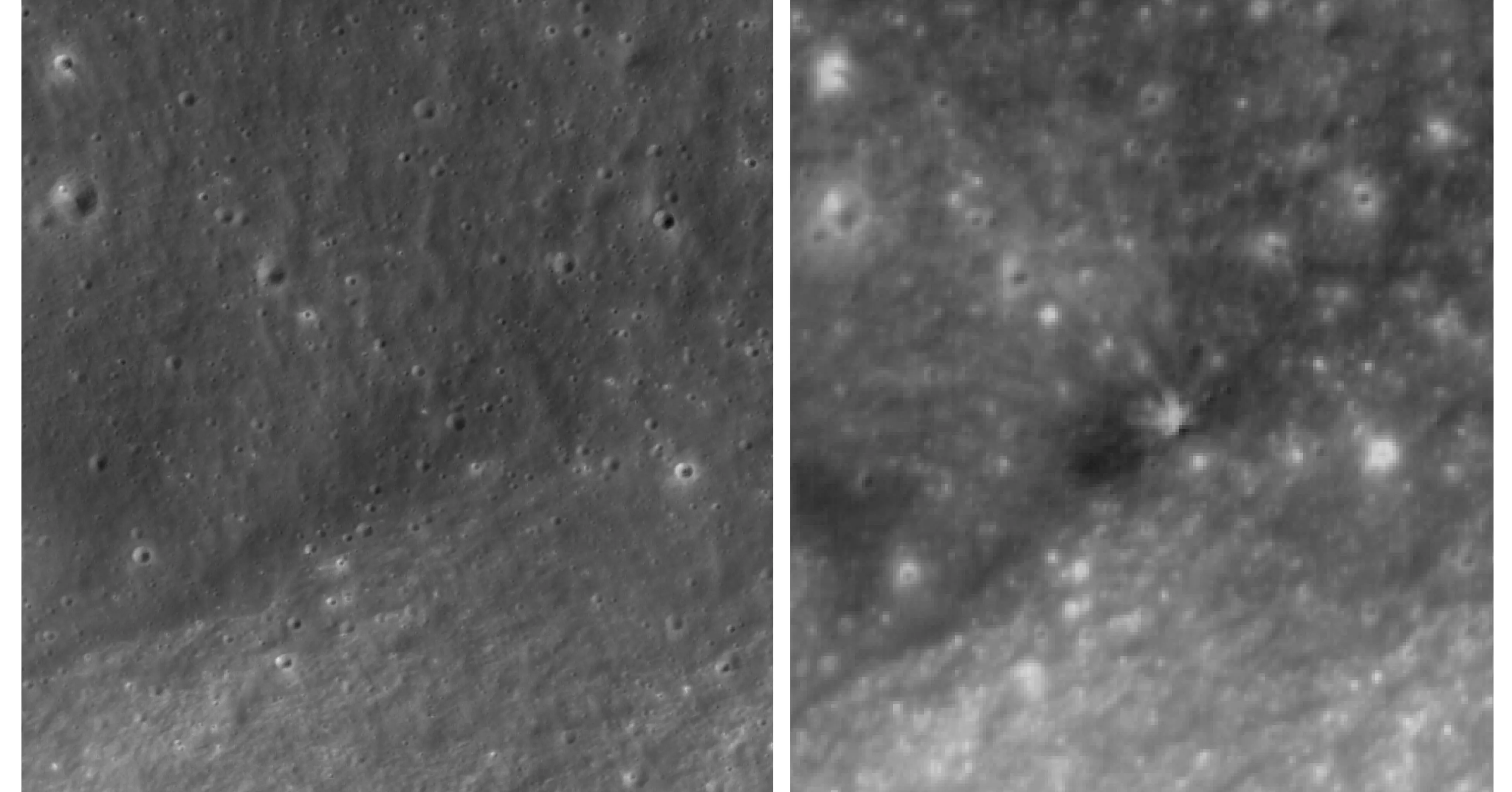
The Korea Aerospace Research Institute (KARI) has released the first images of a crater on the Moon’s surface caused by the impact of a SpaceX Falcon 9 rocket stage. The photographs, captured by the Danuri lunar orbiter, show a depression approximately 12 feet (3.6 metres) deep and dozens of feet wide. The impact occurred after the rocket stage, launched in January 2025, remained in an unstable orbit for over a year before solar activity and gravity deflected it towards the lunar surface. The event was confirmed by sodium and lithium detections from the Very Large Telescope. SpaceX stated that controlled deorbiting is not always possible for high-energy missions and that it is collaborating with NASA to find optimal disposal solutions.
The Danuri orbiter, which operates at an altitude of 62 miles (100 kilometres) above the surface, flew over the region shortly after the collision. KARI explained that it photographed the site both before and after the event, providing visual confirmation that aligns with previous spectral data. The resulting crater is described as larger than several cars combined, though it remains small relative to the Moon’s 2,160-mile diameter.
Astronomers had projected the impact well in advance, and the visual evidence supports earlier detections of sodium and lithium rising from the lunar surface. While NASA and other agencies had warned that observing the moment of impact would be difficult due to weather and timing, the Danuri images offer a clear view of the aftermath. Higher-resolution images may become available in the coming days following data checks, though a granular view is unlikely.
The rocket fragment had been in an unstable orbit for more than a year after completing its mission to deliver lunar landers. During this time, the gravity of the Earth, Moon, and Sun slowly altered its trajectory until it eventually struck the lunar surface. The event highlights the challenges of managing space debris in high-energy orbits where disposal maneuvers are not feasible.
SpaceX clarified that for higher-energy missions, nearly all vehicle performance is dedicated to payload placement, making controlled deorbiting difficult. The company stated it is actively working to be responsible with hardware left in space and is collaborating with NASA to find optimal disposal solutions. Impacts like this are rare but can occur with objects in these types of orbits.
