Jury Trial Unveils Founding Documents in Elon Musk Lawsuit Over OpenAI Mission
A California federal courtroom has begun presenting evidence from 2015 and 2017 that details how Elon Musk shaped OpenAI's governance and mission, while highlighting conflicts over absolute control versus distributed power.
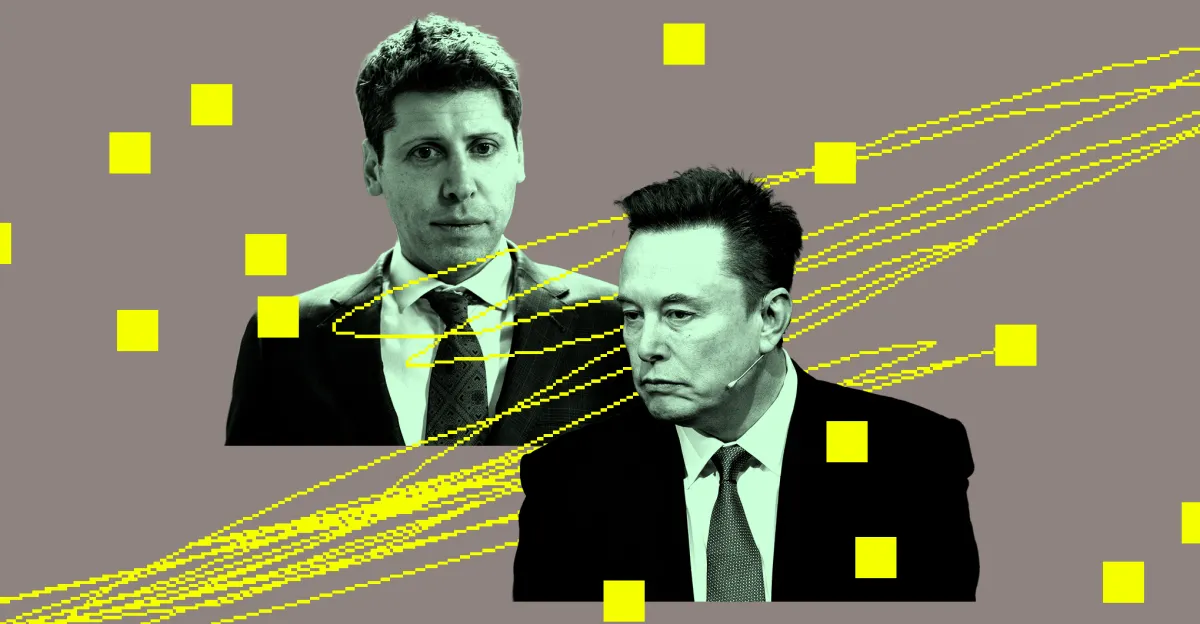
A jury trial concerning Elon Musk's lawsuit against Sam Altman, Greg Brockman, and Microsoft has commenced in a California federal courtroom. Prosecutors have begun unveiling a series of exhibits, including emails, corporate documents, and photographs, that detail the founding of OpenAI. The core legal dispute centres on allegations that the defendants breached OpenAI's charitable trust, committed fraud, and achieved unjust enrichment by deviating from the company's founding mission to ensure artificial general intelligence benefits all of humanity.
Documents from 2015 show Musk heavily influenced the company's mission and structure. Email exchanges from June, October, and November 2015 reveal that Musk heavily drafted OpenAI's initial mission statement and governance structure. While Sam Altman proposed a five-part plan involving a foundation model, Musk insisted on significant involvement, suggesting he would dedicate time despite his other commitments to SpaceX and Tesla. His original drafts for the mission statement emphasised creating digital intelligence that would be freely available to all, contrasting with the approach taken by DeepMind.
Internal communications from August 2017 highlight a major conflict between Musk and early executives. Notes from Musk's chief of staff, Shivon Zilis, reveal that executives like Brockman and Ilya Sutskever feared Musk's desire for absolute control and an ironclad agreement to prevent any single person from dominating AGI development. They sought a scenario where power over the company was distributed after an initial period, regardless of the fates of the founders. Musk reportedly responded to these concerns by stating, This is very annoying. Please encourage them to go start a company. I've had enough.
The equity structure established in September 2017 further illustrates the dynamic between the parties. An email from Musk's family office manager shows Musk holding a 51.20 per cent equity stake, with Altman, Sutskever, and Brockman each holding 11.01 per cent. This distribution was central to the discussions regarding governance and control that preceded the formal establishment of the nonprofit corporation.
In April 2016, Musk requested an early Nvidia supercomputer for OpenAI, explicitly distinguishing the non-profit from Tesla. Nvidia CEO Jensen Huang confirmed the donation, and photos show Musk present when the hardware was delivered. This support was part of Musk's broader involvement in the lab's early infrastructure, separate from his commercial ventures.
The lawsuit alleges that the defendants deviated from the goal of making AGI benefits available to all humanity. The outcome of this jury trial could have significant implications for how OpenAI runs its business and controls its quickly advancing technology, particularly as both OpenAI and SpaceX are reportedly racing to go public this year.
