Japan and South Korea move to formalise energy security pact
Prime Minister Sanae Takaichi and President Lee Jae-myung are adjusting frameworks for a new bilateral mechanism to share petroleum products during crises, as geopolitical instability in the Middle East raises concerns over oil supply chains.
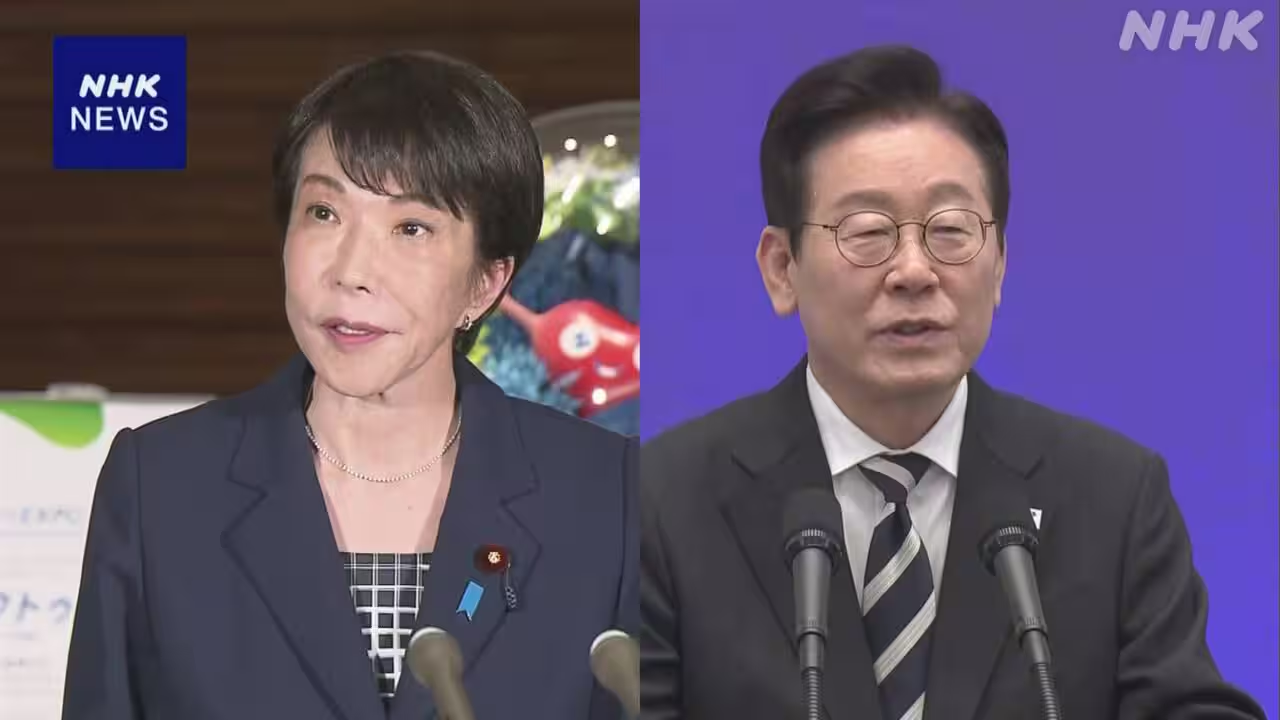
Japanese Prime Minister Sanae Takaichi visited South Korea on 19 May for a summit with President Lee Jae-myung, where the two leaders agreed to adjust the establishment of a "policy dialogue" aimed at concretising energy cooperation. The proposed framework is designed to operationalise bilateral ties, with a specific focus on the mutual sharing of petroleum products during crisis situations.
The announcement comes against a backdrop of heightened geopolitical tension, particularly regarding the situation in Iran and the potential for military conflict in the Middle East. These developments have triggered concerns about oil price hikes and their subsequent impact on the Japanese economy and consumer prices, prompting a reassessment of energy security protocols between the two nations.
While the specific mechanisms for the policy dialogue are still being adjusted, the core objective is to ensure stability in energy supplies. The cooperation explicitly includes provisions for sharing petroleum products, a measure intended to mitigate risks associated with supply chain disruptions in the region, including the Strait of Hormuz.
This diplomatic effort marks a shift towards more structured institutional cooperation on energy security. Previous bilateral engagements have included cooperation on other issues, such as the DNA identification of remains from the Chosei Coal Mine in Yamaguchi, but this summit specifically targets the operationalisation of energy ties in response to current global economic risks.
The timing of the summit coincides with broader discussions on global economic stability, including the G7 Finance Ministers and Central Bank Governors meeting, which is addressing risks such as AI and inflation. The Japan-South Korea initiative reflects a pragmatic response to the fluid nature of regional energy stability, aiming to create a formalised channel for crisis management.
As negotiations continue, the exact scope and timeline for the implementation of the policy dialogue remain to be finalised. The leaders have indicated that the framework is in an adjusting phase, with details regarding the triggers for activation and quantities of shared resources yet to be disclosed.
The move underscores the growing interdependence of energy security in East Asia, as both nations seek to insulate their economies from external shocks. By formalising a dialogue on petroleum sharing, Japan and South Korea are laying the groundwork for a more resilient bilateral energy policy in an increasingly volatile global environment.