James Webb telescope produces most detailed map of cosmic web to date
Researchers from the University of California, Riverside have utilised the space observatory to resolve previously smoothed-out structures, enabling new investigations into galaxy evolution across cosmic time.
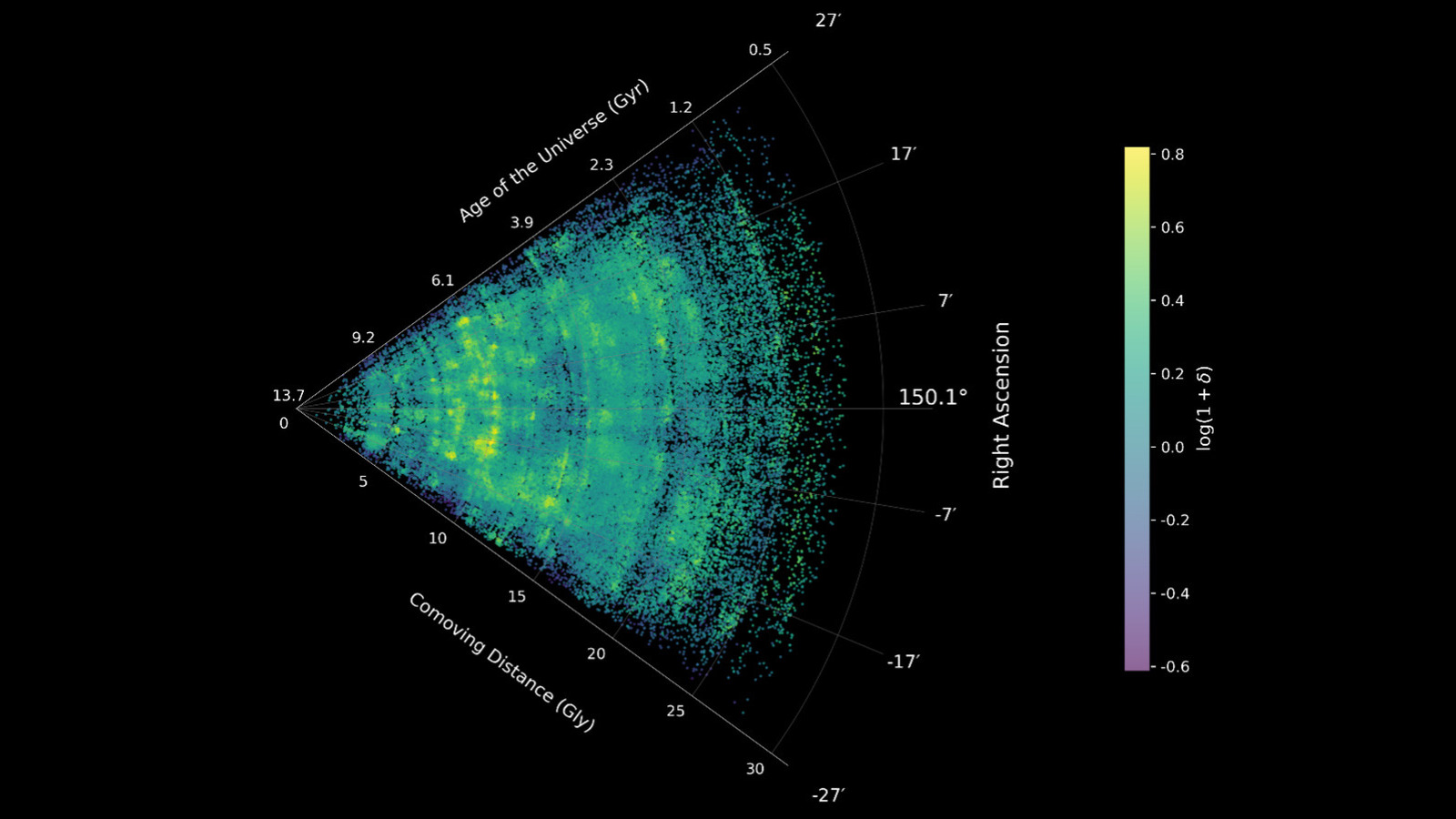
Astronomers have successfully utilised the James Webb Space Telescope to generate the most detailed map to date of the cosmic web. This new survey reveals the underlying architecture of the cosmos, consisting of dark matter, gas, and filaments that link galaxies and clusters into a single, intricate network. The research, led by Bahram Mobasher and Hossein Hatamnia from the University of California, Riverside, allows scientists to observe these structures when the universe was only a few hundred million years old.
The findings, which were published in The Astrophysical Journal, represent a significant leap in depth and resolution. Mobasher, a professor at the University of California, Riverside and an investigator on the study, noted that details previously smoothed away are now clearly visible. He stated that what used to appear as a single structure now resolves into many distinct components, marking a major shift in how the foundational structure of the cosmos is understood.
This enhanced clarity enables researchers to study the evolution of galaxies within cluster and filamentary structures across cosmic time. The new data spans from when the universe was a billion years old up to the nearby universe. The era of observation, dating back to when the universe was only a few hundred million years old, was previously essentially out of reach for such detailed mapping, making this breakthrough particularly significant for the field.
The cosmic web is described as the foundational structure of the cosmos, forming an intricate, far-reaching network that connects larger entities in space. While the James Webb Space Telescope is renowned for capturing high-resolution images that aid in scientific investigation beyond mere aesthetics, this specific application focuses on structural analysis rather than just visual beauty. The study resolves previously smoothed-out details, showing that structures which once appeared singular now appear as many distinct components.
The academic paper covering the development of this survey was published in The Astrophysical Journal. It highlights the utility of the telescope in moving beyond aesthetic appreciation to rigorous scientific inquiry regarding the universe's history. By providing a clearer view of the early universe, the study offers new avenues for understanding how galaxies have evolved over billions of years within the vast web of space.
