Isar Aerospace reaches orbit with Europe’s first fully commercial rocket
The German company’s Spectrum rocket reached low-Earth orbit from Norway on its second flight, carrying five CubeSats and a technology experiment.
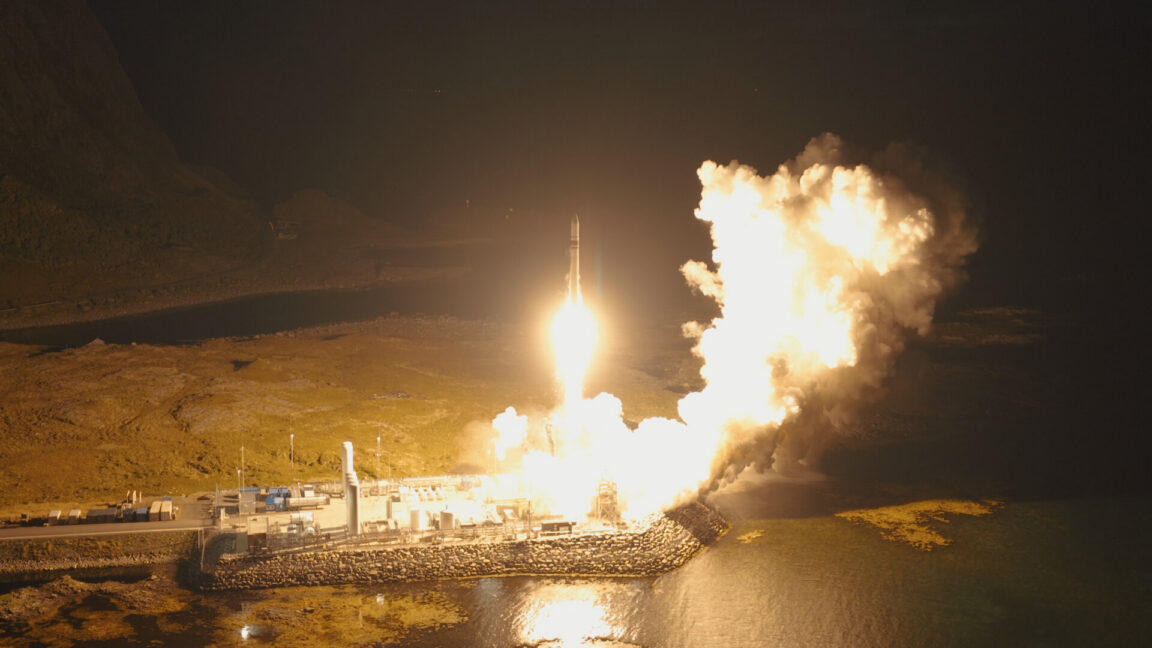
Isar Aerospace has reached low-Earth orbit with its Spectrum rocket, marking what the company and Ars Technica described as the first fully commercial European launch vehicle to achieve the milestone. The rocket lifted off from Andøya Spaceport in northern Norway and reached orbit about seven minutes later.
Spectrum carried five CubeSats and a technology experiment. Isar said at least one CubeSat had contacted ground teams, although the supplied material does not independently confirm the condition or deployment of all payloads. The company also did not immediately specify the mission’s final orbital altitude or inclination.
The flight was Spectrum’s second. Its first test launch, in March 2025, failed less than 20 seconds after liftoff following a loss of attitude control. Engineers attributed that failure to an unintentionally opened vent valve.
The result strengthens Isar’s position among European launch start-ups competing with established providers such as Arianespace and Avio. Spectrum is designed to carry up to one metric tonne to low-Earth orbit, placing it above Rocket Lab’s Electron and below Avio’s Vega-C in reported capability.
Isar, founded in 2018 by three Technical University of Munich students, has raised roughly US$1 billion and employs nearly 500 people. The European Space Agency recently awarded the company a €197.8 million contract through its European Launcher Challenge.
The company has five more Spectrum rockets in production and plans a factory near Munich with capacity for up to 40 vehicles a year. It is targeting launch prices of about US$10 million to US$15 million, while exploring future launch sites in Canada and French Guiana. Those production, pricing and expansion plans remain targets rather than achieved outcomes.