Iran reports move to introduce Strait of Hormuz insurance as US holds firm
Reports from NHK News Japan indicate Iran is seeking to implement a domestic insurance scheme for the critical waterway, while the United States maintains a hardline stance, leaving prospects for de-escalation unclear.
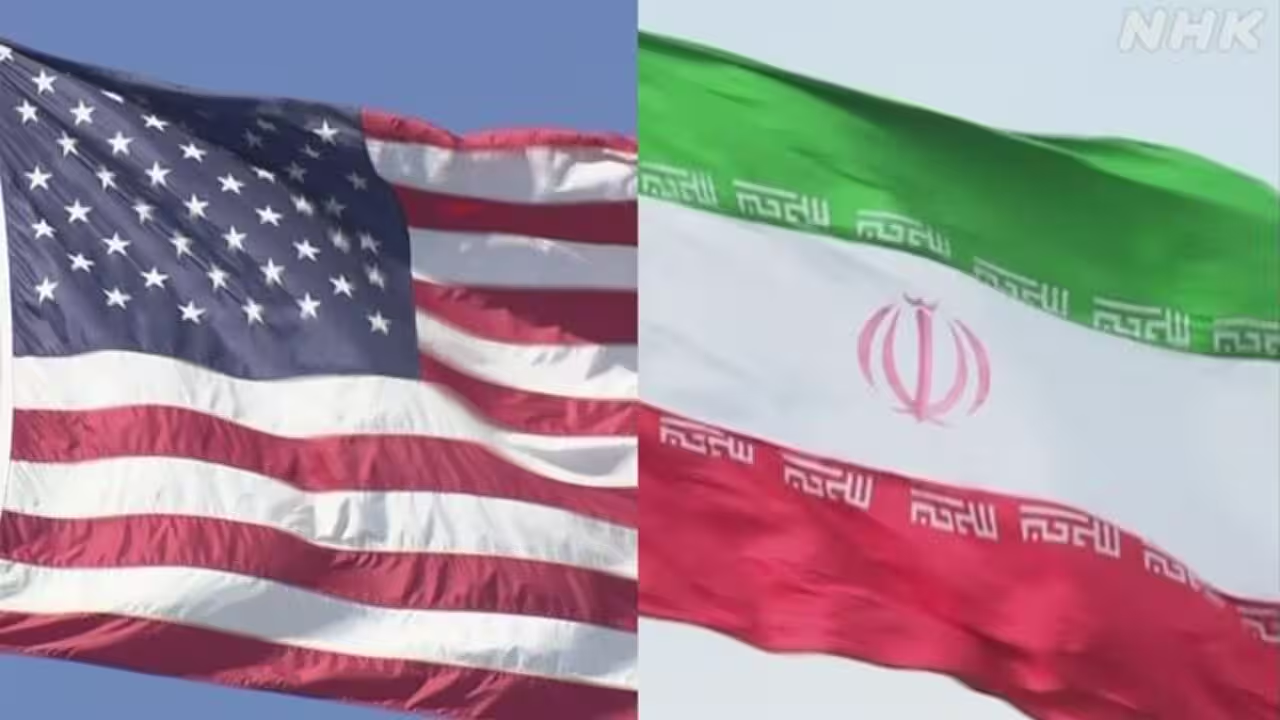
Amid ongoing uncertainty regarding the broader situation in Iran, reports indicate that Tehran is seeking to strengthen its control over the Strait of Hormuz by introducing its own insurance scheme. The move, reported by NHK News Japan on 17 May 2026, suggests an attempt to further consolidate management of the vital maritime chokepoint, which serves as a critical artery for global oil and gas shipments.
The proposed insurance mechanism represents a significant shift in how the waterway is administered, potentially altering the risk landscape for international shipping. While specific details regarding the scope, mandatory nature, or enforcement mechanisms of the scheme remain unverified in the source material, the reported intent signals a hardening of Iran’s position on regional security and economic leverage.
Concurrently, the United States has not softened its tough stance on the issue. According to the report, Washington maintains a hardline approach, showing no signs of compromise or willingness to engage in concessions that might facilitate a resolution. This entrenched diplomatic posture contributes to a broader stagnation in negotiations, with prospects for progress or de-escalation remaining unclear.
The development occurs against a backdrop of unresolved tensions, where unilateral changes to management protocols are viewed as geopolitically significant. The combination of Iran’s reported administrative moves and the US’s refusal to adjust its strategy underscores the complexity of the current standoff, leaving the future trajectory of the Strait of Hormuz in a state of flux.
As both sides maintain their respective positions, the immediate outlook for diplomatic engagement remains constrained. The lack of clarity surrounding the specifics of Iran’s insurance proposal, coupled with the rigid US stance, suggests that any near-term progress in stabilising the region’s most critical energy corridor is unlikely.