Iran inflation hits 77.2 per cent amid war, blockade and currency reforms
The elimination of preferential exchange rates, a naval blockade, and the US-Israeli 'Ramadan War' have triggered a 'perfect economic storm', leaving fixed-income earners below the poverty line and merchants facing bankruptcy.
Iran’s annual inflation rate reached 77.2 per cent between 21 April and 20 May, marking the highest level recorded since 1942, according to a report by the Central Bank of Iran. The surge, which includes a point-to-point inflation rate for goods of 113 per cent, reflects a severe contraction in purchasing power driven by a convergence of geopolitical conflict, maritime restrictions, and domestic economic reforms.
Arman Khaleghi, head of Iran’s Chamber of Commerce, Industries and Mines, described the crisis as a "perfect economic storm" resulting from five simultaneous factors. These include the removal of subsidised exchange rates for basic goods, early-year protests that disrupted market stability, the US-Israeli 'Ramadan War', annual increases in wages and energy prices, and a naval blockade that has hindered import and export chains.
Khaleghi noted that the elimination of preferential currency rates caused food prices to soar, while the war created a "panic-driven demand engine." Consumers rushed to hoard basic goods such as food and detergents despite no real shortage in the markets. This behaviour triggered production shocks in primary industries, particularly petrochemicals and steel, which increased packaging costs for food, pharmaceutical, and detergent sectors, transmitting inflation from factories to store shelves.
The maritime blockade has further compounded the crisis by making cargo travel perilous. Khaleghi stated that even news of ships being targeted raises prices, while actual difficulties have forced reliance on more expensive land routes. This has created a sense of impending scarcity, plunging the import process into uncertainty and driving prices to levels unseen in decades.
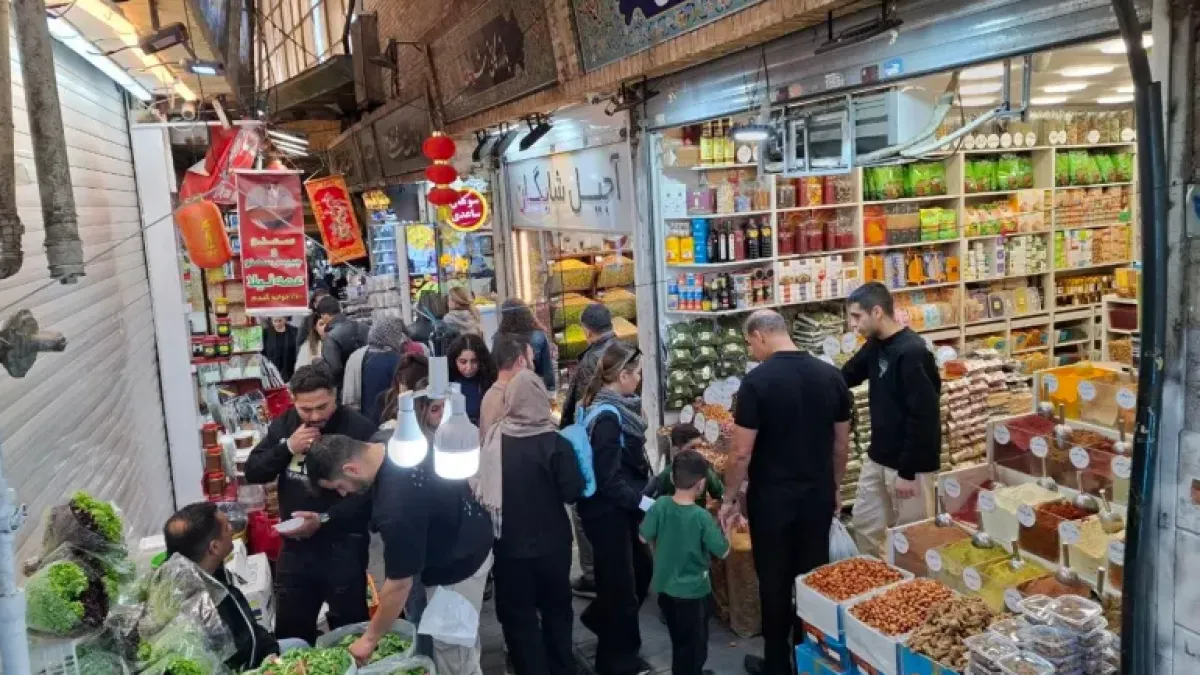
The impact on households has been immediate and severe. In Tehran’s Bastan market, retirees and workers report that fixed incomes no longer cover basic expenses. One retiree noted that rice prices have tripled from approximately 1.8 million rials to over 5 million rials per kilogram, while cooking oil has risen from 700,000 rials to more than 3 million rials per bottle. Housewives describe shopping as a "reconnaissance mission," with some making multiple weekly trips to find lower prices as staples like red meat and chicken become unaffordable.
Merchants are equally affected, with purchasing power collapsing to the point where demand has dried up. A grocery seller in the Narenj wholesale market stated that he has reduced quantities offered but cannot find buyers, fearing bankruptcy. Another shop owner in Tajrish Square described the market as "clinically dead," with customers browsing without buying due to high prices.
Mahmoud, a university lecturer, argued that the current figures are the "tip of the iceberg" resulting from structural diseases accumulated over decades of oil revenue reliance. He warned that the visible crisis masks deeper consequences of flawed economic policies, suggesting that the state of "neither war nor peace" is poisoning an already exhausted economy. Khaleghi added that the state’s tax revenues are shrinking alongside household incomes, creating an impossible equation where prices continue to soar while both citizens and the government face eroding financial stability.