Iran demands tolls from Big Tech for Strait of Hormuz cables, prompting overland pivot
The Islamic Revolutionary Guard Corps has announced fees for US technology firms using undersea internet cables in the contested waterway, a move that threatens regional connectivity and pushes major providers toward overland fibre alternatives.
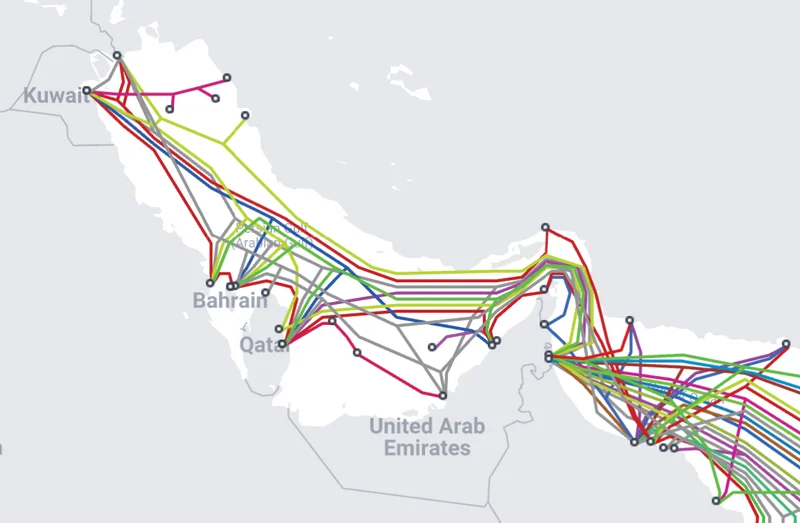
Iran’s Islamic Revolutionary Guard Corps (IRGC) has announced it will impose fees on US technology companies for the use of undersea internet cables running through the contested Strait of Hormuz. The claim, made by IRGC spokesperson Ebrahim Zolfaghari on May 9, asserts Tehran’s exclusive right to repair and maintain these subsea assets. The demand threatens to disrupt regional internet traffic and accelerate efforts by Big Tech and Gulf states to develop alternative overland fibre routes to bypass the maritime chokepoint.
The announcement comes amid ongoing conflict that has already suspended cable repairs in the region and halted new cable-laying projects. Repair ships face significant security risks from Iranian and allied attacks, with operators forced to choose between paying protection fees or accepting that future faults may go unrepaired indefinitely. The vast majority of damage to undersea cables typically stems from commercial shipping, but the current hostilities have introduced direct military threats to critical infrastructure.
Specific Iranian state-linked media outlets, including Tasnim and Fars, have outlined proposals to charge license fees to major US tech giants, specifically naming Meta, Google, Amazon, and Microsoft. These proposals suggest that Iran alone holds the authority to maintain the cables carrying regional internet traffic. However, the practical implementation of such fees remains unclear, as many major routes do not pass through Iranian territorial waters.
TeleGeography research director Alan Mauldin confirmed to CNN that while the FALCON and Gulf Bridge cables run through Iranian territorial waters at certain points, other major routes like Asia Africa Europe-1 pass through Oman-controlled waters. Consequently, the risk to Europe-Asia data traffic is lower compared to cables in the Red Sea, which have suffered damage from Houthi rebels allied with Iran. The US military has also degraded Iran’s naval capabilities, with Admiral Brad Cooper testifying to the Senate Armed Services Committee on May 14 that 161 Iranian naval vessels have been destroyed since the conflict began on February 28.
The suspension of subsea projects has spurred US tech companies and Gulf countries to invest in overland fibre-optic alternatives. Rest of World reported that major US tech firms are backing an overland fibre project by IQ Networks, which runs along protected oil and gas pipeline routes from southern Iraq to the Turkish border and Europe. This shift follows disruptions to Amazon Web Services data centres caused by Iranian drone attacks, which resulted in months of repairs and paused other Middle East projects. Alcatel Submarine Networks also suspended a Meta-backed undersea cable project in March after its main cable-laying ship was stranded near Saudi Arabia.
