IPL 2026 Auction Analysis: Holder Delivers Best Value Amidst Mega-Bid Deficits
A data-driven review of the IPL 2026 mini-auction reveals that the ten most expensive buys generated less than half their cost in on-field value, with only two players achieving a positive return.
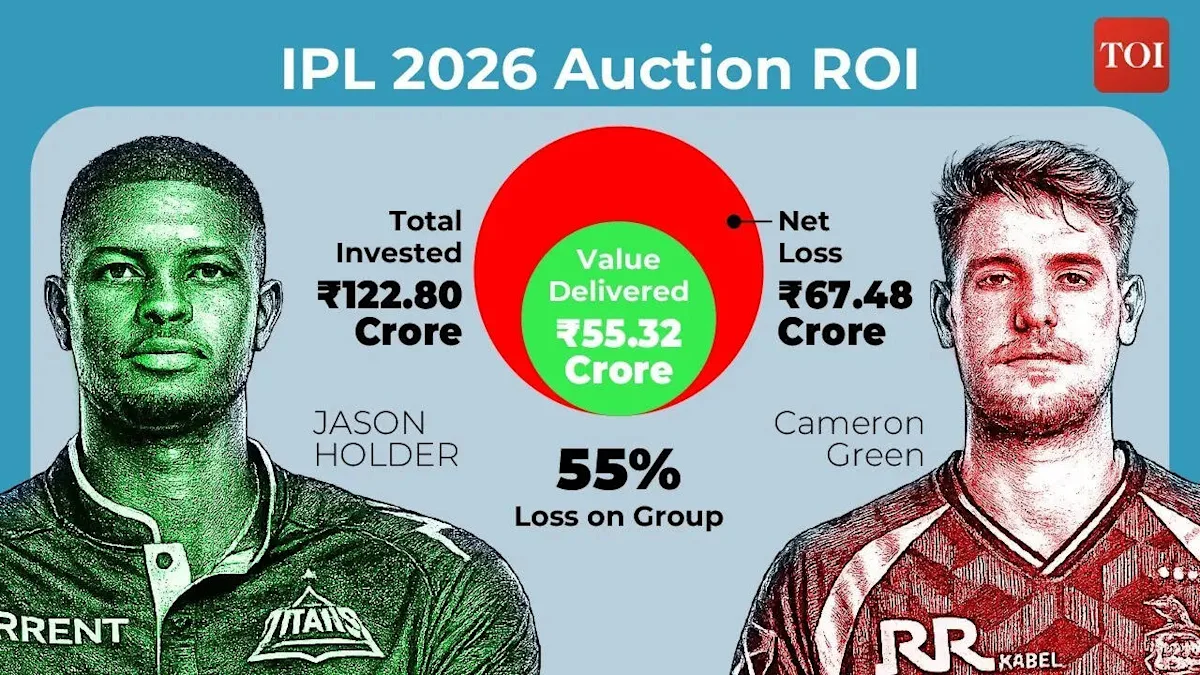
An analysis of IPL 2026 auction data indicates that Jason Holder, purchased by Gujarat Titans for Rs 7 crore, delivered the highest value return among the tournament's most expensive signings. Holder generated an estimated Rs 11.98 crore in on-field value, resulting in a net gain of Rs 4.98 crore and a multiplier of 1.71x. High-profile acquisitions, including Cameron Green (KKR, Rs 25.20 crore), Matheesha Pathirana (KKR, Rs 18 crore), and Liam Livingstone (SRH, Rs 13 crore), failed to justify their price tags, with several yielding negligible returns due to injuries and limited appearances. The ten most expensive buys from the IPL 2026 mini-auction collectively spent Rs 122.80 crore but generated an estimated value of only Rs 55.32 crore, delivering less than half of their cost.
The financial disparity between expenditure and performance was stark across the league. While franchises invested heavily in marquee talent during the December 2025 mini-auction in Abu Dhabi, the resulting on-field output did not align with the capital outlay. The group of ten highest-priced players produced a combined value of Rs 55.32 crore against a total spend of Rs 122.80 crore. This aggregate performance suggests a systemic inefficiency in how teams evaluated and utilised their most expensive assets during the 2026 season.
Jason Holder emerged as the sole clear winner in the high-cost category. Despite initially spending time on the sidelines, Holder forced his way into Gujarat Titans' plans, finishing the league stage with 13 wickets in eight matches at an economy rate of 7.34. This performance stood in sharp contrast to the league average economy rate of 10.26, highlighting his ability to control games and chip away at partnerships. His contribution translated into the best return on investment for any of the top ten buys.
In contrast, Cameron Green’s acquisition by Kolkata Knight Riders for Rs 25.20 crore presented a complex financial picture. Green produced the highest absolute output among the ten players, with 322 runs and seven wickets generating an estimated Rs 12.71 crore in value. However, this figure fell significantly short of his contract price, leaving him with a net deficit of Rs 12.49 crore. Although he was the only genuine dual-discipline contributor in the group, the mega-money signing was judged against the high expectations attached to its price tag, particularly given his initial inability to bowl due to clearance issues.
Other significant spends yielded minimal returns due to availability and performance issues. Matheesha Pathirana played only one match before an injury struck, while Liam Livingstone managed just two appearances. Auqib Nabi Dar never reached the sample threshold for measurable value. Collectively, Pathirana, Livingstone, and Dar cost Rs 39.40 crore but returned effectively zero value. The data underscores that the smartest signings of the season came from the middle tier, where players like Holder, Josh Inglis, and Ravi Bishnoi delivered steady returns relative to their lower acquisition costs.