Intelligence reports North Korea to deploy up to 50,000 troops to Russia
Military analysts doubt the deployment will alter the war’s trajectory, though concerns mount over increased ballistic missile strikes and winter strategic advantages for Moscow.
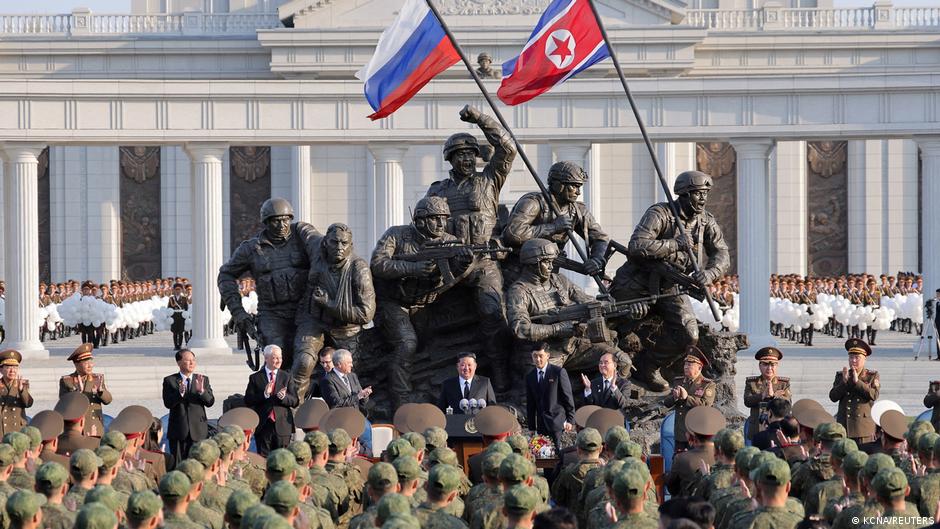
Intelligence agencies report that North Korea is preparing to send an additional 30,000 to 50,000 troops to Russia, supplementing an initial deployment of 14,000 to 15,000 personnel in late 2024. Ukrainian and international officials suspect these forces will secure Russian border territories, such as Kursk and Voronezh, thereby freeing Russian troops for front-line combat. North Korea has also delivered ballistic missiles, including KN-23 and KN-24 systems, which Ukraine states have struck residential areas. Military experts doubt the deployment will alter the war's fundamental course, noting Russia retains sufficient recruitment capacity, but warn of increased missile attacks and potential strategic benefits for Russia during the winter months.
Ukrainian military and political experts suggest the primary role of these additional troops will be to stabilise Russian border regions rather than engage directly on Ukrainian soil. Oleksandr Kovalenko of the Ukrainian Center for Security Studies indicated that North Korean soldiers could help secure southwestern Voronezh, allowing Russia to redeploy approximately 15,000 of its own forces to active front lines in areas such as Vovchansk, Kharkiv, Sumy, or Chernihiv. This assessment aligns with the view of Russian military analyst Ruslan Leviev, who noted that while Moscow has enough troops available, the diplomatic distinction between recapturing Russian territory and fighting on internationally recognised Ukrainian land remains significant.
Despite the scale of the proposed deployment, military analysts remain sceptical that North Korean involvement will shift the fundamental course of the conflict. Leviev argued that Russia’s continued activity on the front line since mid-July indicates sufficient force availability without the need for foreign soldiers. This view is supported by economist Janis Kluge of the German Institute for International and Security Affairs, who noted that regional spending figures suggest Russia is still recruiting around 1,000 contract soldiers daily, despite signs of strain in its recruitment campaign.
The transfer of weaponry, however, presents a more concrete challenge. Ukraine’s Main Directorate of Intelligence (HUR) states that North Korea has delivered 148 KN-23 and KN-24 ballistic missiles since 2025. These systems, which are similar to Russia’s Iskander missiles but feature greater payload and range, have been used to strike residential areas, including an incident near Kryvyi Rih that killed five civilians. The HUR recently reported that a North Korean missile unit was deploying to Russia’s Voronezh region, where it could be equipped with 120 ballistic missiles.
Experts describe these weapons as instruments of terror, noting their lower accuracy makes them suitable for targeting civilian infrastructure rather than precise military objectives. Yuri Fyodorov, a military expert, suggested that Russia has deliberately targeted residential areas with these missiles to spread fear. With Ukraine’s stockpiles of US-made Patriot air-defence systems running critically low, the steady supply of North Korean missiles is expected to become a growing priority for Moscow, particularly as winter approaches.
President Volodymyr Zelenskyy has raised concerns that North Korea’s improved combat and weapons experience could pose a security threat not only to Ukraine but also to the Asia-Pacific region. While observers have had mixed responses to these remarks, Jenny Town of the US-based Foreign Policy Institute stated that Russia and North Korea have established a mutually beneficial partnership that is likely to deepen. Kovalenko warned that the upcoming winter months could be particularly trying for Ukraine, as Russian forces benefit from new military call-ups, freed fighters, and a continued stream of ballistic missiles.