Instagram tests voluntary 'AI creator' labels to boost platform transparency
The new disclosure replaces vague previous badges with definitive language, aiming to build audience trust while regulators and oversight bodies scrutinise detection capabilities.
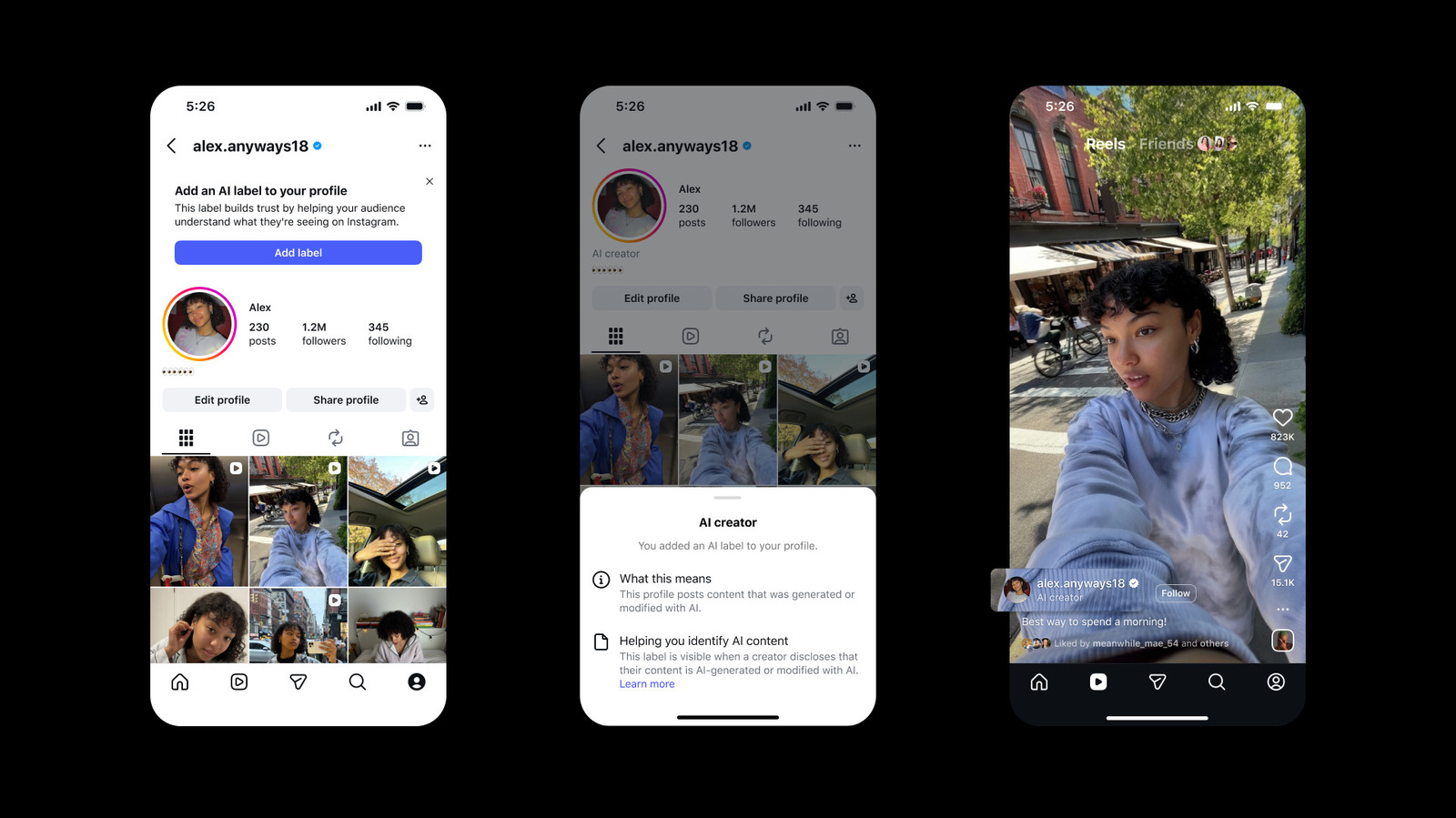
Instagram is currently trialling a new account-level feature that allows creators to explicitly self-identify as "AI creators" on the platform. When enabled, this label appears prominently on user profiles and alongside posts and Reels, clearly stating that the content was generated or modified with artificial intelligence. This initiative marks a shift from previous disclosure methods, offering a more definitive statement than the earlier "AI info" badges which merely indicated that a post "may" have involved AI tools.
The new labels are entirely voluntary and are not enabled by default, meaning the feature is currently restricted to a testing phase rather than a universal rollout. Meta is encouraging accounts that frequently post generative AI content to adopt the option, framing the disclosure as a mechanism to build trust with audiences. An in-app message to creators suggests that the label helps followers understand exactly what they are viewing, though the company has not mandated its use or enforced penalties for non-compliance.
This approach contrasts with the limitations identified by Meta's own Oversight Board, which has recently highlighted the difficulties in reliably detecting all AI-generated content passing through the app. Previous disclosures were applied somewhat haphazardly due to these detection gaps, and the company has yet to respond to specific recommendations to improve its AI-detection methods. The reliance on voluntary self-identification may be insufficient as AI-generated material becomes increasingly pervasive and difficult for human eyes to distinguish from organic content.
While the new language is notably more explicit, the current strategy represents a lighter touch compared to mandatory enforcement. Critics note that if the company truly intended to maximise trust, it could have turned the labels on by default or made them required for all relevant accounts. However, for now, Meta is opting to test the waters with this optional framework before determining if a more rigorous approach is necessary.
As the testing phase continues, the specific duration and the criteria for account eligibility remain undefined. It remains uncertain whether Meta plans to make the label mandatory or default in the future, though the current stance suggests a preference for voluntary participation. The effectiveness of these voluntary labels in building genuine audience trust, compared to potential mandatory enforcement, remains an open question as the technology evolves.
