India’s private-equity secondaries market shows signs of maturing
Stronger IPO activity, regulatory pressures and ageing funds are drawing more investors into India’s secondary market.
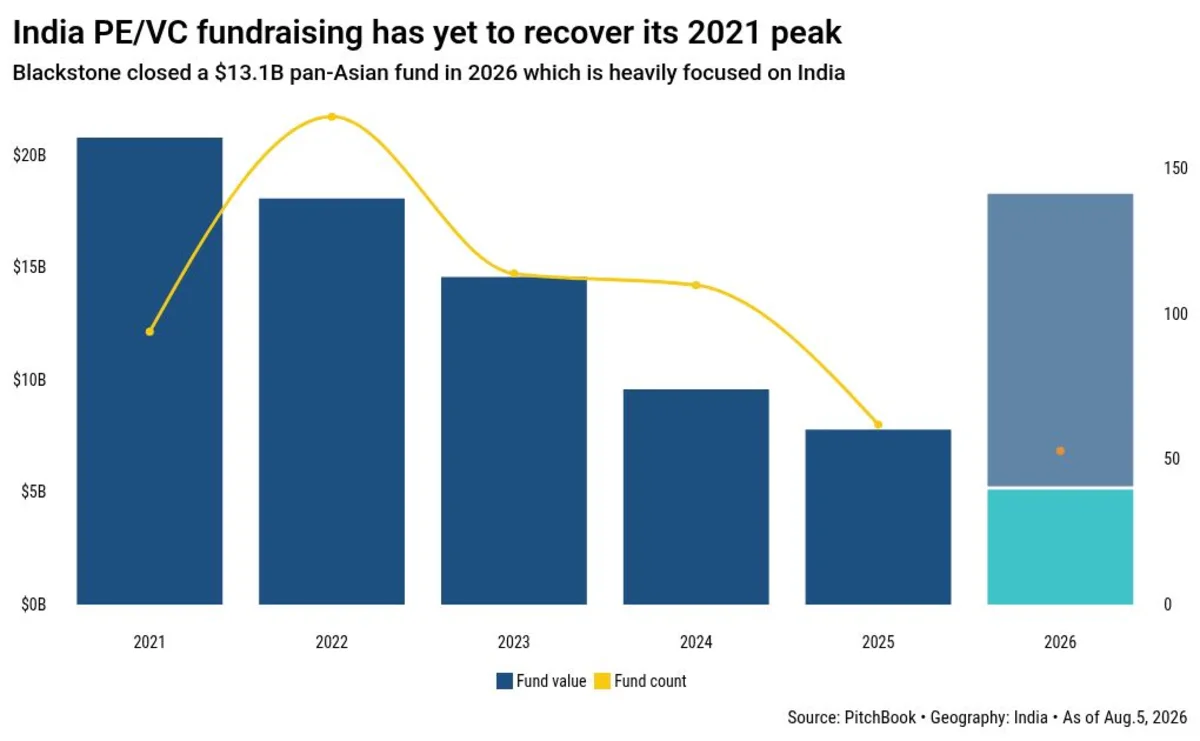
India’s private-equity secondaries market is attracting new capital as improved IPO activity, regulatory requirements and ageing funds create demand for liquidity solutions.
TR Capital, Neo Asset Management and Kenro Capital have expanded into India or launched dedicated secondary vehicles over the past year. The market, which became a common investment strategy only around four to five years ago, remains dominated by direct deals and pre-IPO cap-table clean-ups.
IPO activity has strengthened the potential exit route for secondary investors. India recorded 108 IPO listings in FY2026, more than one-third higher than the previous period, while proceeds rose 8.4% to INR1,761 billion, according to KPMG. Private-equity-backed companies accounted for 35% of the listings.
At the same time, Indian private-market fundraising has declined for four consecutive years after reaching a peak in 2021, according to PitchBook. Funds established from about 2005 to 2006 are also reaching later stages of their lives, increasing pressure on managers to provide distributions and liquidity.
GP-led secondaries and continuation vehicles remain relatively uncommon but are increasing. Regulatory requirements affecting Alternative Investment Funds can restrict fund-life extensions and other structures, creating demand for bespoke transactions designed to release liquidity while maintaining compliance.
360 ONE Asset Management has said it is preparing to deploy capital in a “broken IPO” transaction. The reported activity points to early signs of a more developed market, although larger and more complex secondary transactions remain relatively few and opportunistic.