India and UAE formalise defence and energy ties amid regional instability
Prime Minister Narendra Modi and UAE President Sheikh Mohamed bin Zayed Al Nahyan have finalised agreements covering maritime security, cyber defence, and crude oil storage, set against a backdrop of heightened tensions in the Gulf.
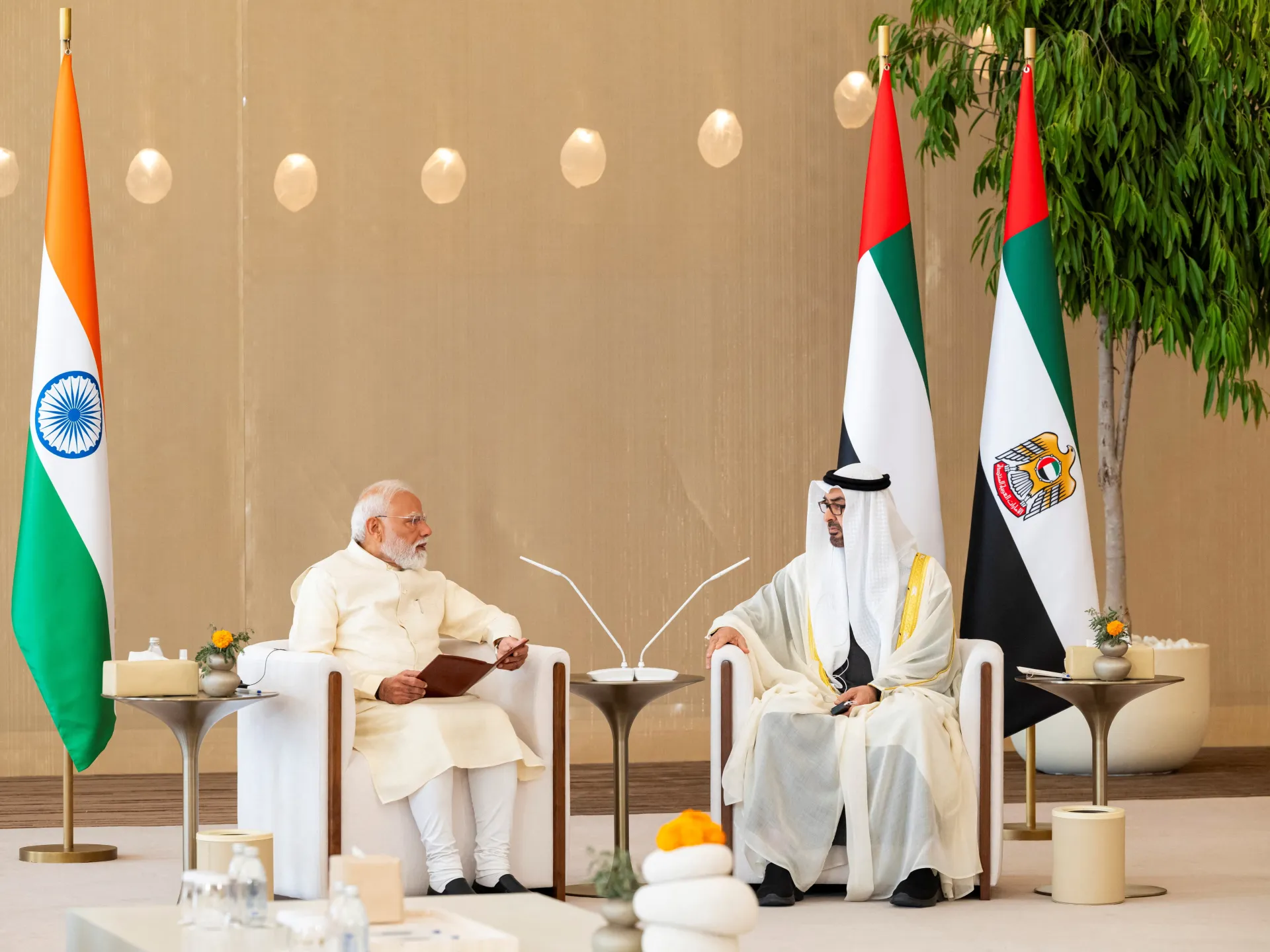
India and the United Arab Emirates have signed a comprehensive suite of defence, energy, and shipping agreements during Prime Minister Narendra Modi’s visit to Abu Dhabi on Friday. The pacts, concluded during a meeting between Modi and UAE President Sheikh Mohamed bin Zayed Al Nahyan, mark the latest step in deepening bilateral ties as both nations navigate escalating security concerns in the region.
The strategic defence partnership outlines a framework for enhanced cooperation across multiple domains, including maritime security, cyber defence, military exercises, secure communications, and defence industrial innovation. An official statement confirmed that the two nations will deepen collaboration on advanced technology and training, aiming to bolster mutual capabilities in an increasingly volatile geopolitical landscape.
Energy security remains a central pillar of the new arrangement. Key provisions include a pact allowing for the potential storage of crude oil in Fujairah as part of India’s strategic petroleum reserve, alongside new liquefied natural gas supply agreements. The UAE has also pledged up to $5 billion in investment to further deepen economic ties, a move President Sheikh Mohamed bin Zayed described as a measure to give new momentum to cooperation in energy and technology sectors.
The timing of these agreements follows recent Iranian drone and missile strikes on Fujairah, which damaged an oil refinery and injured three Indian workers. The UAE has accused Iran of targeting its eastern coast emirate, and Prime Minister Modi condemned the attacks in the strongest terms during the meeting. Modi reiterated his condemnation on social media platform X, highlighting the direct impact of regional conflict on Indian nationals, approximately 4.3 million of whom reside or work in the UAE.
The agreements come as India grapples with the economic fallout of the ongoing US-Israeli war on Iran and the resulting blockade of the Strait of Hormuz. As the world’s third-largest oil importer, with 90 per cent of its oil imported and roughly half passing through the Strait of Hormuz, India has seen fuel prices rise by 3 per cent recently. The new pacts reflect New Delhi’s urgent need to secure its energy supply chains and protect critical infrastructure in a region heavily targeted by rocket and drone strikes.