Human rights worker cites fear of backlash for not submitting to antisemitism royal commission
The author distinguishes between legitimate criticism of the Israeli government and hatred of Jews, calling for a human rights approach that recognises the humanity of all people without ranking grief by ideology
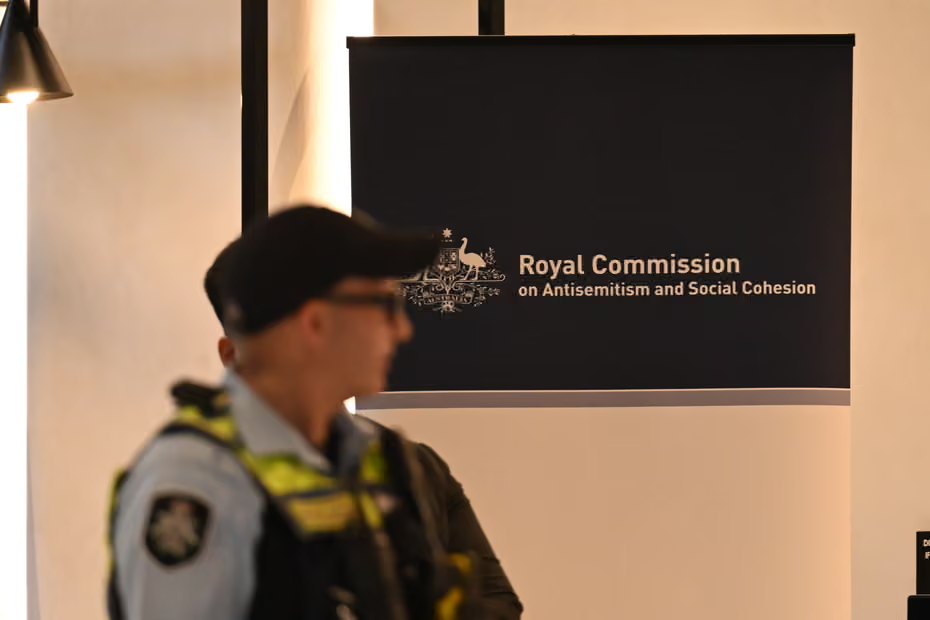
George Newhouse, a worker in the human rights sector, has publicly stated he did not submit a response to the Royal Commission on Antisemitism and Social Cohesion. He attributes this decision to a fear of professional and social backlash, noting that he feels the boundaries of acceptable speech have narrowed regarding the intersection of antisemitism and the Israel-Palestine conflict.
Newhouse identifies a specific dilemma where expressing concern about antisemitism is perceived by some as indifference to Palestinian suffering, while expressing concern for Palestinians is viewed by others as a betrayal of the Jewish community. He argues that both reactions ignore the humanity of the other and make honest speech more dangerous within his sector.
The human rights worker references David Baddiel's book *Jews Don't Count*, stating he previously rejected its premise but now believes he was wrong in his assessment that committed anti-racists would easily identify antisemitism. He notes that many people who can identify almost every other form of racialised hatred have become hesitant, evasive or indifferent when the hatred is directed at Jews.
Newhouse outlines specific actions that constitute antisemitism, including holding Jews collectively responsible for Israeli actions, threatening Jewish institutions, and treating Jewish safety as a negotiable price of political rage. He asserts that criticism of the Israeli government is not antisemitism, whereas hatred of Jews or holding them collectively responsible for Israeli actions is.
He argues that the human rights sector must be able to condemn the killing of civilians on both sides without ranking grief by ideology, race, or religion. The author contends that a Jewish connection to the land does not settle borders or determine the rights of Palestinians, nor does it justify occupation, dispossession, or the killing of civilians.
The Royal Commission is asking Australia to confront antisemitism and promote social cohesion, ideas Newhouse believes belong together. He concludes that silence has consequences too, and that anti-racist politics in the nation must be able to oppose antisemitism without abandoning Palestinians.