Human-Powered Roleplay Site Mimics AI Limitations in New Web App
A new platform allows participants to roleplay as chatbots, earning credits by answering prompts while navigating obtrusive advertising and tight deadlines
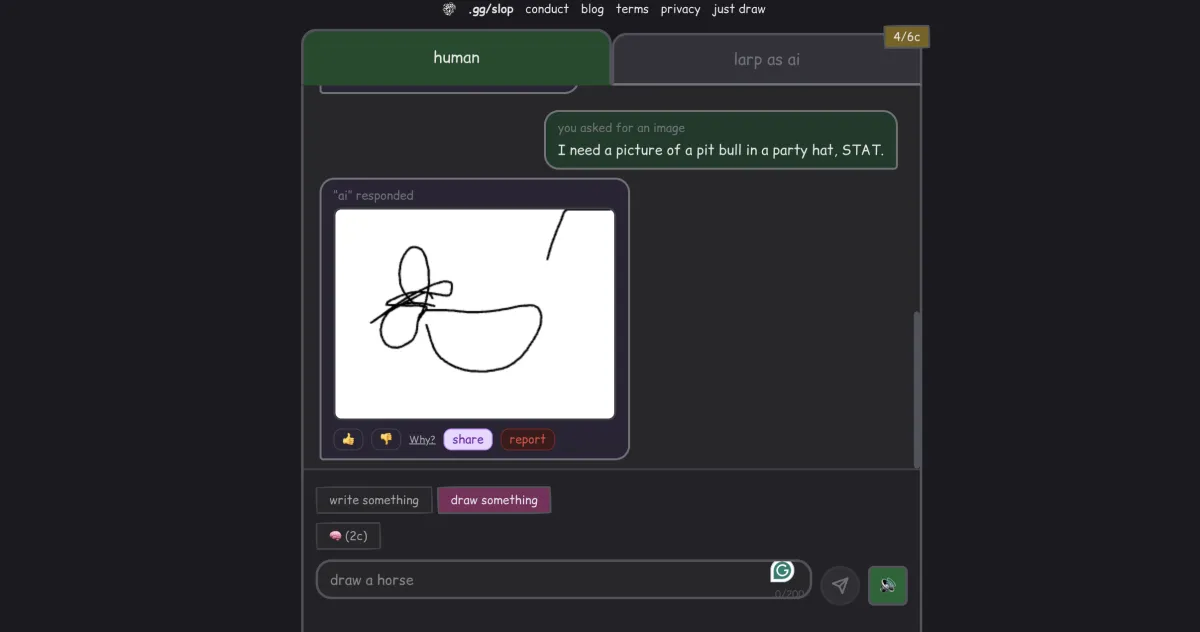
A new web application titled 'Your AI Slop Bores Me' enables users to roleplay as artificial intelligence chatbots, with real humans operating on both the request and response sides of the interface. The platform, which was highlighted in coverage by The Verge, mimics the token-based systems and limitations of large language models through a structured game format.
The application features two distinct tabs: one for human requests and another for responses where users act as the AI. Participants are challenged to generate text or simple images within a 150-second limit, replicating the constraints often associated with automated systems. The site operates on a credit system where requests cost tokens; users can earn credits by answering prompts on the AI side or wait for a free request every two minutes.
The image generation tool is described as rudimentary, comparable to MS Paint, which makes fulfilling specific requests, such as drawings of obscure anime characters, particularly difficult within the time limit. This constraint is intended to force participants to work within extreme limitations while maintaining the illusion of an AI interface. Users may skip requests that do not appeal to them, adding a layer of agency to the roleplay experience.
Community interaction is facilitated through a dedicated Discord server and a Hall of Fame section on the site. The Hall of Fame features notable contributions, including a rendition of Starry Night that has been described as alarmingly good, although the specific criteria for inclusion remain undefined. The platform is framed as a humorous take on artificial intelligence, allowing users to engage with the technology in a satirical manner.
Despite the engaging mechanics, the site has been noted for having obtrusive and overboard advertising. The long-term viability and popularity of the platform are not specified in the available source material, and subjective claims regarding the quality of specific submissions reflect the opinions of the original reporting rather than objective metrics.