HP launches budget Omnibook 3 to challenge Apple’s MacBook Neo with Snapdragon X
While the device matches Apple’s design ambitions, reviewers note trade-offs in portability, display brightness, and connectivity standards.
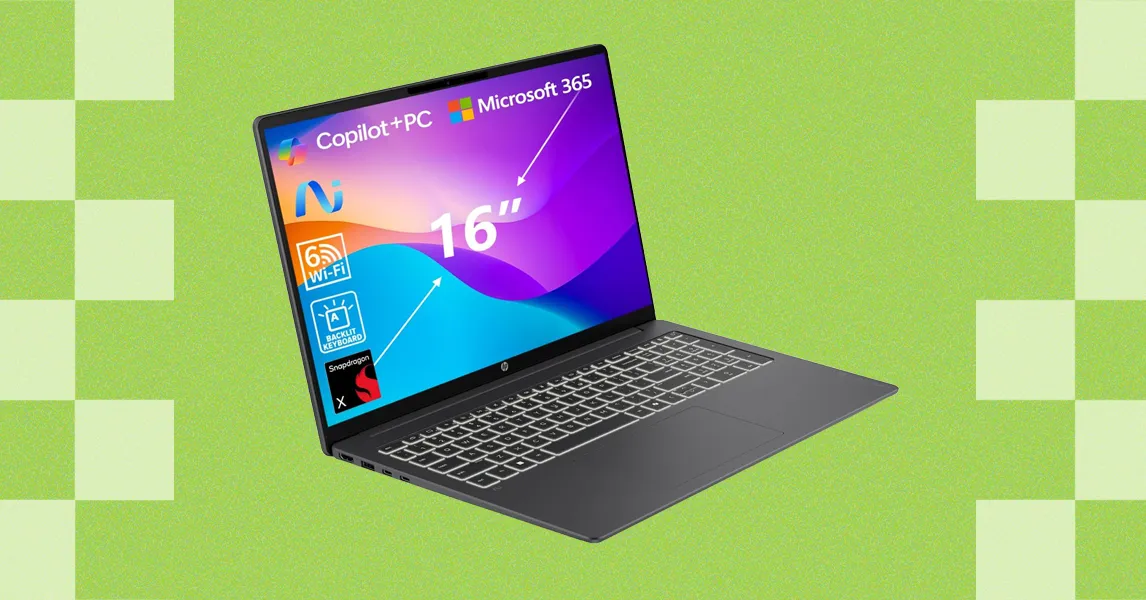
HP has entered the competitive budget laptop market with the launch of the Omnibook 3, a Windows device priced at $599, with promotional rates available as low as $519. Positioned as a direct alternative to Apple’s MacBook Neo, the new notebook utilises a Qualcomm Snapdragon X processor, 16 GB of RAM, and 512 GB of storage. This configuration offers double the memory and storage capacity of its Apple counterpart, aiming to address performance bottlenecks often found in lower-priced competitors.
The chassis is constructed from plastic and measures 0.7 inches in thickness, a design choice that HP has justified by citing improved sturdiness and port availability. The device includes an HDMI port, two USB-C 3.0 ports, and two USB-A 2.0 ports, alongside a headphone jack. However, the inclusion of USB-A 2.0 technology has drawn criticism for its limited 480 MB/s transfer speeds, which restricts utility primarily to basic peripherals rather than high-speed data transfer.
Performance is driven by the ARM-based Snapdragon X architecture, which delivers strong efficiency and battery life. In testing, the laptop achieved nearly 24 hours of battery life during light video looping tasks. While the chip provides robust performance for general productivity and multitasking, the ARM architecture limits gaming capabilities, and the processor may lag behind x86 competitors in specific single-core and graphics benchmarks.
Display options vary by retailer, with a 16-inch OLED model available exclusively through HP.com and IPS variants sold through other channels. The OLED screen offers high contrast and colour accuracy but is rated at 290 nits of brightness, significantly lower than the MacBook Neo’s maximum output. The webcam has been updated for better clarity compared to the previous year’s Omnibook 5 model, though it struggles in low-light conditions, and the speakers have been noted as mediocre in volume and quality.
HP also notes the availability of the Omnibook 5, a superior model featuring a thinner build and a more powerful Snapdragon X Plus processor. The Omnibook 5’s price fluctuates between $499 and $1,050, meaning consumers may find it cheaper than the new Omnibook 3 at certain times. For shoppers seeking a reliable budget device with consistent pricing, the Omnibook 3 remains a viable option, balancing memory capacity and efficiency against the design-centric approach of its Apple rival.
