Hobbyist leverages LLMs and Raspberry Pi to engineer self-setting LED clock
A custom-built clock utilising large language models for Python code generation and CAD modification eliminates manual daylight saving adjustments, though supply constraints may shift future builds toward ESP32 microcontrollers.
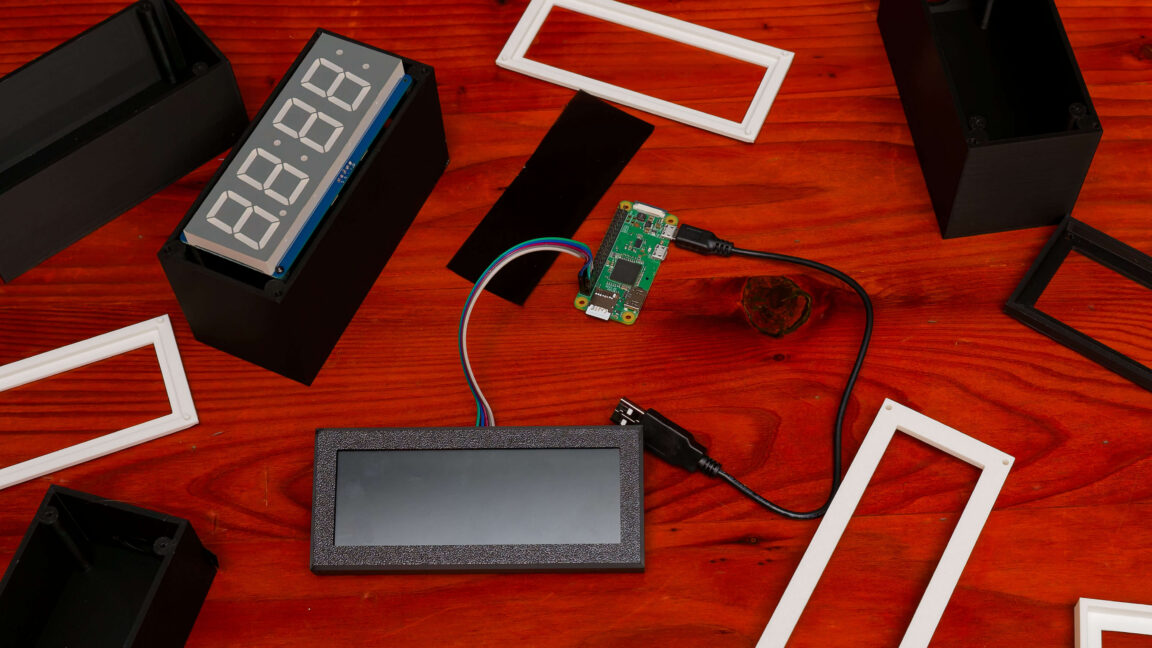
A technology enthusiast has completed a custom-built, self-setting bedside clock featuring a red seven-segment LED display, documenting the process in an article published by Ars Technica. The device is designed to automatically adjust for time changes and power fluctuations, eliminating the need for manual intervention that typically plagues traditional bedside clocks during daylight saving transitions or after power flickers.
The build utilises a Raspberry Pi Zero W, with a Zero 2 W also tested for the final assembly, alongside an Adafruit 7-segment display kit and a custom 3D-printed enclosure. The creator selected the Raspberry Pi platform to leverage its Debian-based operating system, which provides built-in Wi-Fi and Network Time Protocol (NTP) capabilities essential for keeping the device synchronised without external inputs.
A significant portion of the project’s development relied on large language models (LLMs). The creator employed Claude Code, utilising Opus 4.8 and Fable models, to generate Python code for system integration and to modify Autodesk Fusion CAD designs for the case. This AI assistance was deemed essential, as the creator noted that without the LLMs, the coding and parametric modelling challenges would likely have prevented the project's completion.
For the physical construction, the creator attempted to use a locally running Qwen 3.6-35B model to modify CAD files via an MCP server but fell back to Claude Code when the local model struggled with the complexity. The final enclosure was iterated through multiple revisions to accommodate smoked acrylic and 12% neutral density filter material from B&H Photo, ensuring the display brightness was suitable for a bedroom environment.
The deployment pipeline utilises Gitea actions to push release artifacts to the Pi via a local service account. While the project was successful, the creator noted that Raspberry Pi units are currently experiencing scarcity. Consequently, they suggested that an ESP32 microcontroller might be a smarter alternative for future builds, offering similar connectivity without the overhead of a full Linux distribution.
