High-Payroll Teams Struggle as ABS System Reshapes 2026 MLB Landscape
Despite an aggregate record suggesting parity among the league's wealthiest franchises, traditional powerhouses falter while emerging talents and young prospects drive offensive production in April.
The first month of the 2026 Major League Baseball season has exposed a stark divergence between financial investment and on-field performance. While the aggregate record of the top 12 highest-payroll teams stands at 185-179, averaging an 82-win team, several traditional powerhouses are underperforming relative to their budgets. This competitive imbalance is most evident among the league's elite spenders, where three of the worst teams in baseball—New York Mets, Philadelphia Phillies, and Houston Astros—carry payrolls within the top 12.
Conversely, the National League Central teams have all secured positions above .500, defying the narrative that high spending guarantees immediate success. The struggles of the high-payroll clubs have already triggered managerial changes in Boston and Philadelphia, with leadership under scrutiny in New York and Houston. These early failures threaten to derail World Series aspirations for franchises that entered the season with extraordinary expectations, potentially fueling a busy trade deadline and winter market.
A significant factor influencing these results is the Automated Ball-Strike (ABS) challenge system, which has demonstrably altered the strike zone by shaving inches off the top. This structural shift has contributed to a leaguewide spike in walk rates from 8.4% to 9.6%, a trend that disproportionately benefits right-handed hitters. The system's impact extends beyond the challenges themselves, creating a new environment where patience and contact rates are paramount for offensive success.
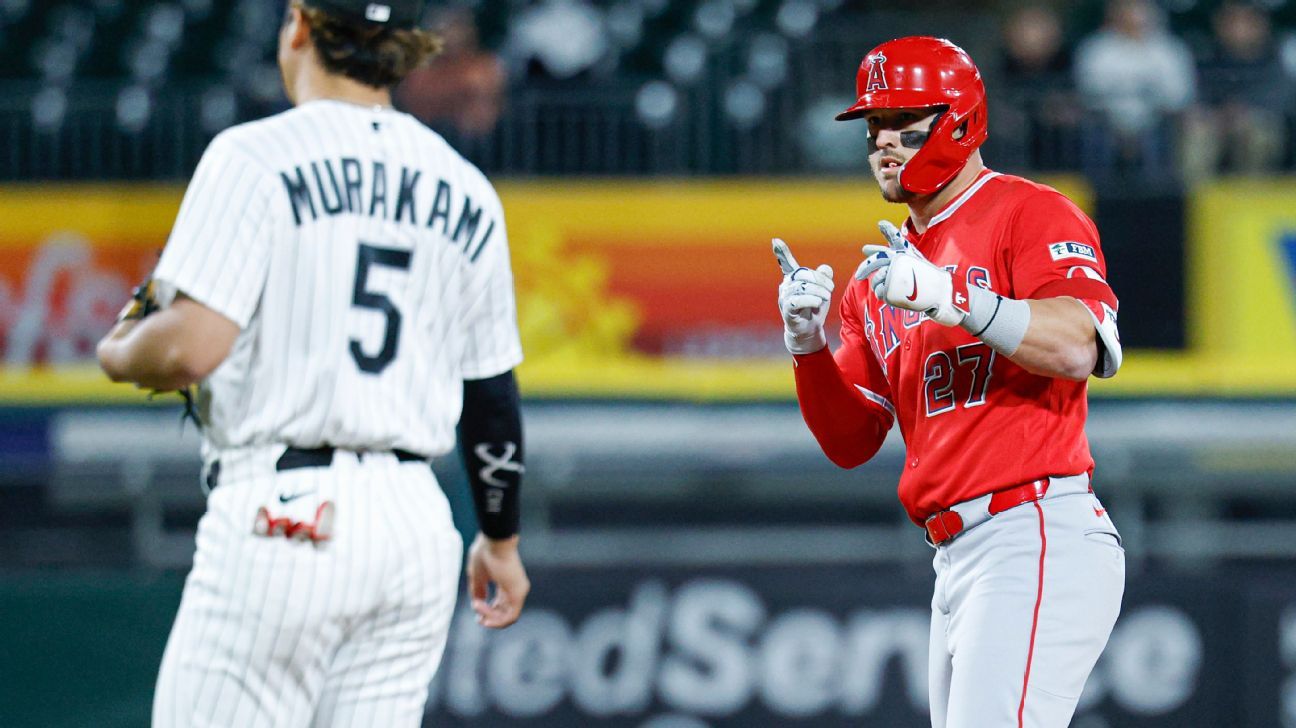
In this reshaped landscape, Kyle Álvarez has emerged as the league's standout hitter, leading all players with a .355 batting average, .463 on-base percentage, and a 1.199 OPS. His ability to maintain an elite 8.2% strikeout rate while posting production comparable to historic greats places him ahead of established superstars like Mike Trout and Shohei Ohtani in current offensive metrics. Trout, while returning to form with a reduced strikeout rate of 20.8%, trails Álvarez in overall production as the calendar turns to May.
Beyond the veteran stars, several young prospects signed to long-term extensions are exceeding expectations. Kevin McGonigle of the Detroit Tigers, Drake Baldwin of the Atlanta Braves, and Cam Schlittler of the New York Yankees are identified as key performers. Additionally, the Houston Astros are reportedly considering offloading expiring assets, with Isaac Paredes and Christian Walker highlighted as potential trade targets due to their offensive production and contract status.
As the season progresses, the disparity between payroll and results suggests that the 2026 campaign will be defined by adaptation rather than financial dominance. Teams must navigate the new realities of the ABS system and the emergence of new talent, while struggling franchises look to the trade deadline for a potential lifeline.