Heat dome triggers collapses at French Open as Roland Garros monitors wet bulb temperatures
Players and officials at the French Open are grappling with sweltering conditions driven by a persistent heat dome, with the French Tennis Federation relying on wet bulb globe temperature metrics to manage safety protocols.
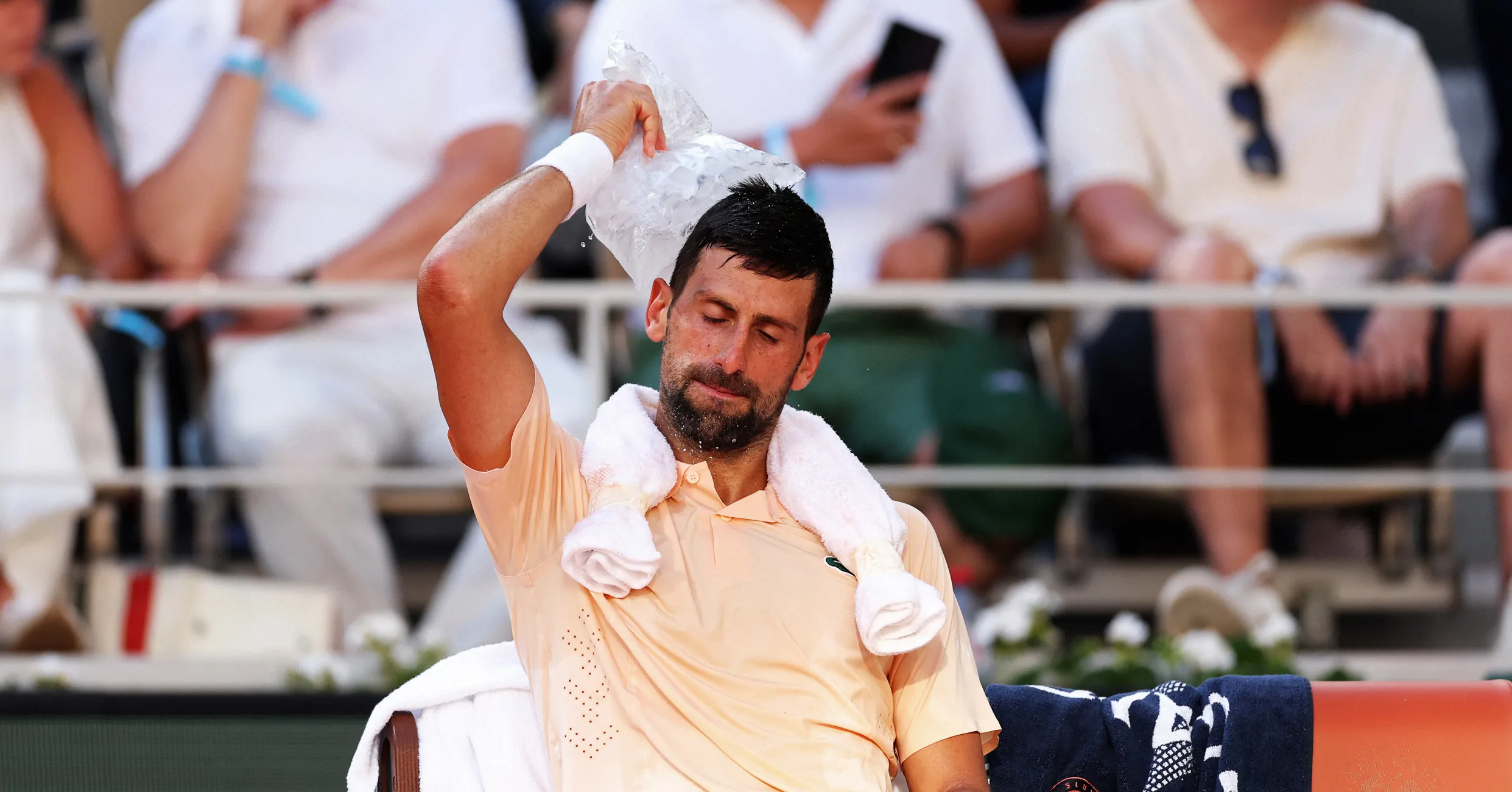
The opening week of the 2026 French Open has been marked by severe heat-related incidents, including the collapse of player Jakub Mensik and a ball girl who nearly fainted during play. Temperatures at Roland Garros have hovered in the low to mid-30s Celsius, driven by a heat dome that has trapped warm air over the region. The extreme conditions have forced competitors to seek shade and apply bags of ice to their heads and shoulders between games in an effort to manage the oppressive environment.
Mensik collapsed on the red clay court following a five-set match on Thursday, describing his physical state by stating his body had simply turned off. These incidents underscore the limitations of standard temperature readings, prompting officials to rely on the wet bulb globe temperature (WBGT) to gauge health risks. This metric accounts for temperature, humidity, solar radiation, and wind, providing a more comprehensive assessment of environmental stress on the human body than air temperature alone.
A WBGT of 30 degrees Celsius marks the beginning of the danger zone for human health, where the efficiency of sweat evaporation begins to decline. While athletes possess greater cardiovascular fitness and sweat more efficiently than the general population, they remain subject to physiological limits. Health experts note that even fit individuals can experience significant issues when wet bulb temperatures reach approximately 31 degrees Celsius, making cooling strategies essential to prevent heatstroke or cardiac events.
The French Tennis Federation has installed thermometers capable of measuring WBGT on the courts and has established protocols to extend breaks between sets or cancel matches if safety thresholds are breached. Although current WBGT levels have not yet reached the critical points required for match cancellation, the federation is closely monitoring the situation as temperatures are expected to intensify in the coming days. Other Grand Slam events, including Wimbledon, the Australian Open, and the US Open, already utilise WBGT measurements to implement similar heat management plans.
The situation at Roland Garros reflects broader climate trends, with research indicating that current WBGT levels may become the norm in the northern hemisphere within 20 years. A global analysis suggests that regions including northern Australia, northern India, China, Africa, Central America, and Southeast Asia will experience a disproportionate increase in these temperatures. Prolonged exposure to a wet bulb temperature of 35 degrees Celsius represents the upper limit of human survival, as sweat evaporation ceases entirely, a threshold not yet reached but increasingly relevant for public health and sport.
