Harvard-Smithsonian Researchers Confirm First Rocky Exoplanet with Retained Atmosphere
Astronomers have identified helium signatures escaping from the planet, proving its atmosphere has persisted for at least three billion years.
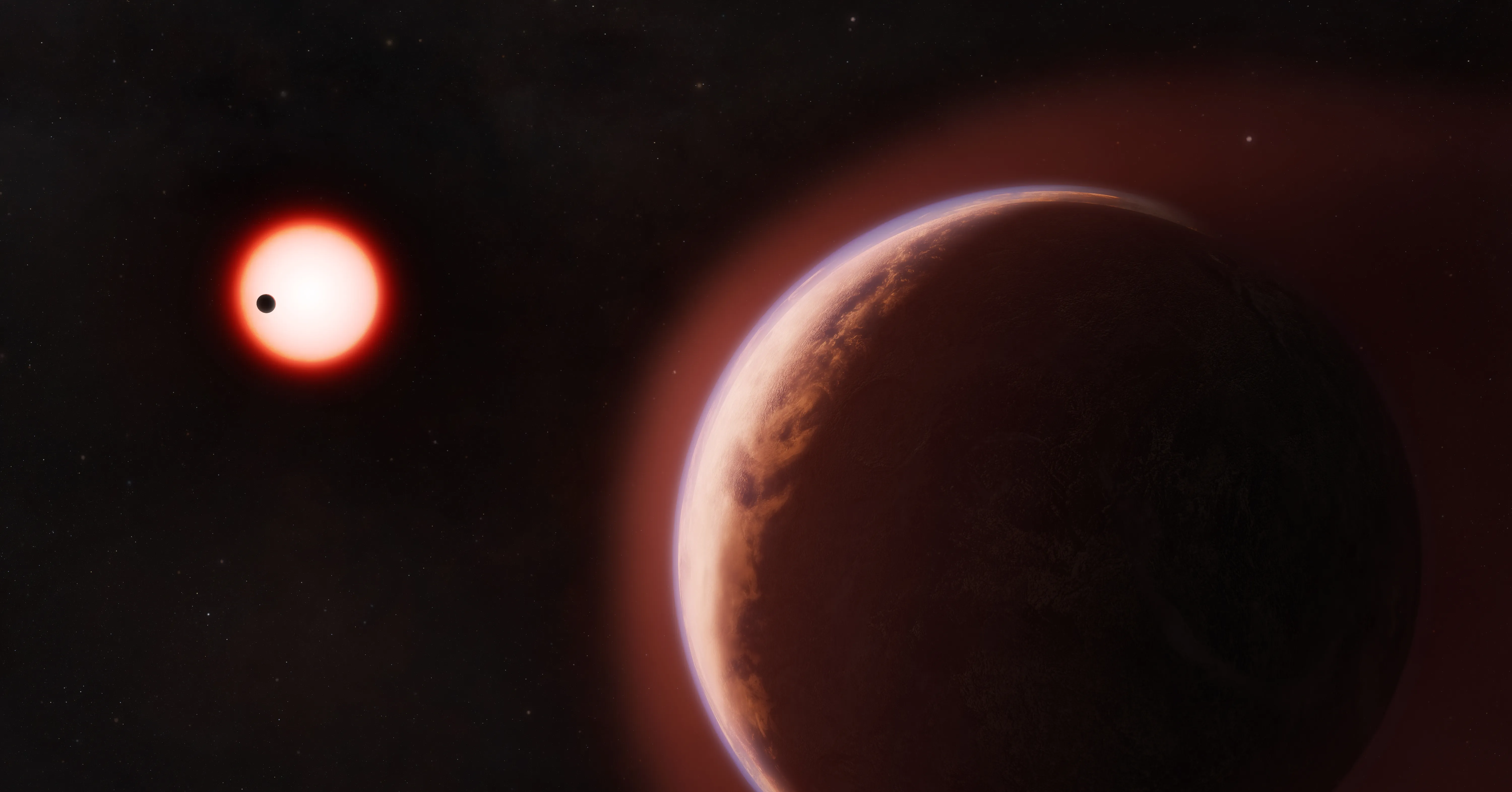
Researchers from the Harvard-Smithsonian Center for Astrophysics have confirmed the existence of LHS 1140 b, a rocky exoplanet located 48 light-years from Earth that possesses a retained atmosphere within its star's habitable zone. The findings, published this week in the journal Science, represent the first solid evidence of a rocky body in a habitable zone maintaining an atmosphere, a critical factor for potential habitability.
The planet, which orbits a cool red dwarf star, was originally identified in 2017. However, the new atmospheric confirmation relies on observations conducted in 2024 and 2025. By detecting spectral signatures of helium escaping from the planet, the research team established that the atmosphere has persisted for at least three billion years. This detection method allows scientists to use physical models to reconstruct how the gas escapes, validating the technique for future studies of distant worlds.
An atmosphere is considered essential for supporting life as we know it, as it regulates temperature, maintains stable climate conditions, and reduces the impact of harmful space radiation. LHS 1140 b is situated far enough from its host star to potentially retain liquid water on its surface. While the planet is in the habitable zone, the researchers caution that this does not prove the environment resembles Earth or supports life. Based on the amount of helium escaping, the atmosphere is likely very different from our own.
Robin Wordsworth, a Harvard professor and study author, noted the significance of the discovery in a press release. He stated that while terrestrial planets in habitable zones are now known to be common, confirming they retain atmospheres has been a significant hurdle. The study answers the question of whether any such planets have managed to keep an atmosphere, confirming that at least one has.
The upper layer of the atmosphere, from which helium is expelled, is the most obvious feature identified so far. The exact composition of the lower atmospheric layers remains unconfirmed, though heavy gases such as nitrogen, carbon dioxide, or carbon monoxide are possible. It is also not yet known if the planet has surface oceans or other specific features compatible with habitability.
Full characterisation of the atmosphere requires future observations with more powerful instruments. The current findings pave the way for scientists to investigate whether the planet has other features compatible with habitability, marking a substantial step forward in the search for Earth-like planets.
