Harvard Professor Warns of ‘Artificial State’ as Tech Giants Erode Democracy
In a discussion with The Verge, the Harvard law and history professor outlines how the quantification of human interaction dehumanises society and undermines democratic deliberation, while pointing to grassroots resistance as a potential counterforce.
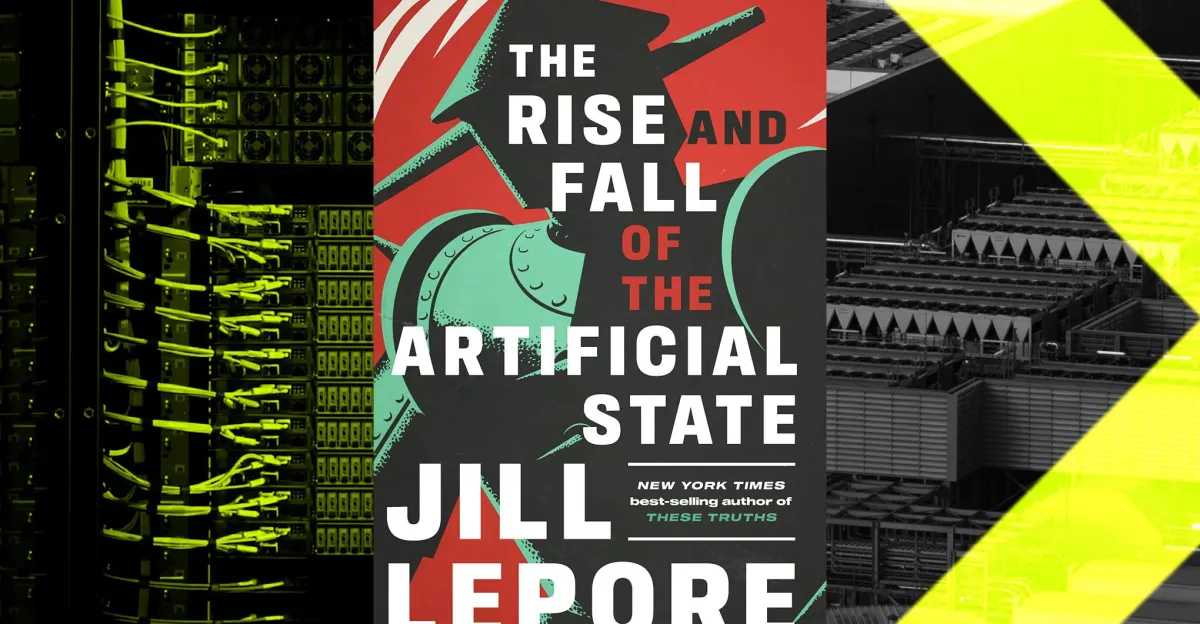
Harvard law and history professor Dr Jill Lepore has released a new book, The Rise and Fall of the Artificial State, arguing that the traditional liberal nation-state is being supplanted by an ‘artificial state’ dominated by private corporations and automated systems. Speaking on The Verge’s Decoder podcast, Lepore contends that this shift dehumanises society by reducing human interaction to quantifiable data, thereby eroding the foundations of democratic deliberation.
The book, scheduled for release on 25 August, identifies the 1980s as a pivotal era for the emergence of Silicon Valley culture and computer-aided microtargeting. Lepore contrasts the initial ‘California ideology’ of the decade, which promised personal liberation through personal computers, with the current consolidation of power among tech billionaires. She suggests that the promise of the internet as a democratizing force has been overtaken by a system where public discourse is privatized and driven by the monetisation of attention rather than civic engagement.
Lepore highlights a troubling lack of institutional moral integrity in major organisations regarding the adoption of artificial intelligence. She cites Yale University as an example, noting that an AI task force focused on branding its partnership with OpenAI rather than deliberating on policy. This prioritisation of corporate branding over ethical consideration is mirrored in big law firms and other institutions, which Lepore argues have failed to protect the humanistic values necessary for a functioning democracy.
Despite these concerns, Lepore identifies hope in grassroots pushback against the growing influence of technology. She points to college students booing AI executives at graduation ceremonies and local opposition to data centre developments, such as those proposed in Utah, as evidence of a growing awareness. These instances of civil society reasserting itself in physical spaces offer a counter-narrative to the digital automation of politics.
The professor also critiques tech CEOs who claim that the democratic process will naturally regulate AI. She argues that these leaders often misunderstand democracy, reducing it to ‘crowdsourced’ data points rather than recognising it as a deliberative process requiring rules, debate, and collective decision-making. Lepore warns that without a return to genuine democratic engagement, the artificial state will continue to erode the agency of citizens.
