Gulf freight rates surge as shipping firms pivot to road transport
Shipping companies are redirecting cargo to trucks, resulting in significantly higher freight rates and additional expenses of thousands of dollars for firms, as road vehicles cannot match the volume capacity of vessels.
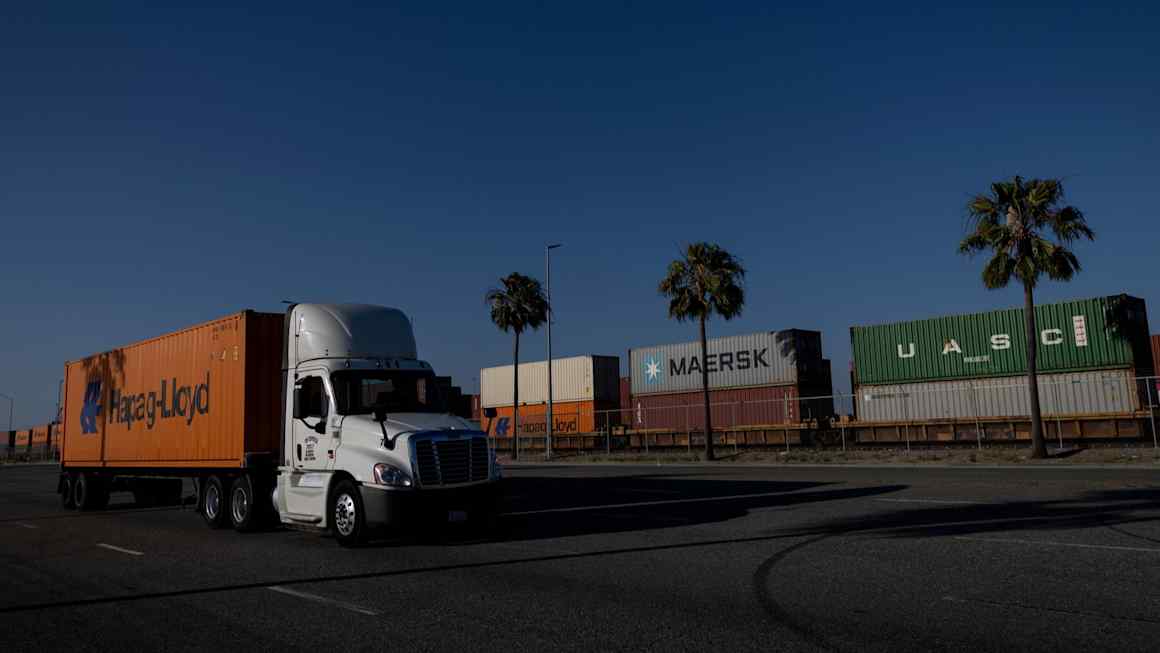
Gulf freight rates have experienced a significant surge as shipping companies increasingly redirect cargo from sea to road transport. This logistical shift has imposed additional costs amounting to thousands of dollars on businesses operating in the region, driven by the inherent capacity disparity between maritime and road networks.
The primary driver of this cost escalation is the physical limitation of trucks, which can only carry a fraction of the volume that ships are capable of transporting. As shipping firms turn to lorries to move cargo, the reduced efficiency per unit of transport has led to a sharp jump in freight rates, placing financial pressure on companies reliant on these supply chains.
The Strait of Hormuz remains a focal point of global trade discussions, underscoring the strategic importance of the region. The waterway was notably included on the agenda of the recent US-China summit in Beijing, highlighting its relevance amidst broader geopolitical and economic dialogues involving trade and artificial intelligence.
While the summit agenda featured high-profile attendees such as Elon Musk, Tim Cook, and Jensen Huang, and discussed topics ranging from trade tensions to Iran, the immediate impact on the logistics sector is being felt through operational adjustments rather than direct policy announcements. The decision to shift to road transport appears to be a response to current logistical constraints rather than a direct outcome of the summit discussions.
The financial impact on businesses is described in general terms, with reports indicating that firms are facing extra costs in the thousands of dollars. However, the source material does not specify whether these figures apply to individual containers, total industry losses, or specific business units, nor does it quantify the exact magnitude of the freight rate increase beyond describing it as significant.