Gulf exporters accelerate pipeline diversification as Hormuz closure reshapes energy security
Analysts warn post-war oil landscape will prioritise redundancy over single-point reliance, while rising Venezuelan output adds pressure to global crude markets.
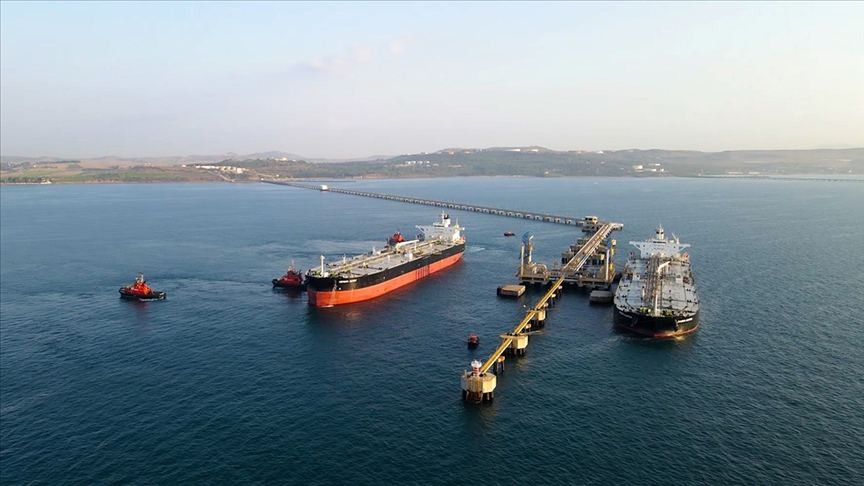
Persian Gulf oil exporters are rapidly expanding pipeline infrastructure to bypass the Strait of Hormuz, which has remained closed following the recent conflict between the United States, Israel, and Iran. The UAE, Saudi Arabia, and Iraq are prioritising alternative export routes to maintain revenue streams and ensure energy security, marking a significant shift in regional logistics.
The UAE is targeting the operationalisation of a pipeline to the port of Fujairah by next year, a move that underscores the urgency of establishing independent export channels. This infrastructure push coincides with the UAE’s recent exit from OPEC, a decision interpreted not only as a pivot to energy policy independence but also as a strategic measure to guarantee uninterrupted oil flows. The country aims to boost its crude production capacity to 5 million barrels per day by 2027, requiring reliable access to global markets.
Saudi Arabia has already utilised its East-West pipeline to diversify exports away from the Hormuz chokepoint, demonstrating contingency planning capabilities. Meanwhile, Iraq is planning to triple its pipeline capacity within three months. This acceleration follows a 70 per cent plunge in crude production from Iraq’s southern fields, which have averaged 1.3 million barrels per day since the conflict began, down from 4.3 million barrels per day pre-war.
Hamad Hussain, commodities economist at Capital Economics, told the Wall Street Journal that the legacy of the crisis will result in permanent infrastructure changes to bypass the strait. He noted that the longstanding threat of Iran closing the strait has now materialised, meaning the genie is out of the bottle. Sultan al-Jaber, head of ADNOC and the UAE’s energy minister, emphasised that energy security now encompasses routes, access, storage, and redundancy, rather than just production capability.
Concurrently, market dynamics are shifting due to increased supply from sanctioned nations. Venezuela’s oil output has risen to 1.25 million barrels per day following US sanction waivers, with potential to reach 1.5 million barrels per day by year-end. Kpler analyst Naveen Das noted that these waivers have eliminated psychological and compliance barriers for Asian buyers of Russian crude. The return of Venezuelan, Iranian, and Russian oil to the market is forecast to drive weaker oil prices within a year, as Venezuelan heavy sour crude competes directly with Iranian and Russian barrels.
Despite the pressure on the US economy from energy price inflation, President Trump remains intent on maintaining the current course, making sanction relief on Iranian crude a distant prospect. However, Kpler analysts suggest that peace deal chances may rise in sync with economic pressures, potentially leading to further sanction relief. The post-war energy landscape is expected to be fundamentally different, with exporters investing in an export network with multiple exits to distribute risk.