Google unveils new Android security measures to combat banking scams and device theft
Google has announced a suite of security enhancements for the Android operating system, unveiled during the Android Show: I/O Edition livestream. The updates focus on combating financial fraud through new spoofing protection for partner banks, improving device theft recovery via biometric locking, and refining privacy controls with a temporary precise location sharing tool.
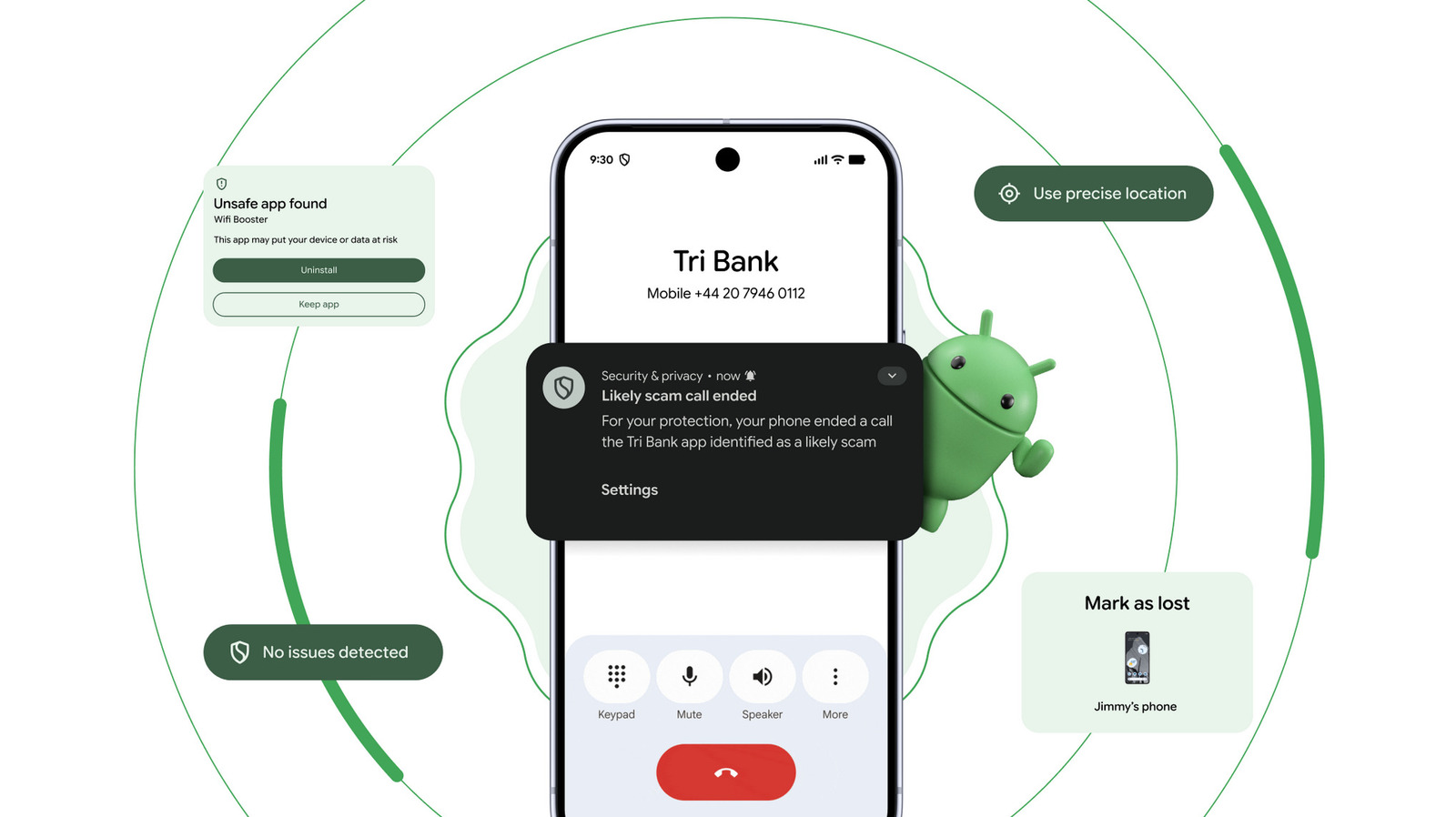
Google has revealed upcoming security enhancements for the Android operating system, disclosed during the Android Show: I/O Edition livestream. The announcement highlights a new spoofing protection feature designed to automatically terminate calls from numbers impersonating partner banks and notify users of potential scams. This initiative aims to counteract sophisticated bad actors who utilise spoofing technology to make fraudulent calls appear to originate from financial institutions.
The spoofing protection feature is rolling out in the coming weeks for devices running Android 11 and newer. Currently, the programme supports only Revolut, Itaú, and Nubank. As none of these banks operate in the United States, the feature is not yet available to US-based users for these specific institutions. Google has promised to expand the banking partnership to more banks later this year.
In parallel, Google is upgrading its Live Threat Detection tool to identify malicious apps using dynamic signal monitoring. The expansion specifically targets SMS forwarding and accessibility permission abuse, allowing the platform to analyse app behaviour more effectively to detect suspicious patterns or actions. These improved detection capabilities regarding SMS forwarding and accessibility rigging are scheduled to arrive on Android 17 devices later this year.
To address the growing risk of device theft, new settings for Failed Authentication Lock are being introduced. Users will soon be able to lock a phone with biometric authentication in addition to passcodes once the device is marked as lost. This ensures that thieves cannot access the phone until it is biometrically unlocked. The biometric authentication lock for lost devices will be enabled by default on all new Android 17 devices in the near future.
A new privacy tool is also part of the announcement, focusing on app permissions and location data. A function will allow users to temporarily share precise location data within an app only while the app remains open. Google states this utility is intended for quick tasks, such as finding a nearby cafe, to prevent apps from having unfettered access to location data.
These measures collectively represent a significant step forward in securing the Android ecosystem against evolving digital threats, balancing robust security protocols with user privacy.
