Google shifts AI strategy to autonomous agents with Gemini 3.5 Flash launch
As Google unveils its latest generative AI tool at the I/O developer conference, the company signals a strategic pivot from conversational chatbots to agentic systems capable of executing complex, multi-hour tasks with minimal human intervention.
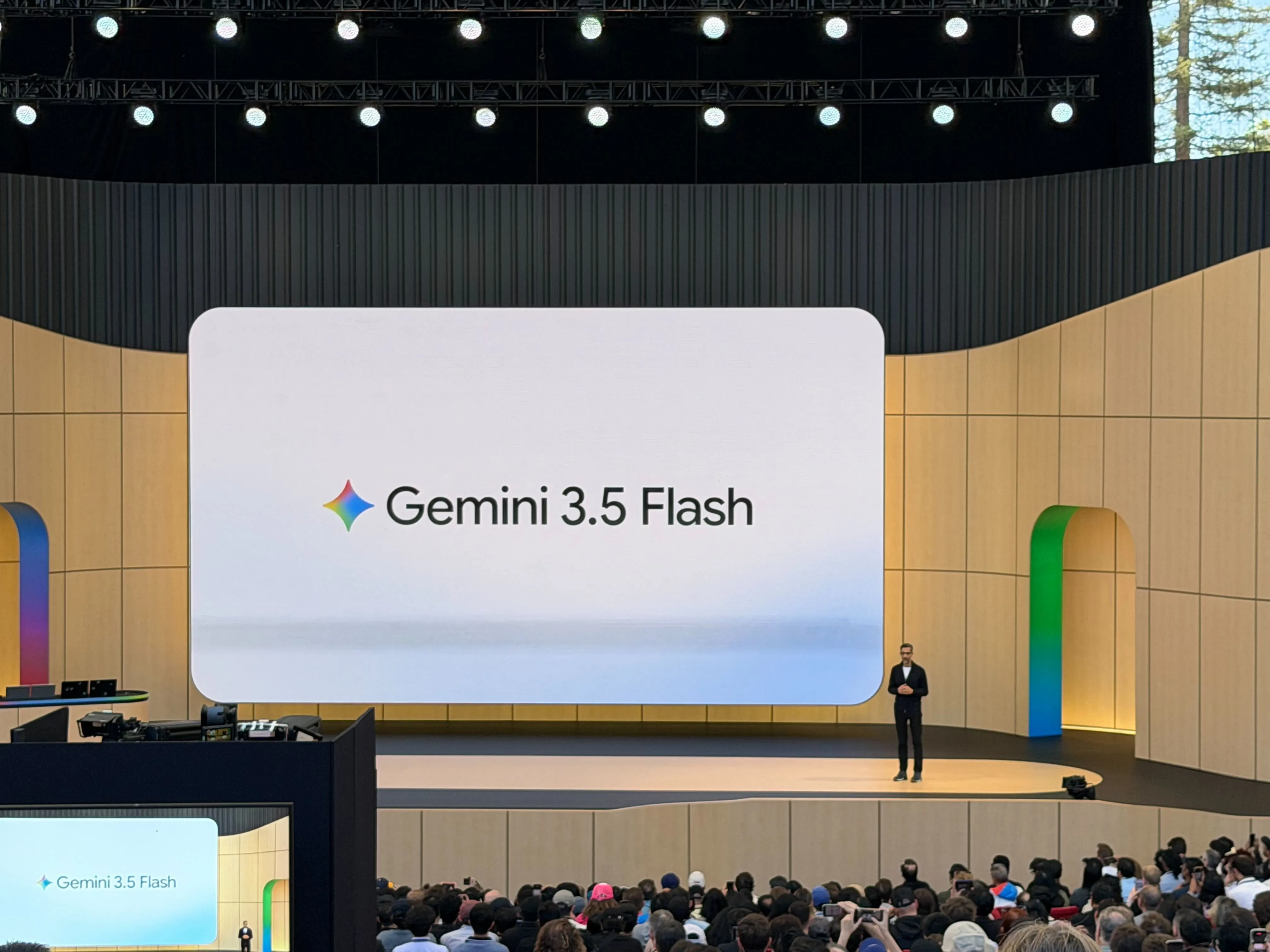
Google has officially launched Gemini 3.5 Flash, its most advanced coding and agentic artificial intelligence model, during its annual I/O developer conference. The release marks a distinct strategic pivot for the technology giant, moving away from positioning AI primarily as a conversational tool towards developing autonomous agents capable of planning, building, and iterating on complex work with minimal human input.
Koray Kavukcuoglu, DeepMind’s chief technologist, stated that the new model outperforms its predecessor, 3.1 Pro, on nearly all benchmarks, including coding, agentic tasks, and multimodal reasoning. Google claims the model is four times faster than other frontier models, with an optimized version achieving speeds 12 times faster while maintaining quality. This velocity is critical for agentic work, where multiple AI agents can run simultaneously on long-running tasks.
In demonstrations at the conference, Google engineer Varun Mohan showed agents spawning to work on separate components before collaborating to build a full operating system from scratch within Antigravity, Google’s agentic development platform. Kavukcuoglu noted that Flash 3.5 was co-developed with Antigravity to provide a native environment where agents can live, work, and execute code. The company also released Antigravity 2.0, a standalone desktop application designed for agent-first development.
The capabilities are already influencing enterprise partners. Google reported that banks and fintech firms are using the model to automate multi-week workflows, while data science teams are utilising it to find insights in complex data environments. The model is designed to run autonomously for multiple hours, pausing only when it encounters decision points or permission issues requiring human judgment.
Looking ahead, Google outlined how the new model fits into its broader ecosystem. Tulsee Doshi, Google’s senior director and head of product, explained that the forthcoming 3.5 Pro model will act as an orchestrator, leveraging Flash as sub-agents for tool use. Meanwhile, 3.5 Flash is now the default model in the Gemini app and AI Mode in Search globally, and will power Gemini Spark, a new personal AI agent designed to run 24/7 for consumers.
Google also announced that agentic capabilities are coming to Search, allowing users to create, customise, and manage AI agents directly on the platform. Amidst ongoing scrutiny regarding AI safety, including a recent lawsuit involving harmful interactions, the company stated it has strengthened cyber and CBRN safeguards in Gemini 3.5 to better handle sensitive questions.
Gemini 3.5 Flash is available generally today via Antigravity, the Gemini API, Gemini Enterprise, the Gemini app, and AI Mode in Search.