Google open-sources Noto Emoji 3D set for public development
The tech giant provides behind-the-scenes insights into the design challenges of translating 2D pictograms into 3D models as part of its latest open-source initiative.
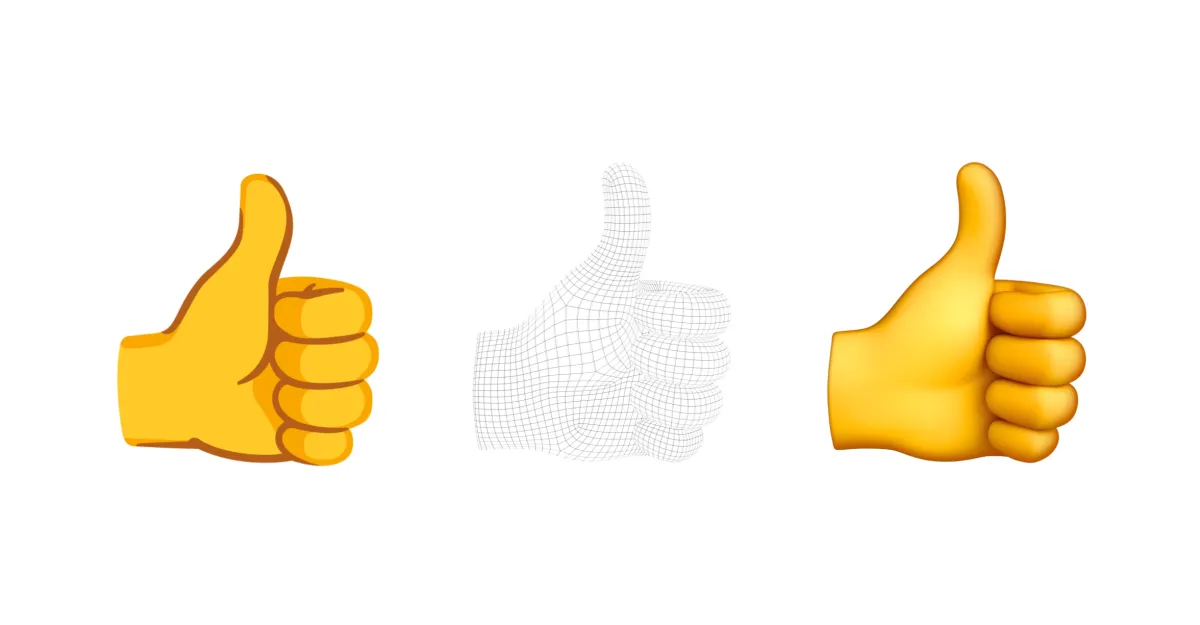
Google has officially open-sourced its Noto Emoji 3D set, making the raw .OBJ files available to the public for use in virtual reality environments, applications, and other creative projects. The announcement was made on Friday coinciding with World Emoji Day, alongside detailed insights into the design process behind the 3D pictograms.
The release allows developers and creators to utilise the emoji assets for building immersive VR worlds, indie applications, or other digital creations. This move follows the initial debut of the Noto Emoji 3D set in May, which introduced the three-dimensional versions of the standard emoji library to users.
In conjunction with the file release, Google provided a look into the complexities involved in translating 2D illustrations into 3D models. The company highlighted specific design decisions that become critical in three dimensions, such as determining whether a smiley face should be modelled as a sphere, a mask, or a flat disc. These structural choices were not typically a concern in the original 2D illustrations.
The Noto Emoji 3D set originally launched in May and received mixed reactions from the public. While the specific types of immersive VR worlds or applications developers will create using these files remain speculative, the open-source nature of the project invites broad community experimentation.
Google’s decision to hand over the raw files marks a significant shift in how these digital assets are distributed. By providing the underlying geometry and design logic, the company aims to facilitate a wider range of creative uses beyond standard messaging platforms.
