Google Health overhaul draws ire as Fitbit users clash with AI-centric redesign
The transition from the Fitbit app to Google Health has triggered significant user backlash, with critics citing intrusive AI content, limited screen real estate, and cumbersome data access as primary grievances.
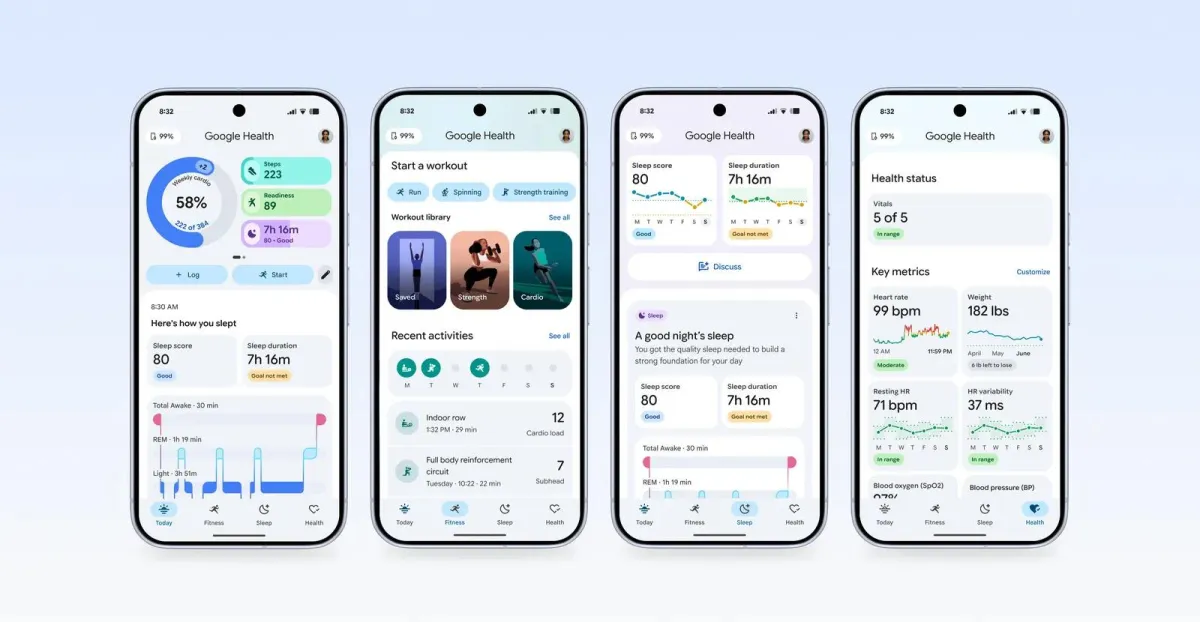
Google has officially retired the legacy Fitbit application, replacing it with Google Health, a new interface anchored by an AI health coach. The rollout, which coincides with the launch of the Fitbit Air wearable, has been met with widespread confusion and frustration among the user base. Many consumers are expressing a desire to revert to the previous iteration, citing that the new design prioritises conversational elements over the straightforward data tracking that defined the original app.
Critics have highlighted significant restrictions on the home screen layout, noting that users are limited to only two large tiles and cannot scroll to view all available information. The main page reserves substantial space for recent activity updates and chatty notes from the AI coach, a feature some users have described as "slop" or "platitudes." One user reported that the bot initiated unsolicited conversations about daily plans, while others complained that they must scroll through paragraphs of text to access basic activity logs.
The navigation structure has also drawn sharp criticism for obscuring essential fitness statistics. In the previous version, users could view exercise logs by scrolling down the main "Today" page. Under the new system, accessing specific data, such as rowing workout logs, requires navigating to the "Health" page and then into the "Fitness" section under "Focus areas." There appears to be no option to permanently remove the "Ask Coach" or activity window from the main view, although the bot can be disabled via the app’s Feature Privacy Controls.
Despite the backlash, some users have found utility in the AI features. Comments on social platforms indicate that the coach can assist with designing workouts using available equipment and logging missed sessions. However, these positive experiences are outweighed by reports of a disjointed user journey, with one senior editor noting initial disorientation and issues with the AI’s timing. Another user described the graphic user interface as resembling a product made by a child, while others labelled the app a "total time drain."
Google’s sample images on its blog post depicted a version of the Today screen with all information visible and a minimal AI chat presence, a layout that did not match the experience of many users who encountered the intrusive chat window. Additionally, while Google executive Rishi Chandra has stated that Google Health will eventually support third-party wearables, current users of devices such as the Nothing Watch Pro 3 do not have access to the additional "Fitness" and "Sleep" tabs that are available to owners of supported hardware.
