Google expands AI Mode with Canva, YouTube Music and Instacart integrations
The US rollout allows users to generate playlists, create design templates and compile shopping lists based on calendar events, marking another step in Google’s push to embed AI into daily digital workflows.
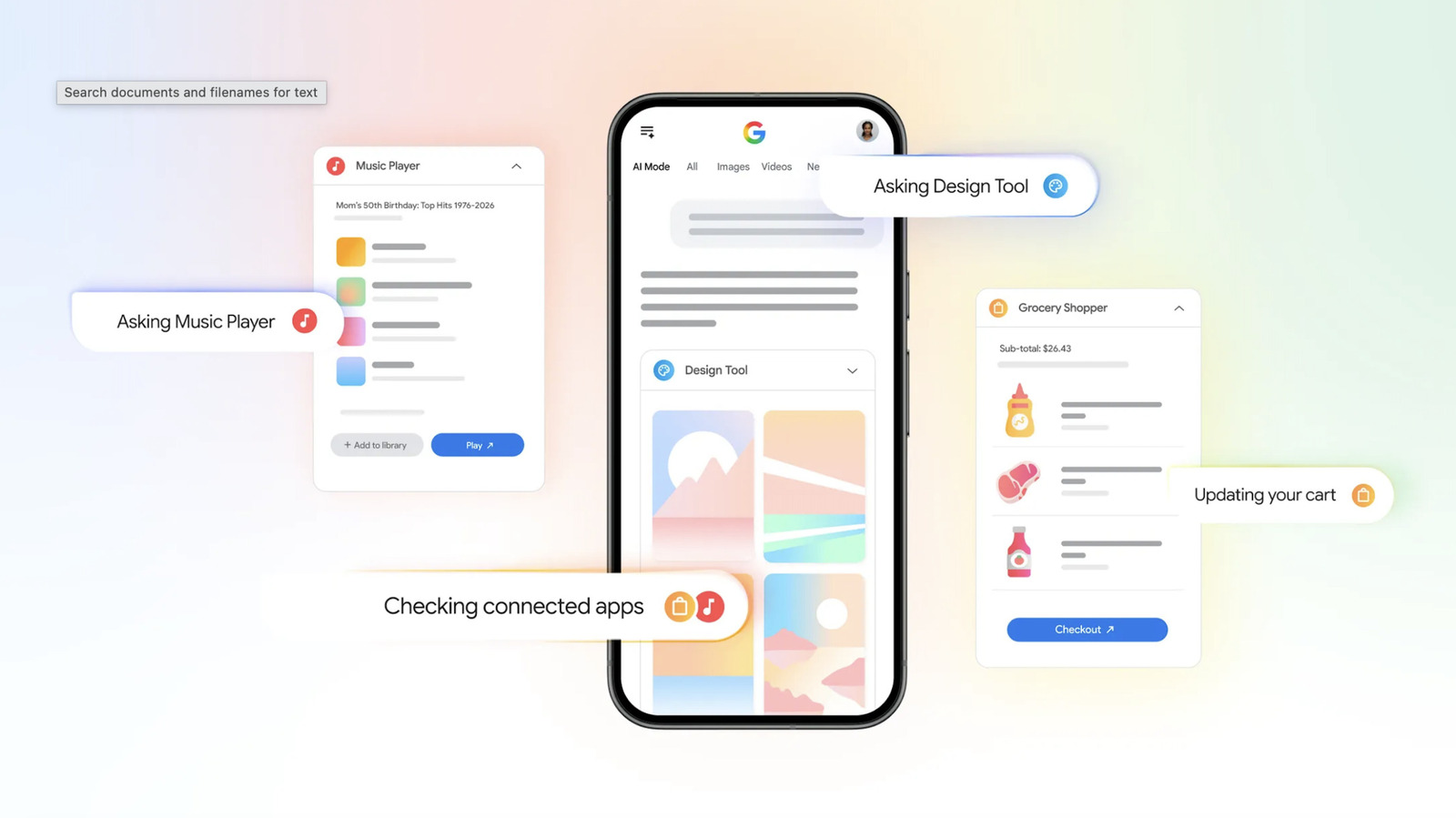
Google has expanded its AI Mode in Search with new integrations for Canva, YouTube Music and Instacart, currently available in the United States. The update allows users to generate music playlists, create design templates using calendar data, and add grocery items to shopping carts based on scheduled events. These features utilise Google’s “Personal Intelligence” capabilities to pull data from third-party applications directly into search responses.
The integration with YouTube Music enables users to request playlists based on specific genre and mood prompts. Gemini connects to the music service and drops the suggested playlist into the chat feed, which users can then open in the app. This functionality aims to slot AI services more naturally into daily routines, reducing the need to manually open separate applications to execute tasks.
For design tasks, the Canva integration allows users to create templates, such as party flyers, by pulling in calendar information. Similarly, the Instacart connection enables users to add ingredients and grocery items to their shopping cart. The system utilises saved calendar events, such as a planned barbecue, to formulate relevant shopping lists, with suggestions requiring user confirmation before finalising orders.
Google stated it is working with other partners to launch similar integrations in the future. This development follows previous enhancements to the Gemini ecosystem, including Reddit integrations for “expert” accounts and the introduction of the Intelligent Search Box at I/O 2026. The company has been gradually widening features available in Search throughout 2026, building on the “Personal Intelligence” capability added to AI Mode earlier this year.
The Intelligent Search Box, launched at I/O 2026, allows inputs such as videos, images, files and Chrome tabs, designed to handle more complex queries. While the current rollout is limited to the US, the move signals Google’s broader strategy to have AI infiltrate various aspects of digital life by connecting disparate services through a unified search interface.
