Google DeepMind’s ‘Solve All Disease’ Claim Faces Reality Check at I/O
The Verge reports that while Google’s new suite aims to accelerate drug discovery, significant regulatory hurdles and a timeline of decades remain before any major breakthroughs.
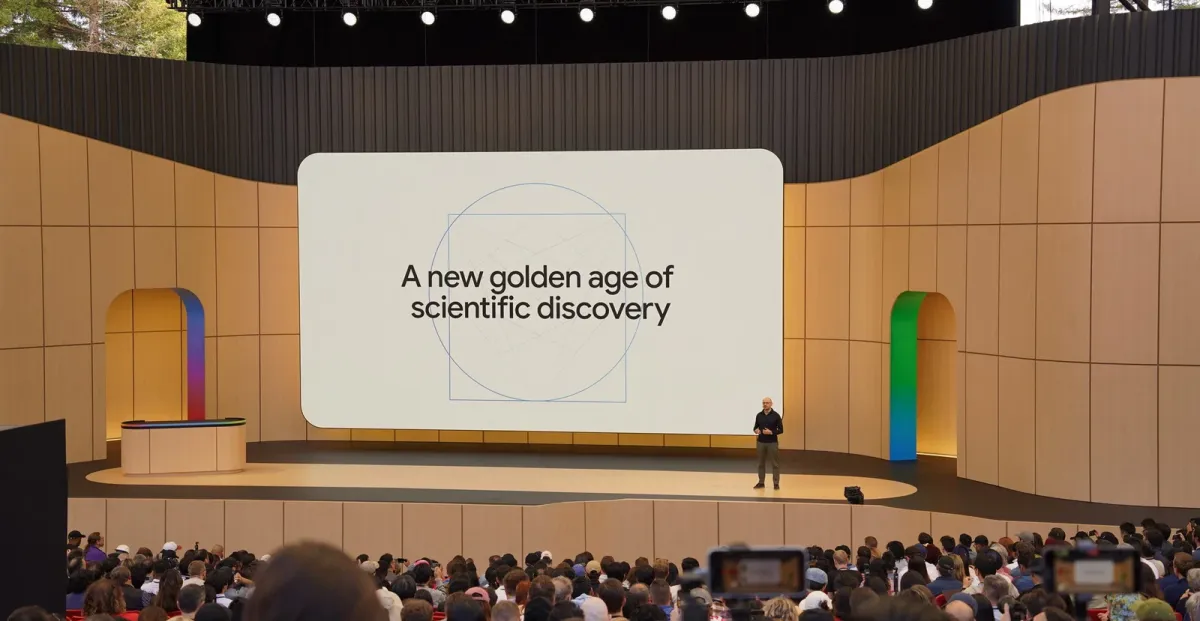
During the 2026 Google I/O keynote, Google DeepMind CEO Demis Hassabis declared that the company aims to reimagine the drug discovery process with the ultimate goal of solving all disease. The statement was introduced alongside Gemini for Science, a suite of experimental artificial intelligence tools designed to assist researchers in making new medical discoveries. While the ambition is significant, industry observers and science communicators have urged immediate context, noting that such bold claims often obscure the rigorous, multi-decade realities of clinical research and regulatory approval.
The tools highlighted in the presentation include AlphaFold, which aids in understanding protein structures, and AlphaGenome, which predicts mutations in human DNA sequences. AlphaFold has already demonstrated utility in developing malaria vaccines, identifying proteins linked to LDL cholesterol, and understanding early-onset Parkinson’s disease. However, AlphaGenome faces notable limitations; a Nature study noted that the model has not been validated for personal genome prediction and struggles to capture cell- and tissue-specific patterns, highlighting the gap between experimental capability and immediate clinical application.
Despite the potential for generative AI to accelerate discovery, the path to new treatments remains complex. A meta-review cited in the source material indicates that while AI played a major role in reducing the development timeline for COVID-19 vaccinations, significant ethical, logistical, and regulatory challenges persist. These include issues surrounding algorithmic bias, data privacy, and equitable global access, all of which must be navigated before any AI-assisted treatment can reach patients.
The timeline for significant breakthroughs from these technologies is estimated to be at least 20 years away, rather than occurring within the next three to ten years. This long horizon contrasts sharply with the immediate expectations often generated by keynote announcements. The source material suggests that while AI is a powerful tool for researchers, it does not eliminate the need for traditional scientific rigor, including animal testing and FDA drug trials, processes that cannot be skipped or accelerated beyond their natural limits.
Concerns about public misinterpretation were underscored by recent comments from US Health Secretary RFK Jr., who suggested AI might render the FDA irrelevant. Experts argue that such views overlook the necessity of clinical trials and regulatory oversight. The source notes that while AI can make pharmaceutical processes more efficient, it does not replace the need for expert input and collaboration. As the technology evolves, the challenge remains to communicate its potential without falling into the trap of "sciencewashing," where buzzwords lend false legitimacy to health claims that lack immediate substantiation.
