Google and Volvo integrate Gemini AI with Volvo EX60 external cameras
Announced at the Google I/O conference, the partnership leverages Nvidia’s Drive AGX Orin platform and Android Automotive to allow the Gemini assistant to access vehicle cameras for real-world situational awareness.
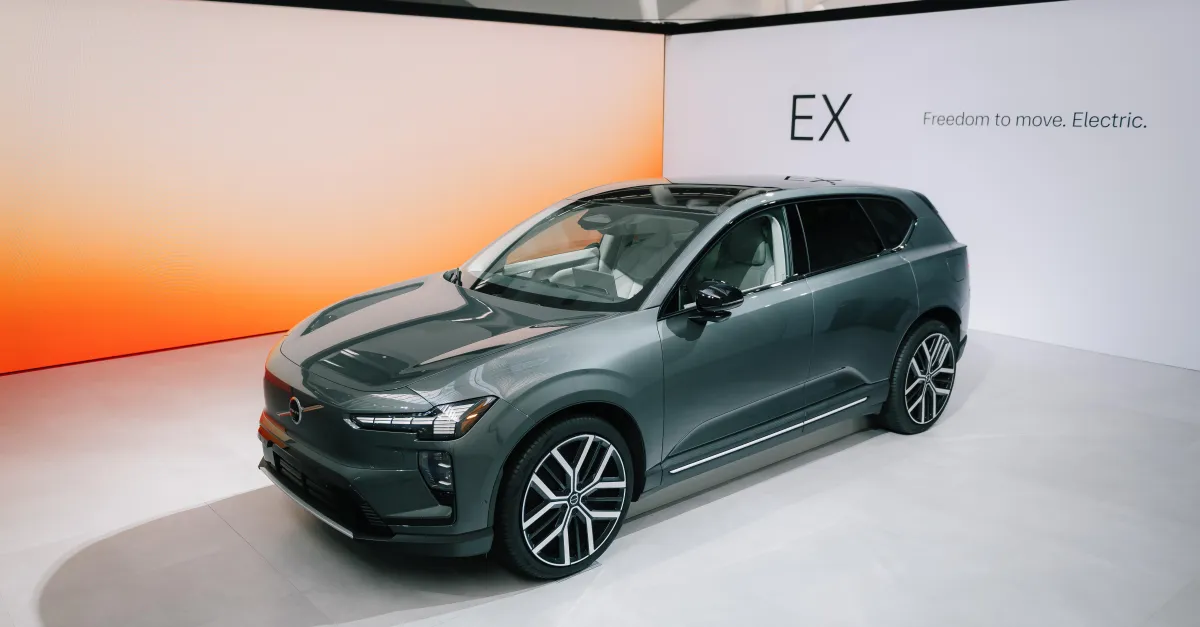
Google and Volvo have announced an integration between the Gemini AI assistant and the external cameras of the upcoming Volvo EX60 electric SUV. The partnership, unveiled at the Google I/O conference, allows the AI assistant to access visual data from the vehicle’s exterior to interpret surroundings for drivers. The system is built on Volvo’s use of Google’s embedded Android Automotive operating system and utilises the Nvidia Drive AGX Orin computing platform for on-board processing power and over-the-air software capabilities.
The primary use case for this integration is to assist drivers with complex parking environments. The AI will be able to interpret difficult-to-understand parking signs, check for specific restrictions, and inform users of permit requirements or time limits. Beyond parking, Google envisions the system recalling road signs, interpreting lane markings, and answering queries regarding nearby landmarks or restaurants. Patrick Brady, vice-president of Android Automotive at Google, stated that the integration aims to make drives more helpful by allowing users to learn more about their surroundings while on the road.
Navigation capabilities will also be enhanced through a new feature called Immersive Navigation, which Volvo will be among the first automakers to receive. This update renders routes in 3D with graphics designed to closely resemble the real world. By leveraging access to external cameras, Google Maps will provide more conversational directions that incorporate nearby landmarks, such as instructing drivers to take the next left at a specific library.
The announcement highlights the growing role of artificial intelligence in automotive software, moving beyond simple voice commands to visual interpretation. However, the accuracy of the AI’s interpretation of visual data has not yet been independently verified. There are concerns that incorrect interpretations of parking signs could lead to fines or vehicle impoundment, potentially causing users to disable the feature if reliability issues arise.
It remains unclear how the system will perform in diverse real-world conditions beyond the initial demonstrations provided by Google. The specific timeline for the consumer rollout of these features to the Volvo EX60 is not specified in the source material. Testing will ultimately determine whether the system delivers on its promise to simplify driving tasks in complex urban environments.
