Good Omens finale review – a heavenly cast, but a script from flaming TV hell
David Tennant and Michael Sheen remain a dazzling demon and angel double act, but the controversial third season is described as a puzzling mess with a smug and stale narrative.
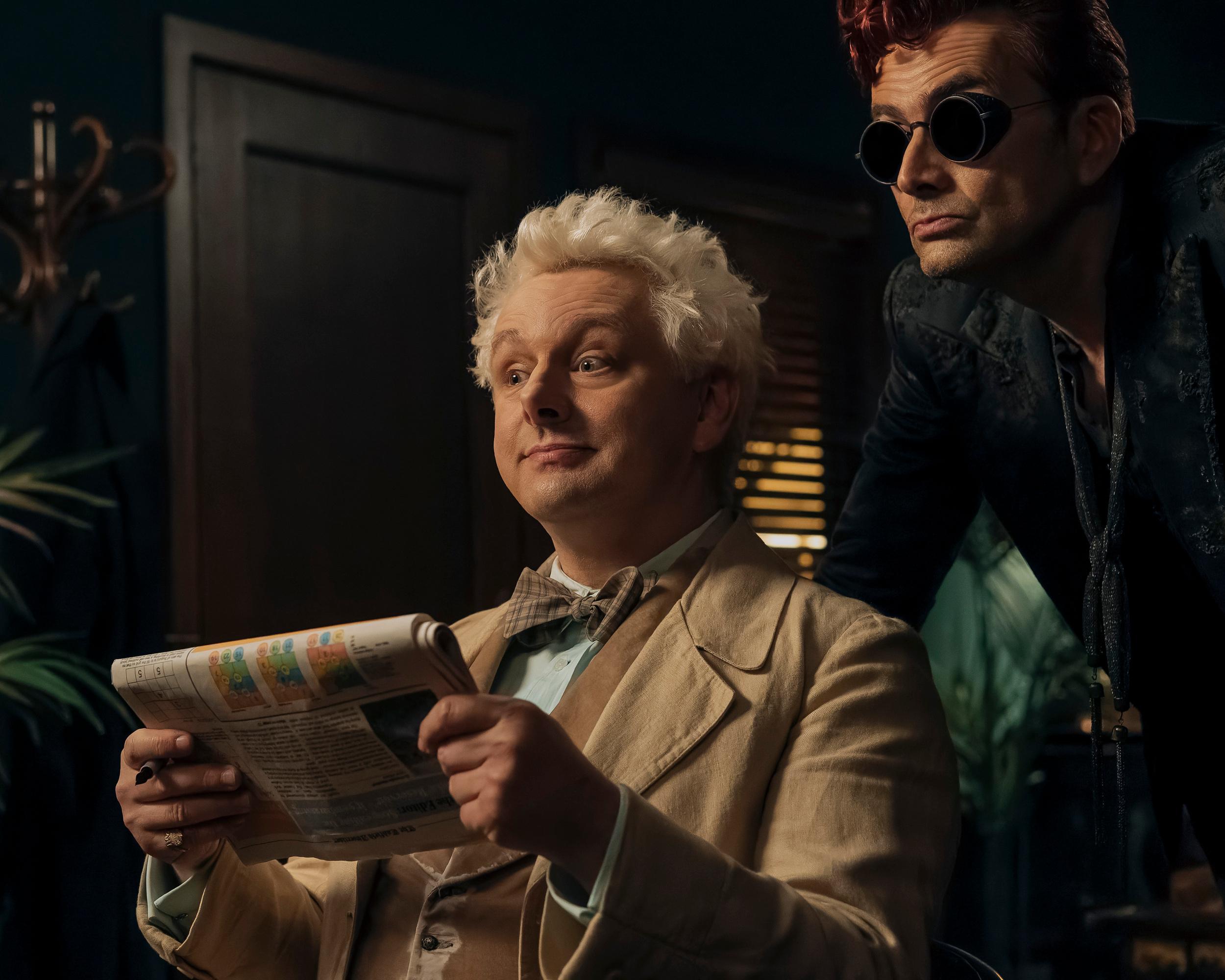
The Guardian has published a critical review of the Good Omens series finale, describing the production as a "puzzling mess" with an incoherent narrative. While the review praises the performances of lead actors David Tennant and Michael Sheen, it criticises the script for being smug, grating and stale. The third season, originally planned as six episodes, was reduced to a single 90-minute special. The production was filmed at the start of 2025 and released amid controversy surrounding co-writer Neil Gaiman, who has denied sexual assault allegations and had three lawsuits dismissed in February 2026.
The review notes that three lawsuits against Neil Gaiman were dismissed by US federal judges in February 2026. Gaiman has denied accusations of sexual assault and other serious misconduct made against him by several women. Despite retaining a co-writing credit, Gaiman’s involvement in the final season has been limited. Amazon initially considered not releasing the special at all. The plot involves the Second Coming of Jesus, played by Bilal Hasna, who is lost on Earth and befriends retired card sharp Harry the Fish (Mark Addy).
Aziraphale (Michael Sheen) and Crowley (David Tennant) reunite to find Jesus, with Crowley portrayed as an alcoholic gambling addict resentful of Aziraphale’s prioritisation of work. The review highlights a "four-way verbal showdown" involving supernatural beings, including archangel Sandalphon (Paul Chahidi), which the reviewer describes as rehearsing "basic musings on religion." The finale ends with a "shamelessly lovely coda" imagining an alternative version of the characters as a married couple in an ordinary romantic drama.
The Guardian published the review on 13 May 2026. The article describes the show's history, noting that the original 1990 novel by Terry Pratchett and Neil Gaiman led to an awkward TV adaptation after Pratchett’s death. Season two converted the chemistry between Tennant and Sheen into romance, but the third season’s gestation has been marred by controversy. The review suggests the show has possibly the biggest imbalance in TV history between a dazzling cast and a stale script.
The review details the plot’s confusion, where the celestial team loses track of the messiah after he roams Earth alone. Jesus is depicted as a naive innocent who misses his former gang of 12 mates. Aziraphale and Crowley’s efforts to find him are complicated by Crowley’s personal struggles and Aziraphale’s work commitments. The narrative shifts to investigating sabotage within heaven, a conundrum solved too quickly for significance. The review concludes that while the cast nearly redeems the show, the script fails to deliver a coherent ending.
The Guardian’s critique underscores the tension between the actors’ performances and the production’s narrative choices. Tennant and Sheen are praised for their gusto in delivering Crowley and Aziraphale’s emotional resolution. However, the review argues that the dialogue’s smugness and the plot’s incoherence undermine the show’s potential. The final coda offers a glimpse of what the characters could have been in a different genre, suggesting their brilliance as a married couple in a romantic drama.
The review serves as a final assessment of the Good Omens series, highlighting the impact of external controversies on the production. Gaiman’s limited involvement and the reduction of the season to a single special have shaped the final product. The Guardian’s analysis reflects on the show’s journey from a faithful adaptation to a standalone narrative driven by its leads. The review leaves readers with a sense of missed opportunity, despite the enduring appeal of Tennant and Sheen’s performances.