GM deploys FANUC robots at Detroit EV plant amid union fury over layoffs
United Auto Workers leaders condemn the move as a profit-driven tactic, while global rivals accelerate adoption of 'dark factories'
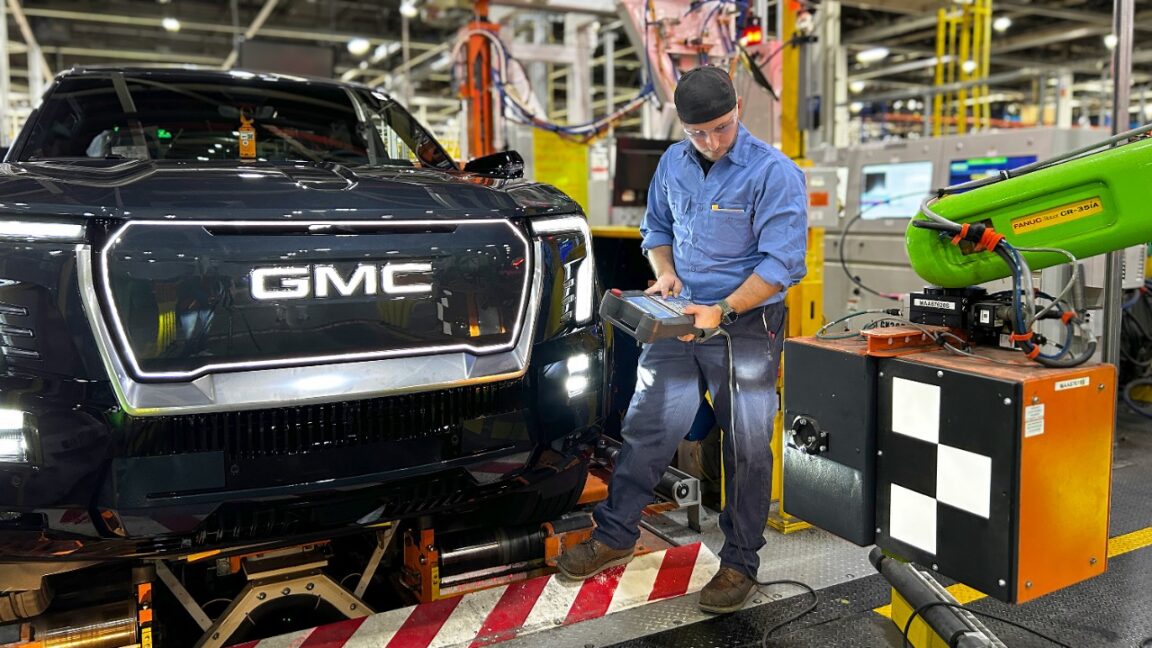
General Motors has installed approximately 50 FANUC robot arms at its Factory Zero facility in Detroit, Michigan, to assist with vehicle assembly. The deployment of the Japanese-manufactured automation units comes in the wake of significant workforce reductions at the plant, including the indefinite layoff of more than 1,000 workers in March and permanent dismissals of 1,200 staff in October 2025. The move has triggered sharp criticism from the United Auto Workers (UAW), with union leaders arguing that the company should recall laid-off employees rather than introducing automation.
James Cotton, president of UAW Local 22, told The Detroit News that more than 1,000 union members remain indefinitely laid off despite the new robotic installations. He stated that GM could bring some of these workers back to the line instead of deploying the 50 robots, which are designed to attach various components during the assembly process. Andrew Bergman, a laid-off Local 22 member and union organizer, criticised corporate leaders for prioritising profits over human workers, noting that technological development is being used to "pad profits and lay off workers" rather than improving working conditions.
The automation push highlights a stark divergence in messaging within Detroit during the same week in June. At the Reindustrialize Summit, speakers discussed how robots could empower the industrial base, while at the UAW Constitutional Convention, union president Shawn Fain warned against the threat of humanoid robotics and mass automation undermining employment and wages. This tension reflects a broader industry shift, with competitors such as Stellantis NV and Ford Motor Company also deploying assembly-line robots to automate US operations.
Globally, the trend towards "dark factories"—facilities with near-complete automation—is accelerating, particularly in China. Chinese automakers including Jetour, Zeekr, and Xiaomi are already operating highly automated sites, with Xiaomi’s EV Hyperfactory in Beijing producing a new electric vehicle every 76 seconds. Data indicates that China’s manufacturing industry deployed 2 million industrial robots by 2024, significantly outpacing Japan and the United States, where installations totalled 44,500 and 34,200 respectively in the same year.
While automation offers lower labour costs and increased production capacity, experts warn of vulnerabilities in fully automated systems, including cybersecurity risks and the difficulty of identifying production line issues without human oversight. Meanwhile, US automakers face headwinds from the Trump administration’s decision to abolish federal tax credits for EV buyers and freeze a federal EV charging infrastructure program, contributing to a retreat from EV production in the United States.
