Global markets retreat as Gulf tensions drive oil and bond yields higher
Brent crude climbs above $110 a barrel while US 10-year note yields hit a 15-month peak, testing investor resilience ahead of key earnings reports.
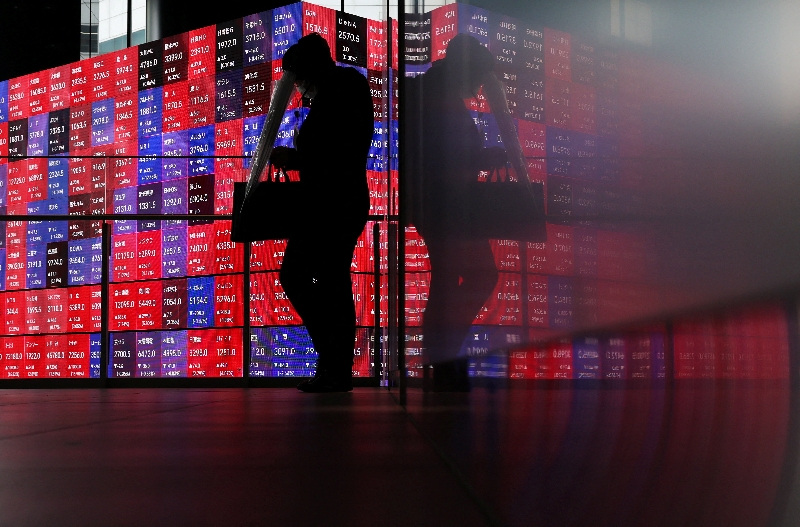
Global equity markets declined on Monday, 18 May, as fresh drone attacks in the Gulf region triggered a sharp rise in oil prices and bond yields, stoking inflation concerns across major financial centres. The unrest has kept the Strait of Hormuz largely closed to shipping, disrupting a waterway that typically handles 20 per cent of the world’s oil and gas trade.
Brent crude oil traded near $110.50 a barrel, while US crude reached $106.72 a barrel. Futures for September climbed above $100, and December contracts hit a contract high as markets braced for potential protracted shortages. A drone strike caused a fire at a nuclear power plant in the United Arab Emirates, and Saudi Arabia reported intercepting three drones, escalating geopolitical tensions.
Bond yields surged globally as investors priced in persistent energy costs. US 10-year note yields hit a 15-month top of 4.631 per cent, having surged 23 basis points the previous week. Japan’s 10-year bond yield reached a peak not seen since 1996 following government proposals to issue fresh debt to fund an extra budget. Germany’s 10-year bond yield rose to its highest level in 15 years.
Equity markets reflected the cautious sentiment. European stocks fell 0.5 per cent, with major markets in Frankfurt, Paris, and London flat to down 1.1 per cent. Overnight, Japan’s Nikkei eased 1 per cent, while South Korean stocks rose 0.3 per cent, buoyed by Samsung Electronics shares gaining almost 4 per cent after a court issued a partial injunction against a union strike. MSCI’s broadest index of Asia-Pacific shares outside Japan lost 0.7 per cent.
In China, economic data disappointed, with April retail sales edging up just 0.2 per cent against analyst expectations for 2.0 per cent growth, while industrial output rose a sluggish 4.1 per cent. Chinese blue chips lost 0.6 per cent. S&P 500 futures fell 0.4 per cent and Nasdaq futures lost 0.2 per cent, as rising yields push up borrowing costs and challenge stock valuations.
The US dollar held firm against the yen at 158.91, with only the threat of Japanese intervention preventing a move towards the 160.00 barrier. Gold prices remained near flat at $4,544 an ounce, drawing little support as a safe haven. G7 finance ministers are scheduled to gather in Paris on Monday to discuss the Strait of Hormuz and critical raw material supplies, though geopolitical differences threaten to test the group’s cohesion.