Global bond yields stabilise near multi-year highs as markets brace for Nvidia earnings
The U.S. 30-year yield settled at 5.17% and the 10-year at 4.65%, levels that continue to pressure asset classes. Investors await Nvidia’s first-quarter report, amid an 18-day strike at Samsung and diplomatic talks in Beijing.
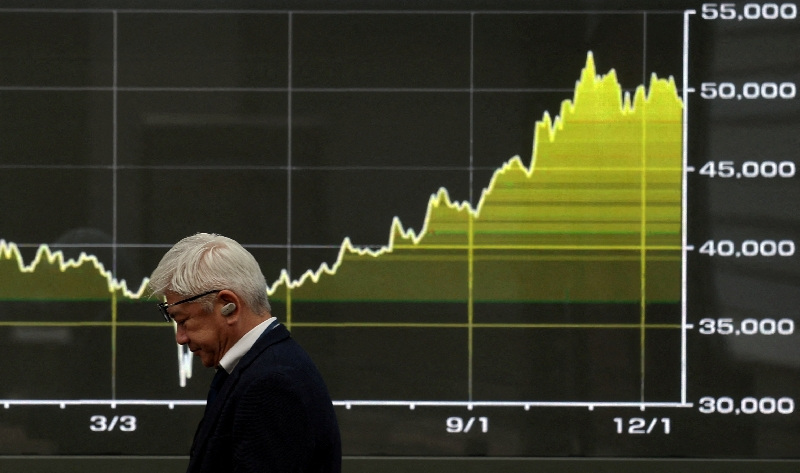
Government bond yields stabilised on Wednesday following a steep selloff that had pushed rates to multi-year highs, driven by war-induced inflation fears and concerns over energy prices stemming from the effective closure of the Strait of Hormuz. The U.S. 30-year Treasury yield settled at 5.17%, while the benchmark 10-year yield was at 4.65%, both remaining at levels that threaten other asset classes. These figures represent a slight pullback from overnight peaks of 5.20% and 4.687%, yet they persist at heights that pose significant risks to broader markets with no immediate relief in sight.
Equities remained steady ahead of Nvidia’s first-quarter earnings report, with expectations for revenue to jump nearly 80%. The global backdrop, however, remains complex. Samsung Electronics announced an 18-day strike starting Thursday, threatening semiconductor supply chains. Samsung shares fell as much as 4.4% before closing broadly flat, though they remain up 130% for the year, contributing to a massive rally in global chip stocks that has supported wider equity markets.
Mohit Kumar, chief European economist at Jefferies, advised clients to avoid longer-dated bonds, noting that even a prolonged 'No War No Peace' scenario would negatively impact oil prices and inflation. He highlighted that government support for fuel subsidies and increased unemployment benefits would likely follow as the oil shock reduces economic activity. "Higher rates should also start feeding into risky assets," Kumar added, referring to stocks and corporate credit.
In diplomatic developments, Chinese President Xi Jinping held talks with Russian President Vladimir Putin to discuss stopping the war in the Middle East. This meeting occurred less than a week after U.S. President Donald Trump’s high-profile visit to Beijing. During a summit in Beijing, U.S. stock markets rose, with the Dow Jones Industrial Average gaining 0.8%, the S&P 500 rising 0.3%, and the Nasdaq Composite climbing 0.2%. Nvidia shares surged more than 2% following U.S. approval of H200 chip sales to Chinese firms.
Currency and commodity markets showed mixed signals. The dollar hovered near a six-week high against major peers, while spot gold was a fraction higher at $4,496 per ounce, still close to a six-week low. In the UK, sterling barely reacted to cooler-than-expected inflation data, though traders pared back bets on imminent Bank of England rate hikes, sending two-year gilt yields down 10 basis points. Tentative signs of easing pressure from the Gulf emerged as two Chinese oil tankers exited the Strait of Hormuz, causing Brent crude futures to fall 2%.