Germany’s rail renewal viewed as litmus test for economic recovery
The Financial Times reports that the country’s railway renewal programme is being positioned as the first test of whether Germany can reverse years of decline.
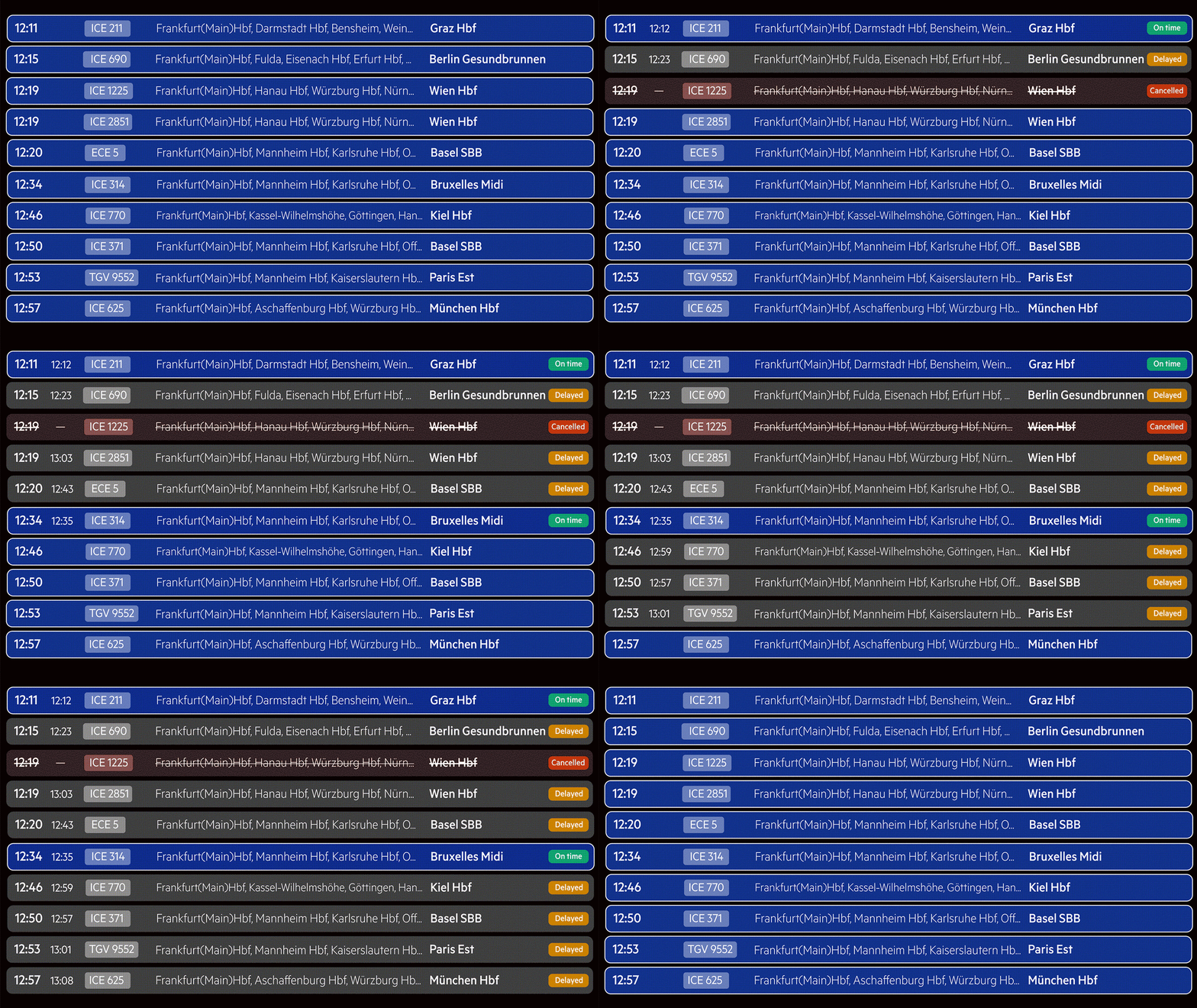
Germany’s railway renewal programme is being characterised as the primary indicator for assessing whether Europe’s largest economy can reverse years of decline, according to a report by the Financial Times. The infrastructure initiative is positioned as the first test of the country's economic recovery capabilities.
The country is identified as Europe’s largest economy, yet it has experienced a period of sustained economic contraction. The railway renewal effort is now central to determining if the nation can stabilise and grow its economic output after this extended downturn.
The Financial Times reports that the railway renewal programme is the primary indicator for assessing Germany’s economic recovery capabilities. This narrative frames the infrastructure project not merely as a logistical upgrade, but as a critical barometer for the broader health of the German economy.
However, the provided source material contains no specific details regarding the scope, funding, or timeline of the railway programme. The extent of the 'years of decline' is also not quantified in the text, leaving the precise magnitude of the economic challenge undefined.
The claim that this infrastructure push represents the 'first test' is a narrative framing by the Financial Times. It should be reported as such, rather than as an objective fact, given the lack of substantive detail regarding the programme's specific impact or execution metrics.
Further verification is required for specific claims about the programme's impact. The current reporting relies on the high-level thesis that railway renewal is the key to reversing economic trends, without providing the granular data typically required for a full financial assessment.