General Motors Targets Grid Stability with Vehicle-to-Grid Expansion and Sodium-Ion Strategy
GM unveils firmware update for V2G capabilities, commercial energy storage partnerships, and unified charging network to capitalise on rising electricity demand.
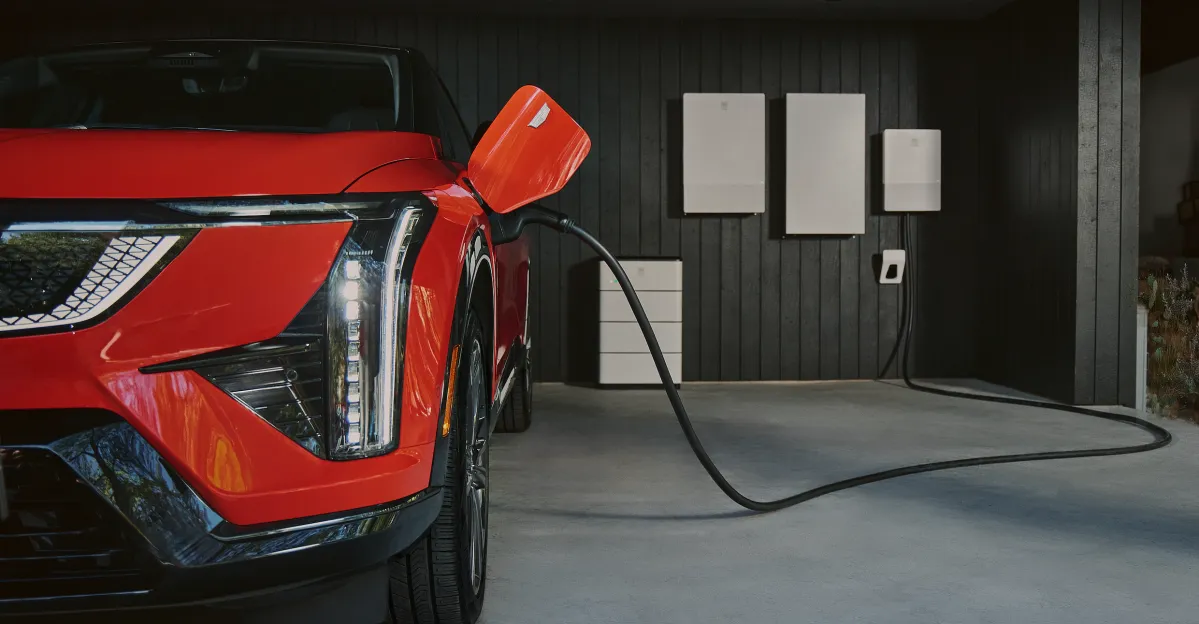
General Motors has announced a strategic expansion into energy services, leveraging its electric vehicle fleet to stabilise the electrical grid amidst rising power demand driven by artificial intelligence data centres. The automaker revealed plans to release a firmware update enabling current vehicle-to-home customers to send energy back to the grid, citing a base of over 250,000 bidirectional-capable EVs currently on American roads. This move represents the largest automaker in North America’s latest effort to secure a share of the multibillion-dollar energy generation and storage market.
GM chief product officer Sterling Anderson stated that the company envisions a future where electric vehicles, their batteries, and the national power grid operate in unison. The automaker is betting that public utilities will utilise these idle EV batteries as a solution to energy demand crises, even as EV sales cool. By injecting flexibility into a historically rigid system, GM argues that vehicle-to-grid technology can lower aggregate energy costs, provide financial returns for consumers, and enhance systemic reliability.
To test these capabilities, GM is partnering with utilities in two key states. In Northern California, the company is working with PG&E to develop a localized fleet of 52,000 EVs for grid balancing protocols, expected to be operational by 2030. Simultaneously, in Michigan, GM is collaborating with DTE Energy to stress-test bidirectional charging using 30 employee homes as real-world test cases. GM Energy VP Wade Sheffer has issued an open letter urging regulators to formalise this infrastructure, citing International Energy Agency reports that identify vehicle-to-grid technology as having the largest hourly flexibility to limit future grid investment costs.
Beyond consumer applications, GM unveiled a commercial energy storage strategy anchored by newly developed sodium-ion batteries for industrial-scale grid applications. The company is partnering with New York-based Peak Energy to deploy this chemistry, which offers improved availability, stability, and cost-efficiency compared to lithium. GM is also collaborating with Redwood Materials to build energy storage systems using US-manufactured batteries and second-life EV packs. For its future electric vehicles, GM is shifting focus to lithium manganese-rich batteries to compete with Chinese manufacturers.
The automaker also launched 'Energy Pass', a new feature across its mobile apps designed to simplify public charging. This allows owners to find, start, and pay for charging sessions across multiple third-party operators, including Tesla, Electrify America, and IONNA, with plans to add EVgo and ChargePoint. The initiative aims to address a major obstacle to EV adoption: the lack of convenient and reliable charging infrastructure. GM continues to expand its energy portfolio, which includes home chargers and stationary batteries, following the launch of its GM Energy spinoff in 2022.
